
Special countermeasures for high-frequency circuits in PCB design
With the rapid development of the modern electronic industry, digital and high-frequency circuits are developing in the direction of high speed, low consumption, small size and high anti-interference, which puts higher requirements on PCB (printed circuit board, printed circuit board) design. The Protel 99SE design system fully utilizes the advantages of Windows XP and Windows 2000 platforms. The super design environment of its core PCB module enables the design work to achieve its design requirements more effectively. For high-frequency circuit designers, it is no longer a simple requirement for PCB routing rate, but requires designers to consider the design from the working characteristics and actual working environment of the circuit based on solid theoretical knowledge and rich PCB design experience. Only in this way can we make an ideal PCB.
This article focuses on the layout and wiring of high-frequency circuits in the PCB design process, taking Protel 99SE software as an example to explore the countermeasures and design techniques of high-frequency circuits in the PCB design process.

1.High-frequency PCB layout
Layout operation is very important in the entire PCB design. Layout is the basis of wiring operation. To achieve perfect component layout, designers need to think about the layout of components from the perspective of circuit working characteristics and routing.
Protel 99SE has the function of automatic layout, with two functions of cluster layout and statistical layout, but it cannot fully meet the working requirements of high-frequency circuits. Designers also need to comprehensively consider the layout from the aspects of PCB manufacturability, mechanical structure, heat dissipation, EMI (electromagnetic interference), reliability, signal integrity, etc. Only in this way can the life, stability, and EMC (electromagnetic compatibility) of PCB be effectively improved, and the layout can be made more perfect.
For the layout of high-frequency circuits, designers should first consider the layout of components that are closely matched with the structure and have fixed positions (such as power sockets, indicator lights, connectors and switches, etc.), and then layout special components on the line (such as heating components, transformers, chips, etc.), and finally layout some small devices. At the same time, the requirements of wiring should be taken into account. The placement of high-frequency components should be as compact as possible, and the wiring of signal lines can be as short as possible, thereby minimizing the cross-interference of signal lines.

(1)Mechanical structure
Power sockets, indicator lights, connectors and switches are all such components, and are all positioning plug-ins related to mechanical dimensions. Usually, the interface between the power supply and the PCB is placed at the edge of the PCB, and the distance from the edge of the PCB is generally not less than 2mm; the indicator light-emitting diode should be placed accurately according to the needs; switches and some fine-tuning components, such as adjustable inductors and adjustable resistors, should be placed near the edge of the PCB for easy adjustment and connection; components that need to be replaced frequently must be placed in a position with fewer components for easy replacement. Components with a mass of more than 15g should be fixed with a bracket, and large and heavy components should not be placed directly on the PCB.
(2)Heat dissipation
High-power tubes, transformers, rectifiers and other heat-generating components generate more heat when working in a high-frequency state. Ventilation and heat dissipation should be fully considered during layout. Such components should be placed at the edge of the PCB or in a ventilated place. For vertical boards, heating components should be placed on the upper part of the board, and heating components should not be placed on the bottom layer of the double-sided board. High-power rectifiers and adjustment tubes should be equipped with heat sinks and kept away from transformers. Heat-sensitive components such as electrolytic capacitors should also be kept away from heating devices, otherwise the electrolyte will be dried, causing its resistance to increase, performance to deteriorate, and affecting the stability of the circuit.

(3)Layout of special components
Because a 50Hz leakage magnetic field will be generated inside the power supply equipment, when it is connected to some parts of the low-frequency amplifier, it will interfere with the low-frequency amplifier. Therefore, they must be isolated or shielded.
It is best to arrange the amplifier stages in a straight line according to the schematic diagram. The advantage of this arrangement is that the ground current of each stage flows in a closed manner at this stage and does not affect the operation of other circuits. The input stage and the output stage should be as far away as possible to reduce the parasitic coupling interference between them. Considering the signal transmission relationship between the functional circuits of each unit, the low-frequency circuit and the high-frequency circuit should be separated, and the analog circuit and the digital circuit should be separated. The integrated circuit should be placed in the center of the PCB, which is convenient for the wiring connection of each pin with other devices.
Inductors, transformers and other devices have magnetic coupling, and they should be placed orthogonally to reduce magnetic coupling. In addition, they all have strong magnetic fields, and there should be a suitable large space around them or magnetic shielding to reduce the impact on other circuits.
(4)Electromagnetic interference
The methods we commonly use to eliminate electromagnetic interference include reducing loops, filtering, shielding, reducing the speed of high-frequency devices as much as possible, and increasing the dielectric constant of PCBs.
For example, the decoupling capacitors of integrated circuits should be placed as close as possible. Generally, 0.1uF capacitors are used for operating frequencies below 10MHz, and 0.01uF capacitors are used for those above 10MHz.
There is a high potential difference between some components or wires, and the distance should be increased to avoid discharge. High-voltage components should be placed as far as possible in places that are not easily touched by hands during debugging. Components that are prone to mutual interference should not be too close, and input and output components should be kept as far away as possible to avoid feedback interference. In order to reduce distributed parameters, high-frequency components are generally placed nearby (irregular arrangement). General circuits (low-frequency circuits) should be arranged according to rules for easy assembly and welding.
2.High-frequency PCB wiring
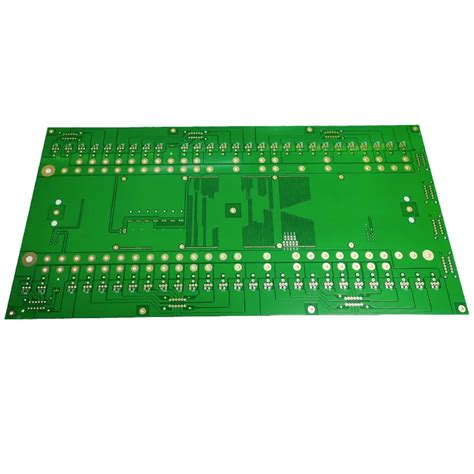
High-frequency circuits are often highly integrated and have high wiring density. The use of multi-layer boards is both necessary for wiring and an effective means to reduce interference. The PCB system of Protel 99SE can provide 32 signal layers, 16 mechanical layers, and more than 70 working layers such as solder mask and solder paste layers for users to choose from. Reasonable selection of the number of layers can greatly reduce the size of the PCB, make full use of the middle layer to set the shield, better achieve nearby grounding, effectively reduce parasitic inductance, effectively shorten the transmission length of the signal, and greatly reduce the cross-interference between signals, etc. All of these are beneficial to the reliability of high-frequency circuits. According to data, when the same material is used, the noise of a four-layer board is 20dB lower than that of a double-layer board. However, the higher the number of layers, the more complex the manufacturing process and the higher the cost.
(1)General principles of wiring
The shorter the wires between the pins of high-frequency circuit devices, the better, and the fewer bends, the better. It is best to use full straight lines for the wires, and sharp bends and sharp corners should be avoided as much as possible. If a turn is required, an arc or broken line transition should be used. This requirement is only used to improve the adhesion strength of the steel foil in low-frequency circuits, but meeting this requirement in high-frequency circuits can reduce the external emission of high-frequency signals and mutual coupling. In high-frequency circuit wiring, it is best to alternate horizontal and vertical wiring in adjacent layers. Parallel routing in the same layer cannot be avoided, but ground wires can be laid on the back of the PCB in a large area to reduce interference. For commonly used double-sided boards, multi-layer boards can use the middle power layer to achieve this function.
(2)Power and ground wire wiring
In order to prevent local current from generating ground resistance interference, each level of the multi-level circuit should be grounded at one point (or concentrated as much as possible). When the high-frequency circuit is above 30 MHz, a large area of grounding is used. At this time, the internal components of each level should also be concentrated in a small area for grounding. Susceptible devices and lines can be surrounded by ground wires. Various signal routings cannot form loops, and ground wires cannot form current loops. Power lines and ground wires should be close to each other and the area surrounded should be minimized to reduce electromagnetic interference. Generally, when wiring, the wire width is between 12-80mil, the power line is generally 20mil-40mil, and the ground line is generally more than 40mil. If possible, the wire should be as wide as possible.
When analog ground wires, digital ground wires, etc. are connected to the common ground wire, a high-frequency choke link must be used. When assembling the high-frequency choke link in practice, a high-frequency ferrite bead with a wire through the center hole is often used. It is generally not expressed on the circuit schematic, and the network table formed by this does not include such components. Therefore, its existence will be ignored during wiring. In view of this reality, it can be treated as an inductor in the schematic diagram, and a component package can be defined for it separately in the PCB component library. Before wiring, it can be manually moved to a suitable position close to the common ground line junction.
(3)Integrated chip wiring
A high-frequency decoupling capacitor should be set near each integrated circuit block. Since the Protel 99SE software does not consider the positional relationship between the decoupling capacitor and the decoupled integrated circuit when automatically placing components, the software is allowed to place them, making the two too far apart, and the decoupling effect is not good. At this time, the position of the two must be intervened in advance by manually moving the components to make them close.
(4)Copper plating
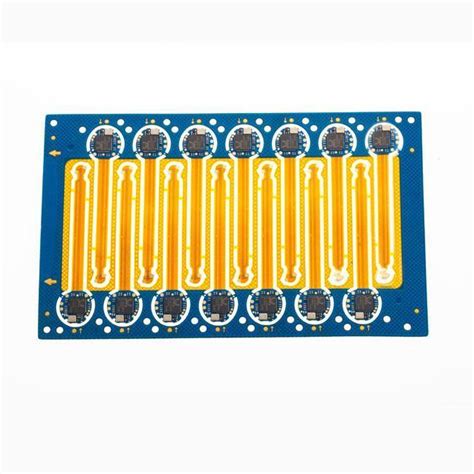
The main purpose of copper plating is to improve the anti-interference ability of the circuit. At the same time, it is very beneficial for PCB heat dissipation and PCB strength. Copper plating grounding can also play a shielding role. However, large-area strip copper foil cannot be used, because when the PCB is used for too long, it will generate a lot of heat. At this time, the strip copper foil is prone to expansion and falling off. Therefore, it is best to use grid-shaped copper foil when plating copper, and connect this grid with the grounding network of the circuit. In this way, the grid will have a better shielding effect. The size of the grid network depends on the interference frequency to be shielded.
3. Conclusion
The design process of high-frequency circuit PCB is a complex process. In addition to the design countermeasures discussed above, it also includes signal integrity including signal crosstalk, how to suppress noise and other issues. Therefore, designers need to have comprehensive planning and consideration when designing, and use different methods and technologies at each stage of the design cycle to ensure the accuracy of the design, so as to design a reasonable and high-performance high-frequency PCB.