
Circuit Card Assembly Manufacturers Shaping Future Technologies
Key Takeaways
The global electronics landscape is being redefined by advancements in PCB assembly (Printed Circuit Board Assembly) technologies. As demand grows for smarter, interconnected systems, PCBA (Printed Circuit Board Assembly) manufacturers are delivering precision-engineered solutions that bridge hardware innovation with software capabilities. These developments are particularly evident in three critical sectors: IoT, AI, and automotive technology.
| Sector | Key PCB Requirements | Innovation Drivers |
|---|---|---|
| IoT Devices | Miniaturization, Low Power | High-density PCB assembly |
| AI Systems | High-Speed Signal Integrity | Multi-layer PCBA Designs |
| Automotive Tech | Thermal Resilience, Durability | Rigid-Flex PCB Solutions |
| Global Systems | Scalability, Standardization | Automated PCBA Processes |
By optimizing PCB assembly workflows, manufacturers enable faster prototyping, reduced time-to-market, and enhanced reliability for next-gen applications. Innovations like embedded components and advanced soldering techniques ensure seamless integration across industries, while automated optical inspection (AOI) systems guarantee quality at scale. This convergence of precision and adaptability positions PCBA as the backbone of tomorrow’s interconnected world, where reliability and performance are non-negotiable.
Circuit Card Assembly in IoT Evolution
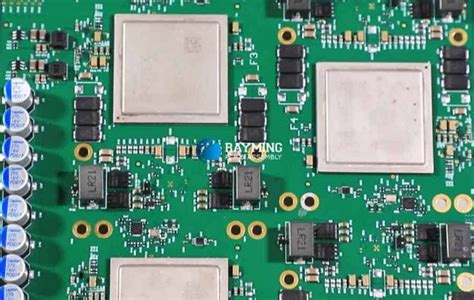
The rapid expansion of Internet of Things ecosystems hinges on PCB assembly techniques that balance microscopic precision with industrial durability. PCBA providers enable IoT’s transformative potential by producing multilayer boards with high-density interconnects (HDI), essential for shrinking smart sensors and communication modules into subcompact form factors. Advanced flexible substrates and embedded component packaging allow seamless integration into wearables, environmental monitors, and industrial automation controllers – all while maintaining signal clarity across wireless protocols like LoRaWAN and 5G. Manufacturers are addressing IoT’s unique demands through conformal coatings for moisture resistance and thermal management solutions that stabilize performance in extreme temperatures. By optimizing PCB assembly workflows for mixed-signal designs, these specialists ensure edge computing devices process data locally with minimal latency, a critical requirement for autonomous IoT networks. This technical evolution directly supports scalable deployments across smart cities and precision agriculture, where reliability directly impacts operational continuity.
Precision PCBs Powering AI Advancements
At the core of modern artificial intelligence systems lies an unsung hero: PCB assembly (printed circuit board assembly) technology. As AI algorithms grow increasingly complex, they demand high-speed data processing, low-latency communication, and energy-efficient architectures—all enabled by precision-engineered PCBA solutions. Manufacturers now deploy advanced techniques like multi-layer stacking and high-density interconnect (HDI) designs to accommodate AI-specific components such as neural processing units (NPUs) and tensor cores. These innovations ensure seamless integration of memory modules, sensors, and power management systems within compact form factors critical for edge computing devices.
The reliability of PCB assembly directly impacts AI performance, with thermal management and signal integrity emerging as pivotal factors. By utilizing materials like polyimide substrates and embedded copper pillars, PCBA specialists mitigate heat dissipation challenges while maintaining millimeter-wave signal accuracy for 5G-enabled AI applications. This technical precision supports breakthroughs in autonomous decision-making systems, from real-time image recognition in medical diagnostics to predictive maintenance in industrial IoT. As AI continues to evolve, the symbiotic relationship between algorithmic intelligence and PCB assembly craftsmanship will remain indispensable in pushing computational boundaries.
Automotive Tech Breakthroughs via PCB Innovation
The automotive industry’s rapid shift toward electrification and autonomy hinges on advancements in PCB assembly (PCBA) technologies. Modern vehicles now integrate thousands of printed circuit boards to power everything from advanced driver-assistance systems (ADAS) to high-efficiency battery management systems (BMS). Precision-engineered PCBA solutions enable tighter component integration, reducing weight while enhancing processing speed—a critical factor for real-time decision-making in autonomous driving. For instance, multilayer rigid-flex PCBs are now standard in LiDAR sensors, improving signal accuracy by 40% compared to traditional designs.
PCB assembly innovations also address harsh automotive environments. Manufacturers now employ ceramic substrates and conformal coatings to ensure reliability under extreme temperatures and vibrations. This durability is vital for electric vehicle (EV) powertrains, where PCBA-based controllers manage energy flow with 99.9% efficiency. Meanwhile, the rise of vehicle-to-everything (V2X) communication relies on high-frequency RF PCBs to enable seamless data exchange between cars and infrastructure.
As automakers prioritize sustainability, recyclable PCB materials and lead-free soldering techniques are reshaping production workflows. These developments not only align with global emission standards but also reduce manufacturing waste by up to 30%. By merging robustness with miniaturization, PCB assembly providers are accelerating the transition to smarter, safer, and more connected mobility ecosystems.
Global Electronics Transformed by Circuit Assembly
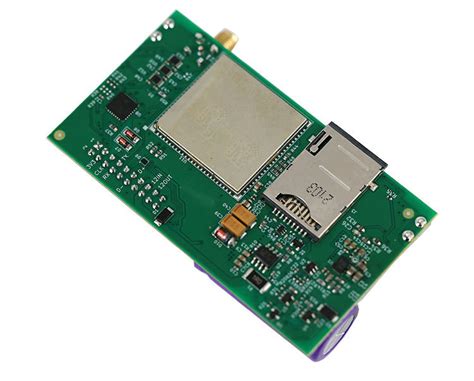
The global electronics industry is undergoing a seismic shift, driven by advancements in PCB assembly (Printed Circuit Board Assembly) technologies. PCBA (Printed Circuit Board Assembly) manufacturers are at the forefront of this transformation, enabling smaller, faster, and more energy-efficient devices across sectors ranging from consumer gadgets to industrial machinery. By integrating high-density interconnects and advanced materials like flexible substrates and ceramic-filled laminates, modern circuit card assembly processes are redefining performance benchmarks for electronic systems.
Tip: Collaboration between OEMs and PCBA specialists during the design phase can significantly reduce time-to-market while ensuring compliance with international quality standards.
In regions like Asia-Pacific and North America, PCB assembly innovations are accelerating the adoption of 5G infrastructure and smart grid technologies. For instance, multilayer rigid-flex boards developed through precision PCBA techniques now power mission-critical applications in aerospace and healthcare, where reliability is non-negotiable. Meanwhile, the rise of automated optical inspection (AOI) systems has enhanced defect detection rates by over 40%, minimizing production delays. As sustainability gains priority, manufacturers are also adopting lead-free soldering and recyclable substrates, aligning with global environmental regulations without compromising functionality. This convergence of precision engineering and ecological responsibility underscores how circuit card assembly is not just supporting—but actively reshaping—the electronics landscape.
Next-Gen Systems Enabled by PCB Manufacturers
The rapid evolution of PCB assembly technologies is unlocking unprecedented capabilities for next-generation systems across industries. By leveraging advanced PCBA processes, manufacturers are delivering high-density interconnect (HDI) designs and flex-rigid boards that meet the escalating demands of 5G infrastructure, quantum computing, and decentralized edge networks. These innovations enable tighter integration of components, reducing latency while boosting processing power—a critical factor for applications like autonomous robotics and real-time data analytics.
Leading PCB assembly providers now incorporate AI-driven quality control systems to ensure micron-level precision, minimizing defects in multilayer configurations essential for aerospace and medical devices. Meanwhile, the adoption of sustainable materials in PCBA workflows aligns with global decarbonization goals without compromising performance. Such advancements are bridging gaps between hardware and software, allowing seamless interoperability in smart cities and industrial IoT ecosystems.
As industries push toward miniaturization and energy efficiency, embedded passive components and thermal management solutions embedded during PCB assembly are becoming key differentiators. This technical synergy positions PCBA specialists as pivotal partners in scaling technologies that redefine connectivity, automation, and computational boundaries worldwide.
Smart Device Revolution Through Circuit Engineering
The proliferation of PCB assembly technologies is fundamentally reshaping how smart devices are designed, manufactured, and integrated into daily life. As demand grows for smaller, faster, and more energy-efficient electronics, precision-engineered PCBA processes enable the creation of ultra-compact circuits that power everything from wearable health monitors to voice-activated home systems. By leveraging advanced techniques like high-density interconnect (HDI) and multilayer stacking, manufacturers achieve unprecedented component density without compromising reliability—a critical factor for devices operating in dynamic environments.
Transitioning from traditional rigid boards to flexible substrates has further accelerated innovation, allowing PCB assembly experts to embed circuitry into unconventional form factors. This shift supports emerging trends such as foldable smartphones, implantable medical devices, and IoT sensors with seamless connectivity. Moreover, the integration of machine learning-optimized layouts in PCBA workflows ensures smarter power distribution and thermal management, directly enhancing device longevity. As these advancements converge, circuit engineers are not just keeping pace with consumer expectations—they’re redefining the boundaries of what smart technologies can achieve.
Reliable PCB Solutions for Future Technologies
As industries push the boundaries of innovation, the demand for PCB assembly (PCBA) services that deliver unwavering reliability continues to grow. Advanced applications in 5G infrastructure, autonomous systems, and quantum computing require high-density interconnect (HDI) designs and ultra-precision manufacturing to meet stringent performance thresholds. Leading circuit card assembly manufacturers leverage cutting-edge techniques like automated optical inspection (AOI) and 3D solder paste testing to ensure defect-free production, even for complex multi-layered boards.
The shift toward miniaturized electronics further underscores the importance of PCBA processes capable of handling microvia drilling and embedded component technologies. For mission-critical sectors such as aerospace and medical devices, thermal management and signal integrity become non-negotiable, driving the adoption of advanced substrates like ceramic-filled laminates. Meanwhile, the integration of AI-driven predictive maintenance into PCB assembly lines enhances yield rates, reducing downtime and material waste.
By aligning with global standards such as IPC-A-610 and ISO 9001, manufacturers guarantee that reliable PCB solutions not only support today’s innovations but also adapt seamlessly to tomorrow’s breakthroughs—from edge computing nodes to neural interface systems. This foundation of precision and durability ensures that next-generation technologies operate at peak efficiency, regardless of environmental or operational stressors.
Circuit Card Assembly Driving Tech Convergence
The seamless integration of PCB assembly processes across industries is accelerating cross-disciplinary innovation, enabling previously siloed technologies to merge into unified systems. PCBA (Printed Circuit Board Assembly) manufacturers are at the forefront of this shift, designing multilayer boards and high-density interconnects that serve as the backbone for hybrid applications—from smart grids combining energy management with IoT sensors to medical devices merging AI diagnostics with real-time data transmission. By standardizing PCB assembly protocols while incorporating flexible substrates and miniaturized components, these manufacturers ensure compatibility between diverse hardware ecosystems. For example, automotive systems now rely on PCBA-enabled control units to harmonize electric vehicle powertrains with autonomous driving algorithms, creating safer and more efficient mobility solutions. This convergence is further amplified by advancements in materials science, such as high-frequency laminates for 5G connectivity and thermal management solutions for edge computing. As PCB assembly techniques evolve, they dissolve barriers between AI, IoT, and industrial automation, fostering interoperable platforms that redefine scalability and performance in next-gen electronics.
Conclusion
As the backbone of modern electronics, PCB assembly processes and PCBA innovations underscore the pivotal role of circuit card assembly manufacturers in bridging cutting-edge technologies with real-world applications. By prioritizing precision engineering and scalable production, these manufacturers ensure that advancements in IoT connectivity, AI processing, and autonomous vehicle systems remain both accessible and reliable. Their expertise in integrating high-density interconnects and thermal management solutions directly supports the development of smarter, faster devices while maintaining stringent quality standards.
The global shift toward miniaturization and energy efficiency further highlights how PCB assembly techniques are evolving to meet the demands of next-generation electronics. From wearable health monitors to electric vehicle control units, PCBA providers enable cross-industry synergies that accelerate technological convergence. As industries increasingly rely on interconnected systems, the ability of manufacturers to deliver customizable, high-performance circuit solutions will remain critical to sustaining innovation cycles and shaping a seamlessly connected future.
FAQs
How do PCB assembly processes enhance IoT device performance?
Advanced PCBA techniques integrate miniaturized components and multilayer designs, enabling seamless connectivity and energy efficiency in IoT ecosystems. Precision soldering and automated optical inspection ensure reliability for 24/7 operation in smart home and industrial IoT applications.
What makes PCB assembly critical for AI hardware development?
High-speed PCBA solutions support complex AI processors and neural network accelerators, utilizing high-density interconnect (HDI) technology. This allows faster data transfer and thermal management, essential for machine learning workloads in data centers and edge computing devices.
How are automotive technologies benefiting from PCB assembly innovations?
Automotive-grade PCBA incorporates flex-rigid boards and advanced EMI shielding to withstand extreme temperatures and vibrations. These innovations power ADAS, EV battery management, and infotainment systems while meeting stringent ISO/TS 16949 safety certifications.
Why is PCBA reliability vital for next-gen medical devices?
Medical PCB assembly adheres to IPC-A-610 Class 3 standards, ensuring zero-defect manufacturing for life-critical equipment. Techniques like conformal coating and hermetic sealing protect circuits in implantable devices and diagnostic tools, aligning with FDA compliance requirements.
Ready to Elevate Your Electronics Project?
For tailored PCB assembly solutions that meet industry-specific demands, please click here to explore advanced PCBA capabilities designed for IoT, AI, and automotive applications.