
PCB Router: An In-Depth Guide to Efficient Printed Circuit Board Routing
Introduction to PCB Routing
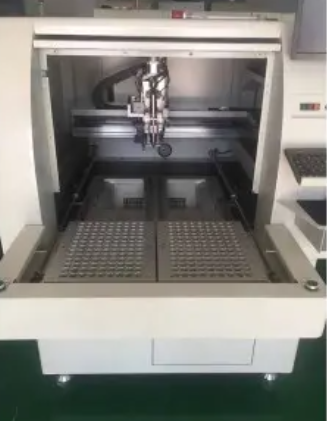
Printed Circuit Board (PCB) routing is a critical step in the design and manufacturing of electronic circuits. It involves the placement and connection of electrical traces that link various components on the PCB, ensuring signal integrity, power distribution, and thermal management. A PCB router is an automated or manual tool used to define these conductive pathways efficiently.
As PCBs become more complex with high-speed signals, multi-layer designs, and miniaturization, the role of PCB routers has evolved significantly. This article explores the fundamentals of PCB routing, different routing techniques, challenges, and best practices for optimizing PCB designs.
Types of PCB Routing
1. Manual Routing
Manual routing involves a designer manually drawing traces between components. While this method offers maximum control, it is time-consuming and prone to errors in complex designs. It is typically used for:
- Critical signal paths requiring precise control (e.g., high-frequency signals).
- Fine-tuning auto-routed designs.
2. Auto-Routing
Auto-routing uses algorithms to automatically connect traces based on predefined design rules. Modern PCB design software (e.g., Altium Designer, KiCad, Eagle) includes auto-routers that can:
- Reduce design time.
- Handle complex multi-layer boards.
- Follow Design Rule Checks (DRC) to avoid errors.
However, auto-routing may not always produce optimal results, especially for high-speed or analog circuits, requiring manual adjustments.
3. Interactive Routing
A hybrid approach where the designer guides the router by setting waypoints while the software optimizes the path. This balances automation and manual control.
4. Differential Pair Routing
Used for high-speed signals (e.g., USB, HDMI), where two traces are routed in parallel to maintain impedance and reduce noise.
5. Length Matching
Ensures signal synchronization by routing traces to the same length (critical for DDR memory, PCIe, etc.).
Key Considerations in PCB Routing
1. Signal Integrity
- Impedance Control: Traces must maintain consistent impedance to prevent signal reflections.
- Crosstalk Prevention: Proper spacing and shielding reduce interference between traces.
- Return Paths: High-frequency signals require a clear return path, often via ground planes.
2. Power Distribution
- Use wider traces or power planes for high-current paths.
- Decoupling capacitors should be placed close to ICs to stabilize voltage.
3. Thermal Management
- High-current traces generate heat; use thicker copper or thermal vias.
- Avoid routing sensitive signals near heat-generating components.
4. EMI/EMC Compliance
- Proper grounding and shielding minimize electromagnetic interference.
- Avoid sharp angles (use 45° or curved traces) to reduce radiation.
5. Manufacturability (DFM)
- Follow manufacturer guidelines for trace width, spacing, and via sizes.
- Avoid unnecessary vias to reduce cost and improve reliability.
PCB Routing Techniques and Best Practices
1. Layer Stack-Up Planning
- Signal Layers: For high-speed designs, dedicate layers for specific signal types (e.g., top layer for high-frequency signals).
- Ground & Power Planes: Provide low-impedance return paths and reduce noise.
2. Trace Width and Spacing
- Wider traces carry more current but occupy more space.
- Follow IPC standards for current-carrying capacity.
3. Via Optimization
- Use blind/buried vias in HDI (High-Density Interconnect) PCBs.
- Minimize via stubs in high-speed designs.
4. Routing Topologies
- Daisy Chain: Simple but can cause signal degradation.
- Star Routing: Better for clock distribution.
- Microstrip/Stripline: Controlled impedance routing for RF/high-speed signals.
5. Avoiding Common Mistakes
Advanced PCB Routing Tools and Algorithms
Modern PCB design software incorporates sophisticated routing algorithms:
1. Grid-Based vs. Gridless Routing
- Grid-Based: Traditional method where traces follow a fixed grid.
- Gridless: Allows finer adjustments, useful for dense designs.
2. Shape-Based Routing
Uses geometric algorithms to optimize space, common in high-density designs.
3. Auto-Routing with AI
Emerging AI-driven routers (e.g., Altium’s ActiveRoute) learn from past designs to improve efficiency.
4. 3D PCB Routing
Accounts for mechanical constraints in multi-board systems (e.g., rigid-flex PCBs).
Challenges in PCB Routing
- High-Speed Signal Integrity: Managing skew, reflections, and losses.
- Miniaturization: Routing in tight spaces without violating DRCs.
- Multi-Board Systems: Ensuring consistency across interconnected PCBs.
- Thermal and Power Issues: Preventing overheating in compact designs.
- Cost vs. Performance Trade-offs: Balancing advanced routing techniques with budget constraints.
Future Trends in PCB Routing
- AI and Machine Learning: Smarter auto-routers that adapt to design habits.
- Higher Layer Counts: More layers for complex electronics (e.g., 5G, IoT).
- Flexible and Stretchable PCBs: New routing techniques for bendable circuits.
- Integration with ECAD/MCAD: Better collaboration between electrical and mechanical design tools.
- Quantum Computing PCBs: Ultra-high-frequency routing challenges.
Conclusion
PCB routing is a crucial aspect of circuit design, impacting performance, reliability, and manufacturability. While auto-routing tools have advanced significantly, manual intervention remains necessary for high-speed and precision applications. By following best practices—such as proper layer planning, impedance control, and thermal management—designers can optimize their PCBs for functionality and cost-efficiency.
As technology evolves, PCB routing will continue to incorporate AI, advanced materials, and 3D integration, pushing the boundaries of modern electronics design. Whether you’re a beginner or an experienced engineer, mastering PCB routing techniques is essential for creating robust and high-performance circuit boards.