
PCB Assembly Service Factory Scalable Solutions for OEMs
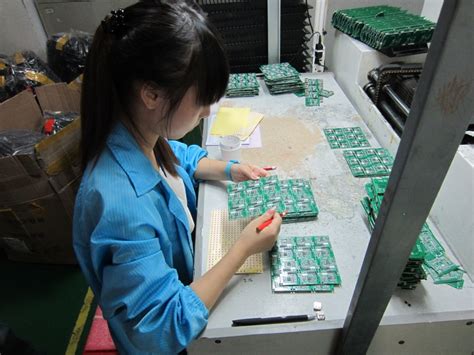
Key Takeaways
For OEMs seeking reliable manufacturing partners, PCB assembly services must balance adaptability with technical excellence. Scalability lies at the core of modern PCBA workflows, enabling seamless transitions from low-volume prototyping to high-volume production without compromising quality. Factories equipped with advanced automation tools, such as AI-driven pick-and-place systems and automated optical inspection (AOI), ensure consistent precision while reducing lead times.
Flexible production capacities allow OEMs to adjust order volumes dynamically, aligning with market demands or iterative design changes. This agility is reinforced by end-to-end quality assurance protocols, including in-line testing and functional validation, which minimize defects across all production stages. For instance, Vexos leverages scalable PCB assembly solutions to support clients in industries ranging from automotive to IoT, demonstrating how tailored manufacturing frameworks can optimize both cost and performance.
By integrating PCBA expertise with modular production lines, factories empower OEMs to navigate complex supply chain challenges while maintaining strict compliance with industry standards. This approach not only accelerates time-to-market but also future-proofs operations against evolving technological requirements.
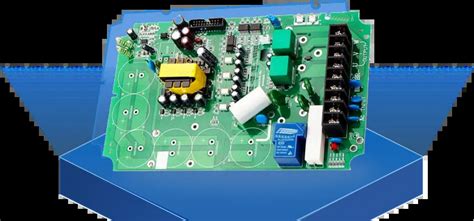
Scalable PCB Solutions for OEMs
Modern OEMs require PCB assembly services that adapt seamlessly to fluctuating demand, from low-volume prototyping to mass production. A PCBA partner with scalable infrastructure ensures cost efficiency and time-to-market optimization by balancing advanced automation with flexible workflows. For instance, factories employing modular production lines can pivot between 100-unit pilot runs and 50,000-unit batches without compromising quality or lead times.
Tip: When evaluating a PCB assembly service factory, prioritize facilities with dynamic resource allocation capabilities. This ensures your project scales efficiently during demand spikes or design iterations.
Key scalability drivers include:
| Factor | Low-Volume Advantage | High-Volume Advantage |
|---|---|---|
| Order Flexibility | Rapid design adjustments | Bulk material cost discounts |
| Lead Time Consistency | 5-7 day turnaround | Predictable 2-3 week cycles |
| Automation Integration | Manual oversight for precision | AI-driven component placement |
Advanced PCBA providers leverage smart manufacturing protocols, such as IoT-enabled equipment monitoring, to maintain yield rates above 99.2% across all production tiers. This is critical for OEMs managing hybrid orders—where customized configurations coexist with standardized builds. By aligning with a factory that offers scalable traceability systems, clients gain real-time insights into supply chain resilience, ensuring compliance even during rapid scaling phases.
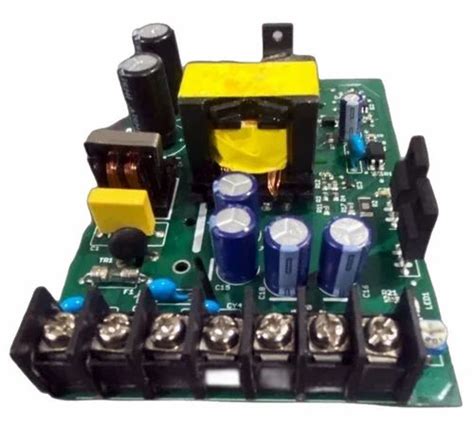
Precision PCB Assembly for OEMs
For OEMs requiring exacting standards in electronics production, PCB assembly processes must align with rigorous technical specifications. Modern pcb assembly service factories leverage surface-mount technology (SMT) and mixed-technology integration to accommodate complex designs, ensuring component placement accuracy within microns. Advanced automated optical inspection (AOI) systems validate solder joint integrity and trace alignment, minimizing defects at scale.
Scalability is achieved through modular workflows, allowing seamless transitions between low-volume prototyping and high-volume PCBA runs. For instance, RP Electronics employs adaptive production lines that adjust to component availability shifts without compromising turnaround times. This flexibility is critical for OEMs managing fluctuating market demands or iterative design updates.
Quality assurance extends beyond assembly, with in-circuit testing (ICT) and functional testing protocols verifying board performance under real-world conditions. By integrating PCB assembly with design-for-manufacturability (DFM) feedback loops, factories preemptively address potential flaws, reducing rework costs. Such precision-driven approaches ensure compliance with industry certifications like ISO 9001 and IPC-A-610, which are non-negotiable for aerospace, medical, and automotive applications.
Transitioning to flexible production strategies, the next section explores how adaptable PCBA solutions empower OEMs to balance innovation with cost efficiency.
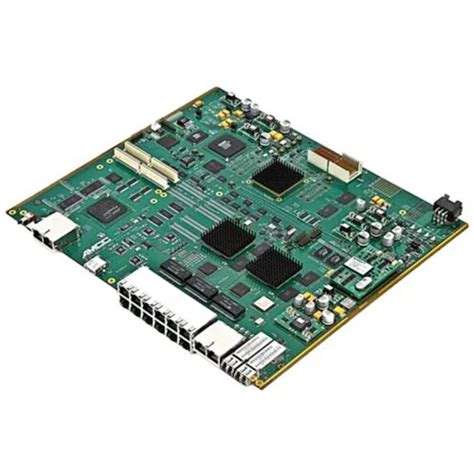
Flexible PCB Assembly Solutions
Modern OEMs require PCB assembly services that adapt to dynamic production demands without compromising quality. A scalable PCBA partner provides configurable workflows, enabling seamless transitions between low-volume prototyping and high-volume manufacturing. By integrating modular production lines and agile inventory management, factories can adjust capacity in real time to match fluctuating order requirements—critical for industries with seasonal peaks or rapid product iterations.
Advanced flexibility extends beyond volume adjustments. Leading PCB assembly providers support diverse component sourcing strategies, including consignment, turnkey, or hybrid models, while accommodating mixed-technology boards (e.g., combining SMT with through-hole components). This agility ensures OEMs avoid costly delays caused by supply chain disruptions or design changes. Moreover, rapid turnaround options—such as 48-hour prototyping—accelerate time-to-market for urgent projects.
To maintain consistency across variable production scales, automated process controls and traceability systems monitor every PCBA stage, from solder paste inspection to final functional testing. Such precision guarantees that flexibility never comes at the expense of reliability, aligning with stringent industry standards for aerospace, medical devices, or automotive applications.
Advanced PCB Automation Benefits
In modern electronics manufacturing, PCB assembly processes leveraging advanced automation deliver transformative advantages for OEMs seeking scalability. Automated pick-and-place systems achieve component placement accuracy within 5µm, minimizing human error while accelerating throughput by up to 70% compared to manual methods. Integrated PCBA lines equipped with AI-driven optical inspection (AOI) ensure real-time defect detection, reducing rework rates and aligning with stringent quality benchmarks.
The adoption of robotics in solder paste application and precision soldering further enhances consistency, particularly for high-density interconnect (HDI) designs. For instance, Rocket-PCB employs closed-loop feedback systems to dynamically adjust process parameters, ensuring optimal yield even during rapid production scaling. Such automation not only shortens lead times but also enables seamless transitions between prototyping and volume runs—a critical capability for OEMs managing fluctuating demand.
Moreover, automated inventory management systems synchronize material tracking with production schedules, mitigating supply chain disruptions. By integrating PCB assembly workflows with IoT-enabled analytics platforms, factories gain actionable insights to refine cycle times and resource allocation. This synergy between hardware automation and data intelligence positions PCBA providers as strategic partners in achieving OEMs’ cost-efficiency and time-to-market objectives.
End-to-End PCB Quality Assurance
In PCB assembly manufacturing, comprehensive quality assurance begins at component procurement and extends through final product validation. Rigorous incoming inspection protocols verify the integrity of raw materials, while automated optical inspection (AOI) systems and X-ray testing ensure precision during PCBA processes. Advanced traceability systems monitor every stage, linking production data to individual boards for rapid defect resolution.
To meet OEM demands, factories implement statistical process control (SPC) to maintain consistency across high-volume orders. Environmental stress screening (ESS) and functional testing validate reliability under real-world conditions, adhering to IPC-A-610 and ISO 9001 standards. For specialized applications, third-party certification support strengthens compliance with industry-specific regulations.
This multilayered approach minimizes rework risks and accelerates time-to-market, ensuring seamless scalability from prototyping to mass production. By embedding quality checks into every workflow phase, PCB assembly service providers deliver electronics that meet both technical specifications and long-term durability expectations.
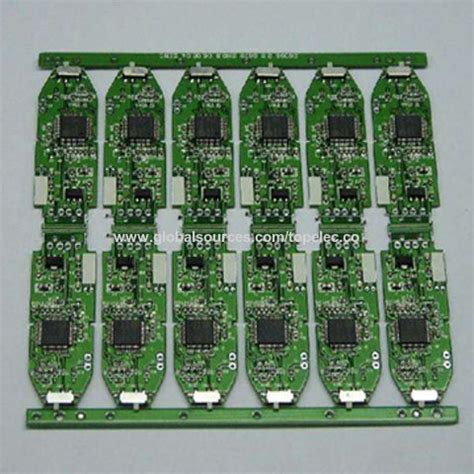
Prototyping to Volume PCB Production
Modern PCB assembly services bridge the gap between prototype development and full-scale production, offering OEMs a seamless transition from concept validation to market-ready products. For prototyping, high-mix, low-volume capabilities enable rapid iteration, allowing engineers to test designs with PCBA components before committing to mass manufacturing. Advanced factories leverage flexible manufacturing processes, ensuring that small batches maintain the same rigorous quality standards as high-volume runs.
As demand scales, production lines shift effortlessly to accommodate thousands of units without compromising precision. Automated pick-and-place systems, coupled with AI-driven quality inspection, ensure consistency across all volumes. For OEMs, this scalability eliminates the need to partner with multiple vendors, streamlining supply chains and reducing time-to-market. Circuits Central exemplifies this approach, providing end-to-end support from design-for-manufacturability (DFM) reviews to final packaging.
Critical to this process is the integration of real-time monitoring tools, which track yield rates and component traceability at every stage. Whether producing 50 prototypes or 50,000 units, PCB assembly factories prioritize adaptability, enabling OEMs to respond dynamically to market shifts while maintaining cost efficiency and reliability.

Tailored Electronics Manufacturing
Modern OEMs require PCB assembly solutions that adapt to their unique product specifications and market demands. A truly customized approach begins with understanding each client’s technical requirements, from component sourcing to final testing. PCBA service factories specializing in tailored manufacturing integrate flexible workflows, enabling adjustments in material selection, layer configurations, and solder mask options without compromising turnaround times.
By leveraging modular production lines, these facilities seamlessly transition between low-volume prototyping and high-volume runs, ensuring scalability for evolving OEM needs. For instance, Rocket PCB combines automated pick-and-place systems with manual oversight for complex assemblies, balancing speed with precision. This hybrid model supports niche applications—such as high-frequency boards or mixed-technology designs—while maintaining strict IPC-A-610 standards.
Critical to tailored PCB assembly is the ability to incorporate value-added services, including conformal coating, firmware loading, or functional testing, directly into the production flow. Such integration minimizes supply chain dependencies, reduces costs, and accelerates time-to-market. For OEMs targeting specialized industries like medical devices or aerospace, bespoke solutions ensure compliance with industry-specific certifications while optimizing performance parameters.
Ultimately, the goal is to align PCBA processes with the OEM’s product lifecycle, from initial design validation to volume scaling—all within a single, cohesive manufacturing partnership.
High-Volume PCB Assembly Expertise
Meeting the demands of large-scale production requires PCB assembly expertise that balances speed, consistency, and precision. Factories specializing in high-volume PCBA leverage advanced automation systems to maintain throughput while minimizing defects. These facilities employ optimized workflows, such as surface-mount technology (SMT) lines capable of placing thousands of components per hour, paired with precision-driven soldering processes. Scalability is further enhanced through modular production layouts, allowing rapid reconfiguration for varying batch sizes or design updates without disrupting timelines.
To ensure reliability, high-volume PCB assembly service factories implement multi-stage inspection protocols, including automated optical inspection (AOI) and X-ray testing, which verify solder joint integrity and component alignment. Additionally, robust supply chain partnerships enable seamless material sourcing, reducing lead times for critical components. This expertise empowers OEMs to scale production confidently, knowing their designs benefit from repeatable quality and cost-efficiency at every stage. By integrating real-time production monitoring and data analytics, manufacturers proactively address bottlenecks, ensuring projects stay on schedule even under tight deadlines.
Conclusion
In an era where electronics manufacturing demands both agility and precision, selecting the right PCB assembly partner is critical for OEMs aiming to scale efficiently. A dedicated PCBA service factory bridges the gap between prototyping and high-volume production by offering adaptive workflows and advanced automation, ensuring seamless transitions across product lifecycles. By integrating end-to-end quality assurance with flexible capacity planning, such facilities empower businesses to respond dynamically to market shifts while maintaining cost-efficiency.
The strategic advantage lies in leveraging PCB assembly expertise that aligns with evolving technical requirements—whether optimizing designs for manufacturability or scaling outputs without compromising reliability. Factories specializing in PCBA solutions combine cutting-edge technologies with rigorous testing protocols, reducing time-to-market while mitigating risks in complex electronics projects. For OEMs, this translates to sustained competitiveness through scalable innovation, where every stage—from initial concept validation to mass production—is underpinned by precision engineering and operational transparency. Ultimately, the right partnership ensures that scalability is not just a feature but a foundational pillar of long-term success.
Frequently Asked Questions
What distinguishes a scalable PCB assembly solution for OEM projects?
Scalable PCBA services adapt to fluctuating production demands through modular workflows and adjustable resource allocation. This ensures seamless transitions from low-volume prototyping to high-volume manufacturing without compromising quality or lead times.
How do PCB assembly factories ensure consistent quality across batch sizes?
Certified PCBA providers implement automated optical inspection (AOI), X-ray testing, and functional validation protocols. Multi-stage quality gates maintain compliance with IPC-A-610 standards, regardless of order volume.
Can advanced automation reduce costs for small-batch OEM orders?
Yes. Smart manufacturing technologies like AI-driven component placement and real-time process monitoring optimize material usage and minimize errors, making PCB assembly cost-effective even for prototype runs.
What timelines should OEMs expect for full-scale production ramp-ups?
Most PCBA factories achieve 10-15-day turnarounds for initial batches after design approval, leveraging pre-qualified component inventories and parallel production lines to accelerate scaling.
How do PCB assembly services handle component sourcing challenges?
Established providers maintain vetted supplier networks and component lifecycle management systems to mitigate shortages. Dual sourcing strategies and onsite warehousing further ensure BOM stability.
Ready to Optimize Your OEM Production?
For tailored PCB assembly solutions that scale with your operational needs, please click here to explore technical specifications and request a customized quote.