
Handling Digital Power, Analog Power, Digital Ground, and Analog Ground in PCB Design
1. Introduction
Printed Circuit Board (PCB) design is a critical aspect of electronic system development, especially when dealing with mixed-signal circuits that incorporate both digital and analog components. One of the most challenging aspects of such designs is managing power and ground planes to minimize noise, crosstalk, and interference. Digital and analog circuits have different noise characteristics, and improper handling of their power and ground connections can lead to signal integrity issues, reduced performance, or even complete circuit failure.
This article explores best practices for managing digital power (VDD), analog power (AVDD), digital ground (DGND), and analog ground (AGND) in PCB designs. We will discuss separation techniques, grounding strategies, and layout considerations to ensure optimal performance.
2. Understanding Digital and Analog Power and Ground
2.1 Digital Power (VDD) and Digital Ground (DGND)
Digital circuits operate with fast-switching signals (e.g., microcontrollers, FPGAs, memory chips), which generate high-frequency noise due to rapid current changes (di/dt). This noise can couple into other parts of the circuit if not properly managed.
- Digital Power (VDD): Supplies power to digital components.
- Digital Ground (DGND): Provides the return path for digital currents.
2.2 Analog Power (AVDD) and Analog Ground (AGND)
Analog circuits (e.g., sensors, amplifiers, ADCs/DACs) are sensitive to noise because small voltage fluctuations can distort signals.
- Analog Power (AVDD): Must be clean and stable to avoid introducing noise into sensitive analog components.
- Analog Ground (AGND): Should be kept free from digital noise to maintain signal integrity.
3. Key Challenges in Mixed-Signal PCB Design
When digital and analog circuits coexist on the same PCB, several issues can arise:
- Ground Loops: Poor grounding can create loops that pick up noise.
- Crosstalk: High-speed digital signals can induce noise in analog traces.
- Power Supply Noise: Switching regulators and digital ICs can inject noise into the power rails.
- Impedance Mismatch: Improper return paths can lead to signal reflections
To mitigate these issues, careful planning of power and ground distribution is essential.
4. Best Practices for Handling Digital and Analog Power and Ground
4.1 Separate Power Planes
- Use dedicated power planes for digital (VDD) and analog (AVDD) supplies.
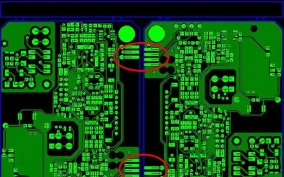
- If a split plane is used, ensure sufficient spacing between digital and analog sections.
- Use ferrite beads or inductors to isolate analog power from digital power while allowing DC current flow.
4.2 Proper Grounding Strategies
There are three primary grounding approaches in mixed-signal PCBs:
A. Single Ground Plane (Unified Ground)
- Suitable for low-frequency or low-noise designs.
- A single ground plane reduces impedance but risks noise coupling.
- Best for simple designs where digital noise is minimal.
B. Split Ground Planes (Separate AGND and DGND)
- Digital and analog grounds are physically separated.
- Helps prevent high-frequency digital noise from affecting analog signals.
- Challenge: Can create ground loops if not properly connected.
C. Hybrid Grounding (Single Plane with Partitioning)
- A single ground plane with careful partitioning.
- Analog and digital sections are separated but connected at a single point (star ground) near the power supply.
- Minimizes ground loops while reducing noise coupling.
Recommendation: For most mixed-signal designs, a hybrid approach with a single ground plane and strategic partitioning is optimal.
4.3 Proper Component Placement
- Group analog and digital components separately to minimize interference.
- Place ADCs/DACs at the boundary between analog and digital sections.
- Route high-speed digital signals away from analog traces.
4.4 Power Supply Decoupling
- Use decoupling capacitors near power pins:
- Digital ICs: 0.1 µF ceramic capacitors for high-frequency noise.
- Analog ICs: Additional 1–10 µF capacitors for stability.
- Place capacitors as close as possible to the power pins.
4.5 Signal Routing Considerations
- Avoid crossing analog and digital traces. If unavoidable, use orthogonal routing.
- Use guard rings or ground shields around sensitive analog traces.
- Keep high-speed digital signals (e.g., clocks) away from analog paths.
4.6 Use of Ferrite Beads and Inductors
- Ferrite beads can block high-frequency noise between digital and analog power supplies.
- Ensure DC resistance is low to avoid voltage drops.
4.7 Star Grounding for Critical Components
- Connect all ground returns from sensitive analog components to a single point (star ground).
- Prevents ground loops and reduces noise coupling.
4.8 Proper Layer Stackup
- In multilayer PCBs, dedicate layers to power and ground.
- Example stackup:
- Top Layer: Signals (digital & analog)
- Layer 2: Ground plane (solid)
- Layer 3: Power planes (split if necessary)
- Bottom Layer: Additional signals
5. Common Mistakes to Avoid
- Floating Grounds: Never leave AGND or DGND unconnected.
- Excessive Ground Splits: Too many splits increase return path impedance.
- Poor Decoupling: Inadequate capacitor placement leads to power noise.
- Ignoring Return Paths: High-speed signals need a clear return path.
6. Conclusion
Managing digital power, analog power, digital ground, and analog ground in PCB design requires careful planning to avoid noise and interference. Key strategies include:
- Separating power supplies (VDD & AVDD).
- Using a hybrid ground plane with a single-point connection.
- Proper component placement and routing to minimize crosstalk.
- Effective decoupling and filtering for stable power delivery.
By following these best practices, designers can achieve a robust mixed-signal PCB with optimal signal integrity and minimal noise interference.