
Reliable and Efficient Industrial PCB Connections: How to Achieve It with Ease
Introduction
In the rapidly evolving world of industrial electronics, ensuring reliable and efficient Printed Circuit Board (PCB) connections is critical. Industrial environments often expose electronic systems to harsh conditions, including extreme temperatures, vibrations, moisture, and electromagnetic interference (EMI). A failure in PCB connectivity can lead to costly downtime, safety hazards, and reduced productivity.
This article explores the key strategies for achieving robust and high-performance PCB connections in industrial applications. We will discuss best practices in connector selection, PCB design, soldering techniques, and maintenance to ensure long-term reliability.
1. Choosing the Right Connectors for Industrial PCBs
1.1 Understanding Industrial Requirements
Industrial applications demand connectors that can withstand mechanical stress, corrosion, and high temperatures. Key considerations include:
- Durability: Connectors must resist vibration and shock.
- Environmental Resistance: Protection against dust, moisture, and chemicals.
- Current and Voltage Ratings: Must match the application’s power requirements.
- EMI/RFI Shielding: Essential for high-noise environments.
1.2 Common Connector Types for Industrial Use
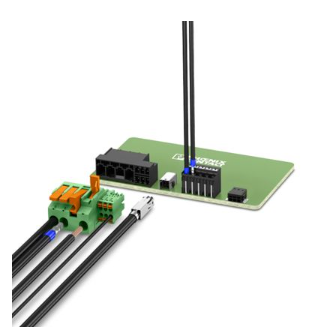
- Board-to-Board Connectors: Provide secure connections between stacked or parallel PCBs.
- Wire-to-Board Connectors: Ideal for connecting external wiring harnesses.
- Terminal Blocks: Useful for modular and field-replaceable connections.
- Circular Connectors: Offer robust sealing for harsh environments.
1.3 High-Performance Connector Brands
Leading manufacturers like TE Connectivity, Molex, Amphenol, and Hirose provide industrial-grade connectors with features such as:
- IP67/IP68 Ratings: Water and dust resistance.
- Locking Mechanisms: Prevents accidental disconnections.
- Gold-Plated Contacts: Enhances conductivity and corrosion resistance.
2. Optimizing PCB Layout for Reliable Connections
2.1 Proper Trace Routing
- Avoid sharp angles (use 45° or curved traces) to reduce signal reflections.
- Ensure adequate trace width for high-current paths.
- Minimize crosstalk by spacing high-speed signals appropriately.
2.2 Grounding and Power Distribution
- Use a solid ground plane to reduce noise.
- Implement star grounding for sensitive analog circuits.
- Place decoupling capacitors near power pins to stabilize voltage.
2.3 Thermal Management
- Use thermal vias to dissipate heat in high-power components.
- Consider metal-core PCBs for extreme thermal conditions.
3. Soldering and Assembly Best Practices
3.1 Soldering Techniques
- Reflow Soldering: Ideal for surface-mount devices (SMDs).
- Wave Soldering: Best for through-hole components.
- Selective Soldering: Useful for mixed-technology boards.
3.2 Inspection and Testing
- Automated Optical Inspection (AOI): Detects soldering defects.
- X-Ray Inspection: Checks hidden solder joints (e.g., BGA components).
- In-Circuit Testing (ICT): Validates electrical connections.
3.3 Conformal Coating
Applying a protective coating (acrylic, silicone, or urethane) helps prevent corrosion and short circuits in humid or chemically aggressive environments.

4. Ensuring Long-Term Reliability
4.1 Stress Testing
- Vibration and Shock Testing: Ensures connectors remain secure.
- Thermal Cycling: Verifies performance under temperature fluctuations.
- HALT/HASS Testing: Accelerated life testing for reliability validation.
4.2 Maintenance and Field Repairability
- Use modular connectors for easy replacement.
- Implement strain relief in cable connections.
- Regularly inspect connections for wear and corrosion.
5. Future Trends in Industrial PCB Connectivity
5.1 Miniaturization and High-Speed Data
- High-Density Interconnects (HDI): Enable smaller, faster PCBs.
- PCIe and USB4: Support high-speed industrial communication.
5.2 Wireless and IoT Integration
- Wireless PCB Interconnects: Reduce cabling complexity.
- Smart Connectors: Embedded sensors for predictive maintenance.
Conclusion
Achieving reliable and efficient industrial PCB connections requires careful selection of components, optimized design, and rigorous testing. By following best practices in connector choice, PCB layout, soldering, and maintenance, engineers can ensure robust performance even in the harshest environments.
As technology advances, innovations like high-speed interconnects and smart connectors will further enhance industrial PCB reliability. By staying informed and adopting these strategies, manufacturers can minimize failures, reduce downtime, and improve overall system efficiency.
Would you like additional details on any specific aspect, such as EMI shielding techniques or advanced soldering methods?