
Avionics PCB Assemblies: Design, Manufacturing, and Reliability Considerations
Introduction
Avionics, or aviation electronics, play a critical role in modern aircraft, ensuring safe and efficient operation. At the heart of these systems are Printed Circuit Board (PCB) assemblies, which provide the foundation for electronic control, communication, navigation, and monitoring. Given the harsh operating conditions in aerospace environments, avionics PCB assemblies must meet stringent reliability, durability, and performance standards.
This article explores the key aspects of avionics PCB assemblies, including design considerations, manufacturing processes, material selection, testing, and compliance with industry standards.
1. Importance of PCB Assemblies in Avionics
Avionics systems rely on PCBs to integrate complex electronic functions, such as:
- Flight control systems (autopilot, fly-by-wire)
- Communication systems (radios, transponders)
- Navigation systems (GPS, inertial guidance)
- Monitoring and diagnostics (engine sensors, health monitoring)
- In-flight entertainment and cabin management
Due to the safety-critical nature of aviation, PCB assemblies must operate flawlessly under extreme conditions, including:
- High vibration and mechanical stress
- Wide temperature ranges (-55°C to +125°C)
- High humidity and pressure changes
- Electromagnetic interference (EMI) and signal integrity challenges
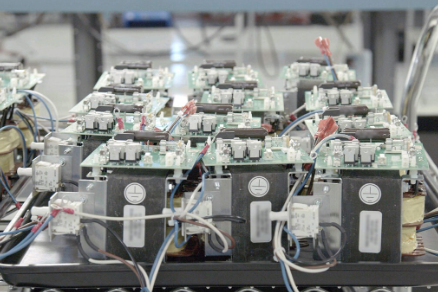
2. Design Considerations for Avionics PCBs
2.1 High-Density Interconnect (HDI) and Multilayer PCBs
Modern avionics require high-density PCBs with multiple layers (often 10+ layers) to accommodate complex circuitry while maintaining compact form factors. Key techniques include:
- Microvias and blind/buried vias for space-saving interconnects
- Controlled impedance routing for high-speed signals (RF, data buses)
- Thermal management with embedded heat sinks or metal-core PCBs
2.2 Material Selection
Avionics PCBs demand materials with high thermal stability, low outgassing, and excellent mechanical strength. Common choices include:
- FR-4 High-Tg (Tg > 170°C) for standard applications
- Polyimide for flexible PCBs in tight spaces
- Ceramic-based substrates for high-power applications
- PTFE (Teflon) for RF/microwave circuits
2.3 EMI/EMC Shielding
Aircraft electronics must comply with DO-160 (Environmental Conditions and Test Procedures for Airborne Equipment) for electromagnetic compatibility (EMC). Key strategies include:
- Ground planes and shielding layers
- Proper grounding techniques (star grounding, chassis grounding)
- Conductive coatings and enclosures
2.4 Thermal Management
Heat dissipation is critical to prevent component failure. Solutions include:
- Thermal vias and heat sinks
- Metal-core PCBs (e.g., aluminum or copper)
- Conformal coatings for heat resistance
3. Manufacturing and Assembly Processes
3.1 PCB Fabrication
Avionics PCBs require tight tolerances and high-quality fabrication processes:
- Laser drilling for microvias
- Automated Optical Inspection (AOI) for defect detection
- Controlled impedance testing
3.2 Component Selection and Assembly
- Use of MIL-SPEC or aerospace-grade components
- Surface-mount technology (SMT) for miniaturization
- Through-hole components for high-reliability connections
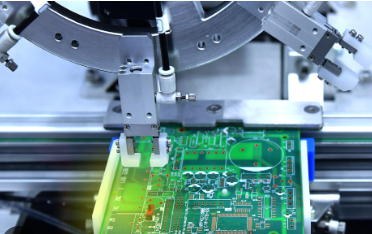
- Automated pick-and-place and reflow soldering
3.3 Conformal Coating and Protection
To protect against moisture, dust, and corrosion, avionics PCBs often use:
- Parylene coating (chemical vapor deposition for thin, uniform protection)
- Acrylic, silicone, or epoxy coatings
4. Testing and Quality Assurance
Avionics PCBs undergo rigorous testing to ensure reliability:
4.1 Environmental Testing (DO-160 Compliance)
- Vibration and shock testing
- Thermal cycling (-55°C to +125°C)
- Humidity and salt fog exposure
4.2 Electrical Testing
- Continuity and insulation resistance tests
- High-voltage dielectric withstand testing
- Signal integrity and EMI/EMC testing
4.3 Functional Testing
- In-circuit testing (ICT)
- Flying probe testing
- Burn-in testing for long-term reliability
5. Industry Standards and Certifications
Avionics PCB assemblies must comply with:
- IPC-6012 (Qualification and Performance for Rigid PCBs)
- IPC-A-610 (Acceptability of Electronic Assemblies)
- AS9100 (Aerospace Quality Management System)
- DO-254 (Design Assurance for Airborne Electronics Hardware)
- DO-160 (Environmental Testing for Avionics)
6. Future Trends in Avionics PCBs
- Increased use of additive manufacturing (3D-printed electronics)
- Integration of AI for predictive maintenance
- More advanced HDI and flexible PCBs for next-gen aircraft
- Enhanced cybersecurity measures for connected avionics
Conclusion
Avionics PCB assemblies are a cornerstone of modern aircraft electronics, requiring precision engineering, robust materials, and rigorous testing. As aviation technology evolves, PCBs will continue to advance in density, reliability, and functionality, supporting next-generation avionics systems. Manufacturers must adhere to strict aerospace standards while innovating to meet future demands.
By focusing on design optimization, material science, and quality assurance, the aerospace industry can ensure that avionics PCBs remain safe, reliable, and efficient for years to come.