
What are the key points to pay attention to in PCB design?
PCB design is very important in the entire circuit board, and it determines the foundation of the entire PCB. This article summarizes some key points that need to be paid attention to in PCB design for reference.
1.Select PCB material
The selection of PCB material must strike a balance between meeting design requirements and mass production and cost. Design requirements include electrical and mechanical parts. Usually, this material issue is more important when designing very high-speed PCB boards (frequencies greater than GHz). For example, the dielectric loss of the commonly used FR-4 material at a frequency of several GHz will have a great impact on signal attenuation and may not be suitable. In terms of electrical, pay attention to whether the dielectric constant and dielectric loss are suitable for the designed frequency.
2.Avoid high-frequency interference
The basic idea of avoiding high-frequency interference is to minimize the interference of the electromagnetic field of high-frequency signals, which is the so-called crosstalk. You can increase the distance between high-speed signals and analog signals, or add ground guard/shunt traces next to the analog signals, and pay attention to the noise interference of digital ground to analog ground.
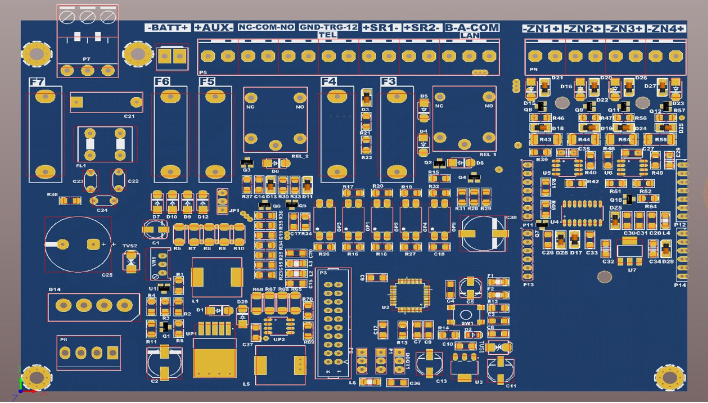
3.Solve the problem of signal integrity
Signal integrity is basically an impedance matching problem. The factors that affect impedance matching include the architecture and output impedance of the signal source, the characteristic impedance of the routing, the characteristics of the load end, and the topology of the routing. The solution is to rely on termination and adjust the topology of the routing.
4.Implement differential wiring
There are two points to note when routing differential pairs. One is that the lengths of the two lines should be as equal as possible, and the other is that the spacing between the two lines (this spacing is determined by the differential impedance) should remain unchanged, that is, they should remain parallel. There are two parallel methods, one is that the two lines are routed on the same routing layer (side-by-side), and the other is that the two lines are routed on the upper and lower adjacent layers (over-under). Generally, the former side-by-side is more commonly implemented.
5.Implement differential wiring in the case of a clock signal line with only one output end
It is meaningful to use differential wiring only when the signal source and the receiving end are differential signals. Therefore, differential wiring cannot be used for clock signals with only one output end.
6.Matching resistors between differential line pairs at the receiving end
Matching resistors between differential line pairs at the receiving end are usually added, and their values should be equal to the value of differential impedance. This will improve the signal quality.
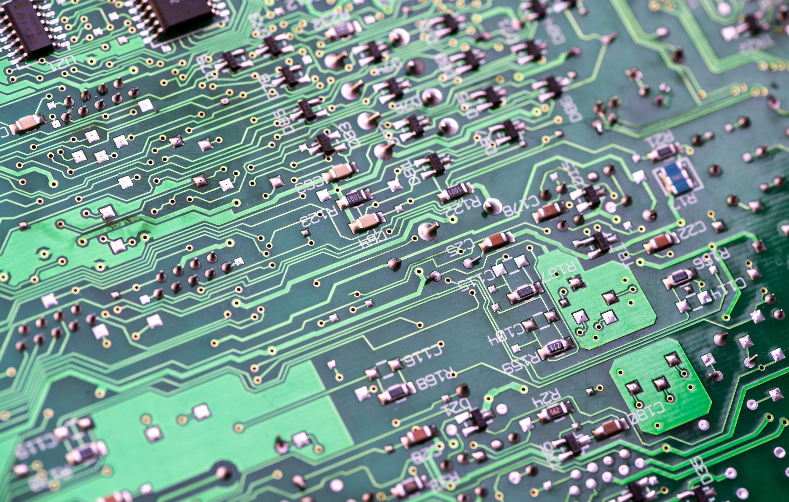
7.The wiring of differential pairs should be close and parallel
The wiring of differential pairs should be appropriately close and parallel. The so-called appropriate closeness is because this spacing will affect the value of differential impedance, which is an important parameter for designing differential pairs. Parallel is also required because the consistency of differential impedance must be maintained. If the two lines are sometimes far and sometimes close, the differential impedance will be inconsistent, which will affect signal integrity and timing delay.
8.Dealing with some theoretical conflicts in actual wiring
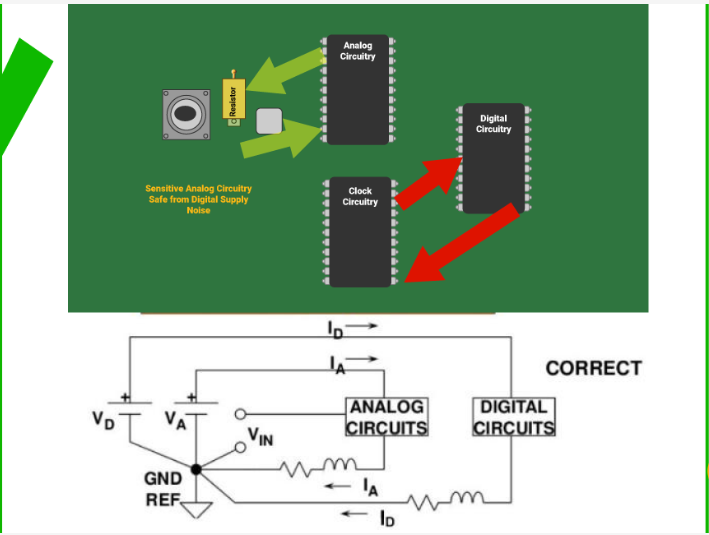
a. Basically, it is right to separate and isolate analog/digital grounds. It should be noted that the signal routing should try not to cross the split place (moat), and do not make the return current path of the power supply and signal too large.
b. The crystal oscillator is an analog positive feedback oscillation circuit. To have a stable oscillation signal, the loop gain and phase specifications must be met. However, the oscillation specifications of this analog signal are easily disturbed. Even if ground guard traces are added, it may not be possible to completely isolate the interference. Moreover, if they are too far away, the noise on the ground plane will also affect the positive feedback oscillation circuit. Therefore, the distance between the crystal oscillator and the chip must be as close as possible.
c. It is true that there are many conflicts between high-speed wiring and EMI requirements. But the basic principle is that the resistors, capacitors or ferrite beads added due to EMI cannot cause some electrical characteristics of the signal to be inconsistent with the specifications. Therefore, it is best to use the techniques of arranging routing and PCB stacking to solve or reduce EMI problems, such as high-speed signals on the inner layer. Finally, use resistors, capacitors or ferrite beads to reduce damage to the signal.
9.Solve the contradiction between manual wiring and automatic wiring of high-speed signals
Most of the automatic wiring machines of the current stronger wiring software have set constraints to control the winding method and the number of vias. The winding engine capabilities and constraint setting items of various EDA companies are sometimes far apart. For example, whether there are enough constraints to control the winding mode of the serpentine, whether the spacing of the differential pair can be controlled, etc. This will affect whether the routing method generated by automatic routing can meet the designer’s ideas. In addition, the difficulty of manually adjusting the routing is also absolutely related to the ability of the winding engine. For example, the pushing ability of the routing, the pushing ability of the via, and even the pushing ability of the routing pair copper, etc. Therefore, choosing a router with a strong winding engine capability is the solution.