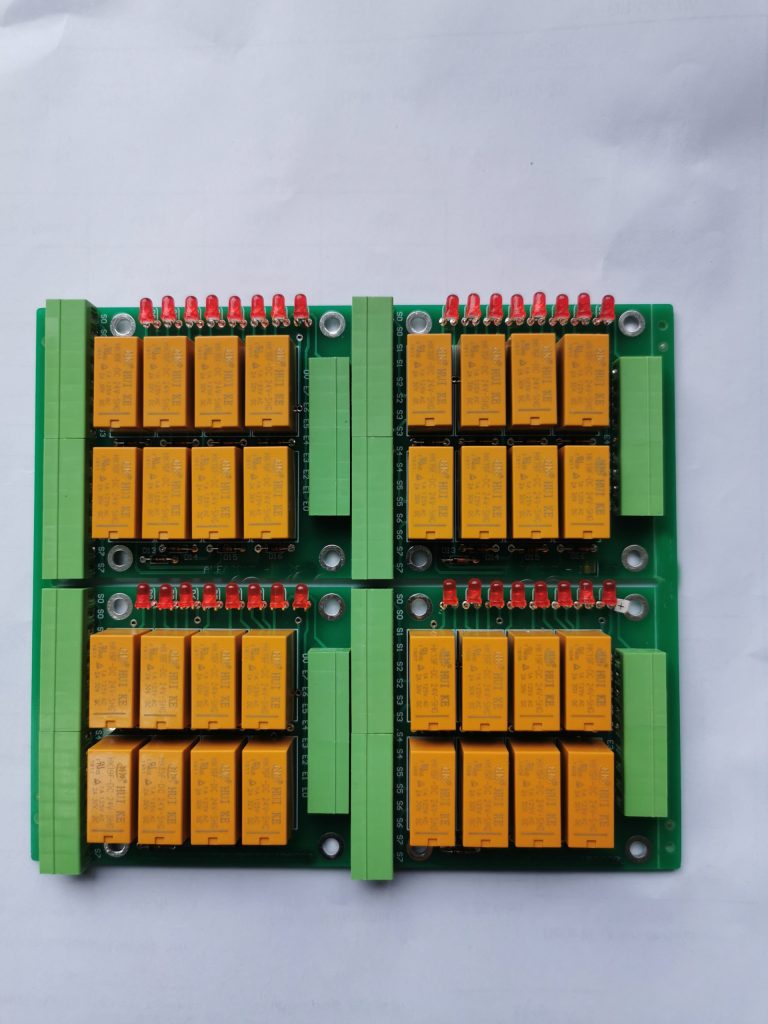
About panelization and precautions in PCB design
In PCB design, when PCB is mass-produced, PCB panelization is also a very important matter. This not only involves the quality standards of PCB circuit boards, but also affects the cost of PCB production. How to reasonably and effectively panelize while ensuring the quality of PCB circuit boards, thereby saving raw materials, is a problem that production companies pay great attention to solving.
1.Panelization connection method
There are two connection methods for PCB panelization connection, one is V-cut (as shown in Figure 1-1), and the other is stamp hole connection (as shown in Figure 1-2).
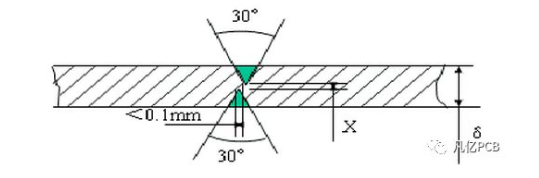
Figure 1-1 PCB V-cut design

Figure 1-2 PCB stamp hole design
V-cut is generally suitable for PCBs with rectangular shapes. It is characterized by neat edges after separation and low processing cost. It is recommended to use it first, as shown in Figure 1-3;
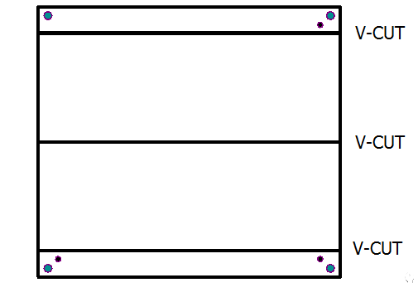
Figure 1-3 V-cut panel
Stamp holes are generally suitable for irregular panel layouts. For example, the “L”-shaped frame structure of MID often uses the linking method of stamp holes for panel layout, as shown in Figure 1-4;
2.Number of panels:
The size of the entire panel must be calculated based on the size of a single PCB board. It cannot exceed the maximum size range of the PCB (the length of the PCB panel must not exceed 250mm), and too many panels will affect the accuracy of the panel position and the accuracy of the patch. Generally, the main board of MID is 2 panels, and the sub-boards of keypads and LCD panels do not exceed 6 panels. The sub-boards of special areas are determined according to the specific situation.
3.Requirements for stamp hole link strips
In a PCB layout, the number of link strips should be appropriate, generally 2-3 link strips, so that the strength of the PCB meets the requirements of the production process and does not break easily.
As shown in Figure 1-5, when designing the link strip, it is generally necessary to design a length of 4-5mm, the hole is a non-metallized hole, the size is generally 0.3mm-0.5mm, and the spacing between holes is 0.8-1.2mm;
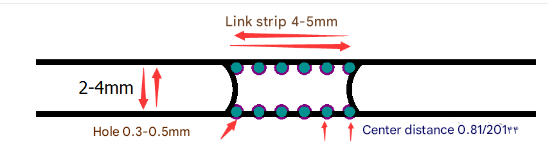
Figure 1-5 Design of link strips
4.Process edge
When the board is densely populated and the board edge space is limited, it is necessary to increase the process edge for the transfer edge of the PCB board during SMT, generally 3-5mm. On the process edge, generally one positioning hole is added to each of the four corners, and optical positioning points are added to the three corners to strengthen the positioning of the machine, as shown in Figure 1-6.
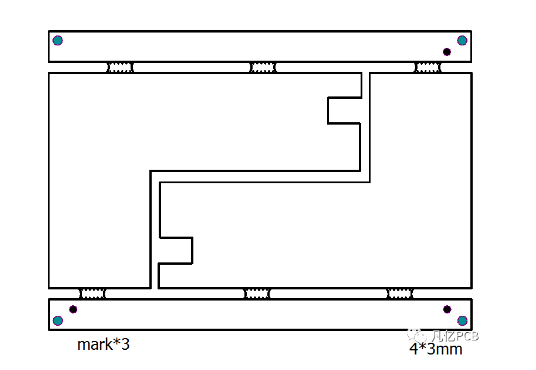
Figure 1-6 Design of process edge