Aerospace PCB Assembly: Reliability Standards for Extreme Environments
Key Takeaways
Aerospace PCB assembly processes prioritize reliability under conditions ranging from extreme temperatures to intense mechanical stress. Central to this is the integration of ruggedization techniques—such as conformal coating and advanced solder masking—that protect PCBA components from moisture, radiation, and vibration. Compliance with military-grade standards (e.g., IPC-6012 Class 3) ensures traceability, material integrity, and defect-free manufacturing, critical for mission-critical systems.
Thermal management strategies, including high-performance substrates like polyimide and ceramic-filled laminates, mitigate heat buildup in low-pressure environments. Additionally, rigorous environmental stress screening (ESS) validates PCB assembly durability against thermal cycling, shock, and vacuum exposure. By aligning design, material selection, and testing protocols, aerospace PCBA achieves the zero-failure thresholds demanded by satellite, avionics, and deep-space applications.
Rugged PCB Design for Aerospace Use
Aerospace applications demand PCB assembly processes that prioritize structural resilience against extreme mechanical stresses. Ruggedization techniques such as multi-layer stacking, edge reinforcement, and conformal coating are critical to ensure circuit boards withstand vibration, shock, and G-forces during launch and flight. For instance, PCBA designs often integrate reinforced through-holes and thicker copper traces (up to 3 oz) to enhance durability.
"In aerospace, every gram and millimeter matters. Rugged PCB designs must balance weight reduction with uncompromising structural integrity." – Senior Aerospace Engineer
A key consideration is material selection. High-performance substrates like polyimide or ceramic-filled laminates provide superior thermal stability and mechanical strength compared to standard FR-4. Below is a comparison of common aerospace-grade materials:
| Material | Thermal Conductivity (W/mK) | Flexural Strength (MPa) | Key Application |
|---|---|---|---|
| Polyimide | 0.2 | 450 | High-vibration zones |
| Ceramic-Filled | 1.5 | 600 | Thermal shock environments |
| PTFE Composite | 0.3 | 300 | RF/antenna systems |
Tip: To prevent delamination in vacuum conditions, use adhesives with low outgassing properties and validate designs through thermal cycling tests (-55°C to 125°C). Additionally, military-grade compliance standards like MIL-PRF-31032 mandate strict tolerances for trace spacing and solder joint quality, ensuring PCBA reliability in mission-critical systems. Advanced simulation tools, such as finite element analysis (FEA), further optimize board layouts to mitigate stress concentrations. By integrating these practices, aerospace PCB assembly achieves the robustness required for sustained operation in extraterrestrial or high-altitude environments.

Thermal Handling in Aerospace PCBs
Effective thermal management in aerospace PCB assembly is critical to ensuring performance stability under extreme temperature fluctuations. Unlike commercial applications, aerospace systems face operational ranges from cryogenic conditions in deep space to intense heat during atmospheric re-entry. To mitigate thermal stress, engineers prioritize materials with low coefficient of thermal expansion (CTE) and high thermal conductivity, such as polyimide substrates or ceramic-filled laminates. Advanced PCBA designs often incorporate thermal vias and embedded heatsinks to dissipate heat efficiently, preventing delamination or solder joint failures.
Military-grade standards, including IPC-6012DS and MIL-PRF-31032, mandate rigorous thermal cycling tests that simulate decades of mission-critical operations within hours. These protocols validate whether PCB assembly techniques—like selective soldering or conformal coating—can withstand rapid temperature transitions without compromising electrical integrity. Additionally, thermal simulations during the design phase help identify hotspots, enabling layout adjustments to optimize airflow and component placement.
Transitioning from ruggedization strategies, thermal handling directly supports the broader objective of aerospace PCB reliability assurance. By balancing material innovation with precision manufacturing, the industry ensures that circuits maintain functionality even when exposed to the harshest thermal environments encountered in aviation and space exploration.
Military Standards for PCB Assembly
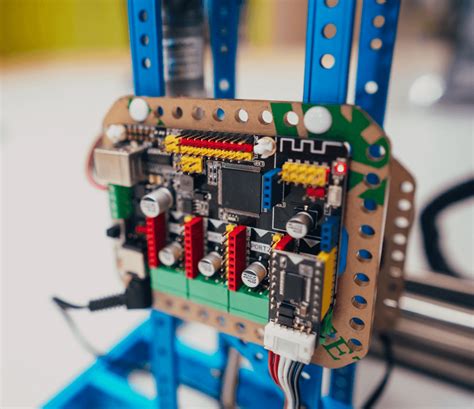
Aerospace PCB assembly processes must adhere to stringent military specifications to ensure performance in mission-critical systems. Standards such as MIL-PRF-31032 and MIL-STD-883 define rigorous testing protocols for thermal cycling, vibration resistance, and shock tolerance, which are non-negotiable for applications in extreme environments. These requirements mandate specialized PCBA techniques, including the use of high-reliability soldering alloys, conformal coatings, and substrates capable of withstanding rapid temperature fluctuations.
Compliance extends beyond component selection to encompass traceability and documentation. For instance, military-grade PCB assembly demands full material disclosure, lot code tracking, and adherence to IPC-A-610 Class 3 criteria for workmanship. Manufacturers must also validate designs through accelerated life testing and environmental stress screening (ESS) to simulate decades of operational stress within compressed timelines.
While commercial PCBA may prioritize cost efficiency, aerospace applications require alignment with standards like MIL-STD-202 for humidity resistance and MIL-STD-461 for electromagnetic compatibility. This ensures seamless integration with avionics systems while mitigating risks of signal interference or corrosion. By embedding military-grade compliance into every production phase, aerospace PCB assembly achieves the durability needed for missions where failure is not an option.
Aerospace PCB Reliability Assurance
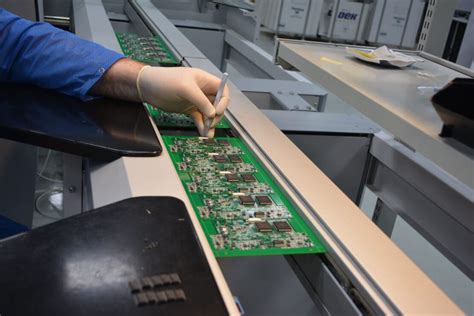
Achieving mission-critical reliability in aerospace PCB assembly demands rigorous adherence to failure-mode-resistant design principles and advanced manufacturing controls. PCBA destined for extreme environments must withstand temperature fluctuations (-55°C to 125°C), mechanical shocks exceeding 50G, and prolonged exposure to humidity or radiation. To ensure robustness, manufacturers implement multi-stage validation processes, including thermal cycling tests, vibration simulations, and accelerated life testing aligned with MIL-STD-883 and IPC-6012EM standards.
Critical to reliability assurance is the integration of high-reliability components—such as hermetically sealed connectors and radiation-hardened ICs—paired with controlled impedance routing to minimize signal degradation. Conformal coatings like Parylene or silicone-based materials are applied post-PCBA to protect against contaminants and moisture ingress. Additionally, traceability protocols ensure every layer, solder joint, and component meets aerospace-grade specifications, with documentation spanning lot codes, material certifications, and process audits.
Building on ruggedized design and thermal management strategies discussed earlier, reliability assurance also hinges on redundancy architectures. Dual-redundant circuits and error-correcting memory modules mitigate single-point failures, while design-for-testability (DFT) features enable in-field diagnostics. These layered safeguards ensure aerospace systems maintain uninterrupted functionality, even when operating at the edge of physical performance limits.

PCB Materials in Extreme Aerospace
Selecting appropriate materials for PCB assembly in aerospace applications requires balancing performance, durability, and compliance with stringent environmental demands. High-reliability substrates such as polyimide or ceramic-filled laminates are prioritized for their ability to withstand extreme temperature fluctuations, from cryogenic conditions in orbit to intense heat during re-entry. These materials maintain structural integrity while minimizing thermal expansion mismatches that could compromise solder joints or interconnects. For PCBA destined for military or space missions, copper weights and dielectric properties are optimized to handle high-frequency signals and radiation exposure without degradation.
Advanced polymer coatings and conformal shields play a dual role, providing both moisture resistance and protection against corrosive atmospheres encountered in stratospheric or marine-adjacent deployments. Material choices align with standards like IPC-6012DS and MIL-PRF-31032, which mandate rigorous testing for outgassing, ionic contamination, and long-term stability under vacuum conditions. Manufacturers often integrate embedded passive components directly into the substrate to reduce failure points, a critical consideration when repair post-launch is impossible. This focus on material science ensures aerospace PCB assemblies meet mission lifetimes measured in decades, even when operating at the edge of Earth’s atmosphere or beyond.
Testing Aerospace PCB Durability
Rigorous testing protocols form the backbone of ensuring PCB assembly reliability in aerospace applications, where failures can have catastrophic consequences. Mission-critical systems demand validation under simulated extreme conditions, including rapid thermal cycling, mechanical vibration, and prolonged exposure to humidity. Advanced PCBA qualification processes often involve accelerated life testing (ALT), which subjects boards to stress levels exceeding operational norms to identify potential weaknesses in materials or solder joints.
Compliance with MIL-STD-883 and IPC-6012 standards requires specialized equipment, such as thermal shock chambers and vibration tables, to replicate the harsh environments encountered during launch, orbital operations, and re-entry. Non-destructive testing (NDT) methods, like automated optical inspection (AOI) and X-ray imaging, are employed to detect microcracks or delamination without compromising board integrity. For high-altitude applications, conformal coating performance is evaluated through salt spray and outgassing tests to ensure protection against corrosive atmospheres and vacuum conditions.
Transitioning from design to deployment, these validation processes bridge the gap between theoretical ruggedization and real-world performance. By integrating failure mode analysis into test cycles, engineers refine thermal management strategies and material selections, ensuring aerospace-grade PCBA meets the zero-defect thresholds demanded by satellite, avionics, and deep-space systems.
Environmental Stress in PCB Assembly
Aerospace PCB assembly (PCBA) operates under uniquely demanding conditions, requiring designs that withstand extreme thermal cycling, intense vibrations, and prolonged exposure to corrosive atmospheres. These environmental stressors challenge the structural integrity of circuit boards, making ruggedization a non-negotiable priority. For instance, temperature fluctuations ranging from -55°C to +125°C can induce microfractures in solder joints, while high-altitude radiation may degrade unprotected components.
To address these challenges, engineers employ conformal coatings and advanced encapsulation materials to shield sensitive circuitry from moisture, dust, and chemical contaminants. Additionally, mechanical reinforcement techniques—such as through-hole plating and edge-bonding—enhance vibration resistance in PCBA layouts. Compliance with military-grade standards like MIL-PRF-31032 ensures boards survive shock testing equivalent to 50G impacts, a critical benchmark for aerospace applications.
Thermal management strategies further mitigate stress, integrating materials with low coefficients of thermal expansion (CTE) to minimize warping during rapid temperature shifts. By combining rigorous material selection, precision manufacturing, and adherence to IPC-6012DS specifications, aerospace PCB assembly achieves the resilience needed for missions where failure is not an option. This multilayered approach ensures reliability even when operating at the edge of physical tolerances.
Conclusion
The demanding nature of aerospace applications necessitates PCB assembly processes that prioritize mission-critical reliability under extreme conditions. From thermal cycling in orbital environments to vibration resistance during high-speed maneuvers, every aspect of PCBA design must align with rigorous military-grade standards such as MIL-PRF-31032 and MIL-STD-883. Achieving this requires a holistic approach: selecting PCB materials with high glass transition temperatures, integrating ruggedization techniques like conformal coating, and validating performance through accelerated life testing.
While advanced PCB assembly technologies enable robust solutions, the true measure of success lies in seamless interoperability between components and systems. Manufacturers must balance thermal management strategies—such as embedded heat sinks—with weight constraints, ensuring compliance without compromising structural integrity. Ultimately, the convergence of precision engineering, material science, and stringent testing protocols defines the backbone of aerospace-grade PCBA, safeguarding functionality in environments where failure is not an option.
Frequently Asked Questions
What distinguishes aerospace PCB assembly from commercial PCBA processes?
Aerospace PCB assembly requires adherence to military-grade specifications (e.g., IPC-6012 Class 3) to ensure resilience in extreme temperatures, vibrations, and radiation. Unlike commercial PCBA, components undergo rigorous thermal cycling tests and conformal coating to prevent corrosion in high-altitude or vacuum conditions.
How do thermal management solutions enhance reliability in aerospace PCBs?
Advanced heat dissipation techniques, such as embedded copper cores or ceramic substrates, mitigate thermal stress. PCB assembly for aerospace integrates thermal vias and high-conductivity materials to maintain stable operation across -55°C to 125°C ranges, critical for avionics and satellite systems.
What certifications are mandatory for aerospace PCB manufacturers?
Compliance with MIL-PRF-31032, AS9100D, and NASA-STD-8739 is non-negotiable. These standards validate PCBA processes for traceability, material selection, and failure analysis, ensuring mission-critical reliability in defense and space applications.
Why is ruggedization vital for aerospace-grade PCBs?
Ruggedized designs incorporate anti-vibration mounts, hermetic sealing, and radiation-hardened components to withstand mechanical shocks and electromagnetic interference. This prevents signal degradation in PCB assembly used for flight control or deep-space communication systems.
How are aerospace PCBs tested for extreme environmental stress?
Boards undergo HALT/HASS testing, salt spray exposure, and thermal vacuum cycling to simulate decades of operational stress. PCBA validation includes electrical continuity checks and X-ray inspection to detect micro-cracks or solder joint defects.
Ready for High-Reliability PCB Solutions?
For mission-ready PCB assembly services meeting aerospace standards, please click here to explore custom solutions tailored for extreme environments.