Ceramic Capacitors for PCB: A Comprehensive Guide
Introduction to Ceramic Capacitors
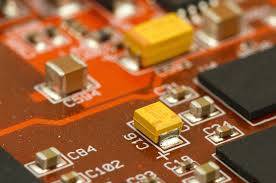
Ceramic capacitors are among the most widely used passive components in modern printed circuit board (PCB) designs. These versatile components serve critical functions in electronic circuits, including decoupling, filtering, timing, and energy storage. Characterized by their small size, reliability, and cost-effectiveness, ceramic capacitors have become indispensable in virtually all electronic devices, from smartphones to industrial equipment.
The fundamental construction of a ceramic capacitor consists of alternating layers of ceramic dielectric material and metal electrodes. This multilayer structure (MLCC – Multilayer Ceramic Chip Capacitor) allows for high capacitance values in compact packages. When mounted on PCBs, these surface-mount components occupy minimal space while providing excellent electrical performance.
Types of Ceramic Capacitors for PCB Applications
1. Class 1 Ceramic Capacitors
Class 1 capacitors use paraelectric dielectric materials like C0G (NP0) formulations, offering the most stable performance characteristics:
- Excellent temperature stability (±30 ppm/°C for C0G)
- Low losses and high Q factor
- Minimal capacitance change with voltage or frequency
- Precision timing and resonant circuit applications
2. Class 2 Ceramic Capacitors
Class 2 capacitors utilize ferroelectric materials (X7R, X5R, Y5V, etc.) providing higher capacitance values but with less stability:
- Higher volumetric efficiency (more capacitance per unit volume)
- Moderate temperature stability (±15% for X7R over -55°C to +125°C)
- Non-linear voltage characteristics
- Decoupling and bypass applications
3. Specialty Ceramic Capacitors
Recent advancements have introduced specialized ceramic capacitors for particular PCB needs:
- High-voltage ceramic capacitors (up to several kV)
- RF/microwave capacitors with optimized high-frequency performance
- Low-ESL (Equivalent Series Inductance) designs for high-speed digital circuits
- Ultra-stable capacitors for precision analog applications
Key Parameters in Ceramic Capacitor Selection
1. Capacitance Value and Tolerance
The nominal capacitance (measured in pF, nF, or μF) and its allowable variation (typically ±5% to ±20%) must match circuit requirements. Tight tolerance parts (C0G) are essential for timing circuits, while general-purpose applications can use wider tolerance components.
2. Voltage Rating
The rated voltage (DC or AC) must exceed the maximum expected operating voltage with sufficient margin. Derating guidelines typically suggest using capacitors at no more than 50-80% of their rated voltage.
3. Temperature Characteristics
Different dielectric materials exhibit varying capacitance changes with temperature:
- C0G: ±30 ppm/°C
- X7R: ±15% from -55°C to +125°C
- Y5V: +22%/-82% from -30°C to +85°C
4. Equivalent Series Resistance (ESR)
ESR affects power loss and filtering effectiveness. Lower ESR is particularly important for:
- Power supply decoupling
- High-current pulse applications
- Low-impedance filtering circuits
5. Equivalent Series Inductance (ESL)
Parasitic inductance becomes significant at high frequencies, limiting capacitor effectiveness. PCB layout and capacitor package size affect ESL.
6. Dielectric Absorption
This “memory effect” can impact precision analog circuits, with C0G showing the lowest dielectric absorption among ceramic types.
PCB Layout Considerations for Ceramic Capacitors
1. Placement Strategies
Optimal capacitor placement is crucial for effective performance:
- Place decoupling capacitors as close as possible to power pins
- Distribute multiple capacitors around large ICs
- Consider current loops when placing filtering capacitors
2. Routing Best Practices
Proper routing maximizes capacitor effectiveness:
- Minimize trace lengths between capacitors and components
- Use wide, low-impedance connections for power decoupling
- Maintain proper grounding techniques
3. Thermal Management
While ceramic capacitors are generally robust, thermal considerations remain important:
- Avoid placing near heat sources when using temperature-sensitive dielectrics
- Consider thermal expansion mismatches in extreme environments
- Allow for proper soldering temperature profiles
4. High-Frequency Considerations
For RF and high-speed digital applications:
- Use low-ESL capacitor packages (reverse geometry, interdigitated)
- Implement proper grounding and shielding
- Consider capacitor self-resonant frequency in the design
Soldering and Manufacturing Considerations
1. Soldering Processes
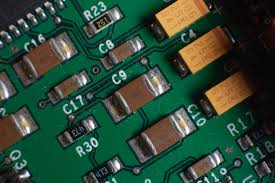
Ceramic capacitors are compatible with standard PCB assembly processes:
- Reflow soldering (recommended for most SMT applications)
- Wave soldering (with proper process controls)
- Hand soldering (with appropriate temperature control)
2. Mechanical Stress Considerations
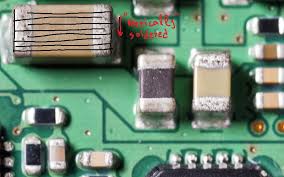
Ceramic capacitors are brittle and susceptible to mechanical stress:
- Avoid board flexure near capacitor locations
- Follow manufacturer recommendations for pad sizes
- Consider stress-relief patterns for boards subject to mechanical stress
3. Cleaning and Coating
Post-assembly processes require attention:
- Most ceramic capacitors are compatible with common cleaning solvents
- Conformal coating compatibility should be verified
- Avoid ultrasonic cleaning for certain capacitor types
Reliability and Failure Modes
1. Common Failure Mechanisms
Understanding potential failure modes helps design more reliable circuits:
- Mechanical cracks from board stress or thermal shock
- Solder joint failures
- Dielectric breakdown (especially with voltage overstress)
- Parametric shifts due to aging or environmental factors
2. Lifetime Considerations
Ceramic capacitors typically offer excellent long-term reliability:
- No wear-out mechanisms like electrolytic capacitors
- Potential for parametric drift in some dielectric types
- Moisture sensitivity varies by construction and materials
3. Testing and Qualification
Industry standards govern ceramic capacitor reliability:
- MIL-PRF-55681 for military applications
- AEC-Q200 for automotive applications
- Various IEC standards for general-purpose components
Advanced Topics in Ceramic Capacitor Applications
1. High-Speed Digital Decoupling
Modern digital systems present unique challenges:
- Power integrity management in multi-rail systems
- Frequency-dependent impedance characteristics
- Proper capacitor selection and placement for broadband decoupling
2. RF and Microwave Applications
Special considerations for high-frequency designs:
- Q factor and self-resonant frequency importance
- Low-loss dielectric materials
- Parasitic effects at microwave frequencies
3. High-Voltage Applications
Designing with high-voltage ceramic capacitors:
- Creepage and clearance requirements
- Voltage derating practices
- Special package considerations
Future Trends in Ceramic Capacitor Technology
1. Miniaturization
Ongoing trends toward smaller components:
- 008004 package size (0.25 × 0.125 mm) and smaller
- Thinner dielectric layers for higher capacitance in small packages
- Advanced materials enabling better performance in miniature forms
2. Enhanced Materials
New dielectric formulations offer improved characteristics:
- Higher permittivity materials
- More stable temperature characteristics
- Reduced microphonics and piezoelectric effects
3. Integration Trends
Emerging approaches to capacitor integration:
- Embedded capacitor technology within PCBs
- 3D packaging approaches
- Combined passive components
Conclusion
Ceramic capacitors remain fundamental components in PCB design, offering an unmatched combination of size, performance, and reliability for countless applications. Proper selection and implementation require understanding of their characteristics, limitations, and optimal usage practices. As electronic systems continue to evolve toward higher speeds, greater complexity, and smaller form factors, ceramic capacitors will undoubtedly maintain their essential role in electronic circuit design.
By carefully considering the parameters discussed in this article—capacitor type, electrical characteristics, PCB layout requirements, and application-specific needs—designers can fully leverage the benefits of ceramic capacitors to create robust, high-performance electronic systems. The ongoing advancements in ceramic capacitor technology promise to address emerging challenges in power delivery, signal integrity, and miniaturization, ensuring these components remain vital to electronics design for the foreseeable future.