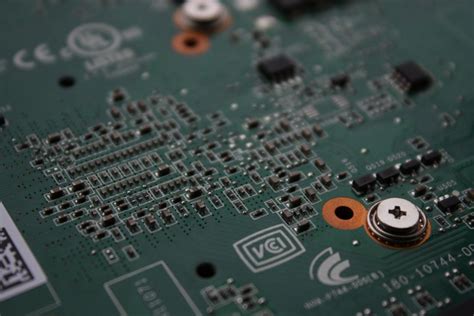
Ceramic capacitors pcb
Understanding The Role Of Ceramic Capacitors In PCB Design
Ceramic capacitors play a pivotal role in the design and functionality of printed circuit boards (PCBs), serving as essential components in a wide array of electronic devices. These capacitors are renowned for their reliability, compact size, and cost-effectiveness, making them a popular choice among engineers and designers. To fully appreciate their significance, it is crucial to understand their function, characteristics, and the considerations involved in their integration into PCB designs.
At the core of their functionality, ceramic capacitors store and release electrical energy, a process that is fundamental to the operation of electronic circuits.
They are primarily used for decoupling and filtering applications, where they help stabilize voltage and reduce noise by smoothing out fluctuations in the power supply. This capability is particularly important in high-frequency circuits, where maintaining signal integrity is paramount. By providing a low-impedance path to ground for high-frequency noise, ceramic capacitors ensure that sensitive components on the PCB are shielded from potential disruptions.
The construction of ceramic capacitors involves the use of ceramic materials as the dielectric, sandwiched between conductive plates.
This design allows them to achieve high capacitance values in a small form factor, which is advantageous for modern electronic devices that demand miniaturization without compromising performance. Moreover, ceramic capacitors are available in various types, such as Class 1 and Class 2, each offering different levels of stability, temperature coefficient, and capacitance range. Class 1 capacitors are known for their precision and stability, making them suitable for applications requiring tight tolerance. In contrast, Class 2 capacitors provide higher capacitance values but with less stability, which is acceptable for general-purpose applications.
When integrating ceramic capacitors into PCB designs, several factors must be considered to optimize their performance.
One of the primary considerations is the placement of the capacitors on the PCB. Ideally, they should be positioned as close as possible to the power pins of the integrated circuits they are intended to support. This proximity minimizes the inductance and resistance in the connection path, enhancing the capacitor’s ability to filter out high-frequency noise effectively. Additionally, the choice of capacitor value and type should align with the specific requirements of the circuit, taking into account factors such as operating frequency, voltage rating, and temperature range.
Another critical aspect of using ceramic capacitors in PCB design is understanding their behavior under different conditions.
For instance, ceramic capacitors exhibit a phenomenon known as voltage dependency, where their capacitance can decrease with an increase in applied voltage. This characteristic must be accounted for during the design phase to ensure that the capacitors perform as expected under all operating conditions. Furthermore, the dielectric material used in ceramic capacitors can affect their performance over temperature variations, necessitating careful selection based on the intended application environment.
In conclusion, ceramic capacitors are indispensable components in PCB design, offering a blend of performance, size, and cost advantages that are hard to match. Their ability to stabilize voltage and filter noise is crucial for maintaining the integrity of electronic circuits, especially in high-frequency applications. By understanding their characteristics and considering key factors in their integration, designers can effectively harness the benefits of ceramic capacitors to enhance the functionality and reliability of their electronic devices. As technology continues to evolve, the role of ceramic capacitors in PCB design is likely to remain significant, underscoring their enduring importance in the electronics industry.

Advantages Of Using Ceramic Capacitors In Modern Electronics
Ceramic capacitors have become an integral component in modern electronics, offering a range of advantages that make them indispensable in various applications. As technology continues to advance, the demand for reliable and efficient electronic components has grown, and ceramic capacitors have risen to the occasion, providing numerous benefits that enhance the performance and reliability of electronic devices.
One of the primary advantages of ceramic capacitors is their compact size.
In an era where miniaturization is key, ceramic capacitors offer a significant advantage due to their small footprint. This compactness allows for more components to be placed on a printed circuit board (PCB), enabling the design of smaller and more efficient electronic devices. Furthermore, their small size does not compromise their performance, as ceramic capacitors are capable of storing a substantial amount of charge relative to their size, making them highly efficient.
In addition to their compactness, ceramic capacitors are known for their excellent frequency response.
This characteristic is particularly beneficial in high-frequency applications, such as radio frequency (RF) circuits and microwave communications. The ability of ceramic capacitors to operate effectively at high frequencies ensures that they can handle rapid changes in voltage and current, which is essential for maintaining signal integrity in these applications. Consequently, they are often the preferred choice in circuits where high-frequency performance is critical.
Moreover, ceramic capacitors exhibit remarkable thermal stability, which is crucial in environments where temperature fluctuations are common.
Their ability to maintain consistent performance across a wide temperature range makes them suitable for use in automotive, aerospace, and industrial applications, where reliability under varying thermal conditions is paramount. This thermal stability is attributed to the materials used in their construction, which are inherently resistant to temperature-induced changes in capacitance.
Another significant advantage of ceramic capacitors is their low equivalent series resistance (ESR).
Low ESR is desirable because it minimizes energy loss and heat generation within the capacitor, leading to improved efficiency and longevity of the electronic device.
This characteristic is particularly important in power supply circuits, where energy efficiency is a key consideration. By reducing energy loss, ceramic capacitors contribute to the overall energy efficiency of electronic systems, aligning with the growing emphasis on sustainable and energy-efficient technologies.
Furthermore, ceramic capacitors are highly reliable and have a long operational lifespan.
Their robust construction and resistance to environmental factors such as humidity and mechanical stress make them suitable for use in harsh conditions. This reliability ensures that electronic devices can operate without frequent maintenance or replacement of components, thereby reducing downtime and associated costs.
In conclusion, the advantages of using ceramic capacitors in modern electronics are manifold. Their compact size, excellent frequency response, thermal stability, low equivalent series resistance, and high reliability make them an ideal choice for a wide range of applications. As electronic devices continue to evolve, the role of ceramic capacitors in enhancing performance and efficiency will undoubtedly remain significant. By providing these benefits, ceramic capacitors contribute to the advancement of technology, enabling the development of more sophisticated and reliable electronic systems.
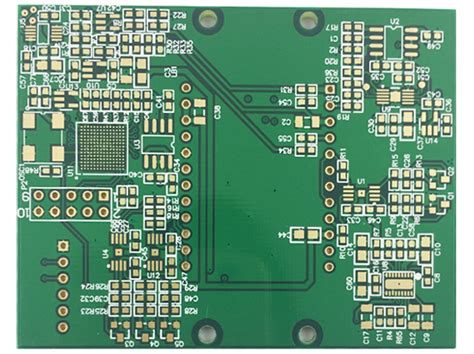
How To Choose The Right Ceramic Capacitor For Your PCB
When designing a printed circuit board (PCB), selecting the appropriate ceramic capacitor is crucial for ensuring optimal performance and reliability. Ceramic capacitors are widely used in electronic circuits due to their small size, low cost, and excellent frequency characteristics. However, choosing the right one involves considering several factors that can significantly impact the functionality of your PCB.
To begin with, it is essential to understand the role of ceramic capacitors in your circuit.
They are primarily used for decoupling, filtering, and timing applications. Therefore, identifying the specific function the capacitor will serve in your design is the first step in making an informed choice. Once the purpose is clear, the next consideration is the capacitance value. The capacitance required depends on the application and the frequency range of the circuit. For instance, higher capacitance values are typically used for power supply decoupling, while lower values are suitable for high-frequency filtering.
In addition to capacitance, the voltage rating of the ceramic capacitor is another critical factor.
It is imperative to select a capacitor with a voltage rating that exceeds the maximum voltage it will encounter in the circuit. This ensures that the capacitor can handle voltage spikes without breaking down, thereby enhancing the reliability of the PCB. Furthermore, the dielectric material used in ceramic capacitors affects their performance characteristics. Common dielectric types include C0G (NP0), X7R, and Y5V, each offering different temperature stability and capacitance tolerance. C0G capacitors provide excellent stability and are ideal for precision applications, while X7R and Y5V are more suitable for general-purpose use where some variation in capacitance is acceptable.
Another aspect to consider is the physical size and package type of the ceramic capacitor.
The size is often dictated by the available space on the PCB and the required capacitance and voltage ratings. Smaller packages, such as 0402 or 0603, are advantageous for compact designs but may have limitations in terms of capacitance and voltage. Therefore, balancing size constraints with electrical requirements is crucial.
Moreover, the equivalent series resistance (ESR) and equivalent series inductance (ESL) of the capacitor can influence the performance of high-frequency circuits.
Low ESR and ESL values are desirable as they minimize energy losses and improve the efficiency of the capacitor in filtering applications. Therefore, it is advisable to consult the manufacturer’s datasheets to compare these parameters across different capacitor models.
Additionally, environmental factors such as temperature and humidity can affect the performance of ceramic capacitors
.It is important to choose capacitors that can withstand the operating conditions of your application. Capacitors with a wide temperature range and high humidity resistance are preferable for harsh environments.
Finally, cost considerations should not be overlooked. While it may be tempting to opt for the cheapest option, it is essential to weigh the cost against the performance and reliability requirements of your design. Investing in high-quality capacitors can prevent costly failures and ensure the longevity of your PCB.
In conclusion, selecting the right ceramic capacitor for your PCB involves a careful evaluation of various parameters, including capacitance, voltage rating, dielectric type, size, ESR, ESL, and environmental resilience. By thoroughly assessing these factors, you can make an informed decision that aligns with the specific needs of your electronic design, ultimately leading to a successful and reliable PCB implementation.
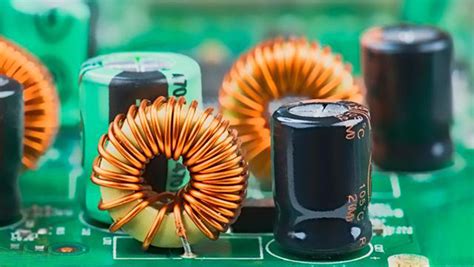
Common Mistakes To Avoid When Integrating Ceramic Capacitors In PCBs
When integrating ceramic capacitors into printed circuit boards (PCBs), engineers and designers often encounter a range of challenges that can impact the performance and reliability of the final product. Understanding and avoiding common mistakes in this process is crucial for ensuring optimal functionality and longevity of electronic devices.
One of the most frequent errors involves improper selection of capacitor values.
It is essential to choose the correct capacitance value to match the specific requirements of the circuit. Selecting a capacitor with an inappropriate value can lead to issues such as signal distortion or inadequate power supply decoupling, which can compromise the overall performance of the device.
In addition to selecting the correct capacitance, it is important to consider the voltage rating of the ceramic capacitors.
Using a capacitor with a voltage rating that is too low for the application can result in dielectric breakdown, leading to capacitor failure and potential damage to the circuit. Therefore, it is advisable to select capacitors with a voltage rating that exceeds the maximum voltage expected in the circuit, providing a safety margin to accommodate voltage spikes and fluctuations.
Another common mistake is neglecting the impact of temperature coefficients on ceramic capacitors.
Different types of ceramic capacitors exhibit varying levels of capacitance change with temperature fluctuations. Failing to account for these changes can result in performance variations, especially in temperature-sensitive applications. To mitigate this issue, it is important to select capacitors with appropriate temperature coefficients that align with the operating environment of the device.
Furthermore, the physical placement of ceramic capacitors on the PCB can significantly influence their effectiveness.
Placing capacitors too far from the components they are intended to support can introduce unwanted inductance and resistance, reducing their ability to filter noise or stabilize voltage. To avoid this, it is recommended to position capacitors as close as possible to the power pins of integrated circuits or other critical components, thereby minimizing parasitic effects and enhancing performance.
Additionally, improper soldering techniques can lead to issues such as poor electrical connections or mechanical stress on ceramic capacitors.
Excessive heat during soldering can cause thermal shock, leading to cracks in the ceramic material and eventual failure. To prevent this, it is crucial to adhere to recommended soldering profiles and use appropriate soldering equipment to ensure reliable connections without damaging the capacitors.
Moreover, overlooking the importance of derating can be a costly mistake.
Derating involves operating capacitors below their maximum rated values to enhance reliability and extend their lifespan. By not incorporating derating practices, designers risk exposing capacitors to conditions that may accelerate wear and lead to premature failure. Implementing derating guidelines can significantly improve the durability and performance of ceramic capacitors in PCBs.
Finally, it is essential to consider the potential impact of electromagnetic interference (EMI) on ceramic capacitors.
Inadequate shielding or poor layout design can expose capacitors to EMI, resulting in performance degradation or malfunction. To address this, designers should implement effective grounding strategies and consider the use of EMI suppression components to protect capacitors from unwanted interference.
In conclusion, integrating ceramic capacitors into PCBs requires careful consideration of various factors to avoid common pitfalls. By selecting appropriate capacitance and voltage ratings, accounting for temperature coefficients, optimizing placement, adhering to proper soldering techniques, implementing derating practices, and addressing EMI concerns, designers can enhance the performance and reliability of their electronic devices. Through meticulous planning and attention to detail, the integration of ceramic capacitors can be executed successfully, ensuring the desired functionality and longevity of the final product.
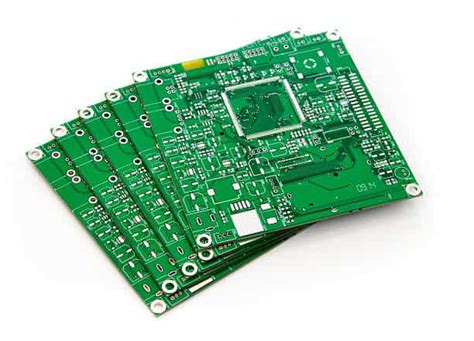
The Impact Of Ceramic Capacitor Placement On PCB Performance
In the realm of electronic design, the placement of components on a printed circuit board (PCB) is a critical factor that significantly influences the overall performance of the device. Among these components, ceramic capacitors play a pivotal role due to their ability to store and release electrical energy efficiently. Understanding the impact of ceramic capacitor placement on PCB performance is essential for optimizing circuit functionality and reliability.
To begin with, ceramic capacitors are widely used in electronic circuits for their excellent frequency response and stability.
They are typically employed for decoupling and filtering applications, where they help to smooth out voltage fluctuations and suppress noise. The strategic placement of these capacitors on a PCB can enhance their effectiveness, thereby improving the performance of the entire circuit. For instance, placing ceramic capacitors close to the power pins of integrated circuits (ICs) can minimize the inductance and resistance in the power delivery network. This proximity ensures that the capacitors can quickly respond to transient changes in current demand, thereby maintaining a stable voltage supply to the ICs.
Moreover, the physical layout of ceramic capacitors on a PCB can influence electromagnetic interference (EMI) and signal integrity.
By positioning capacitors near high-speed signal traces, designers can reduce the loop area, which in turn minimizes the potential for EMI. This careful placement is crucial in high-frequency applications where signal integrity is paramount. Additionally, the orientation of ceramic capacitors can affect their parasitic inductance and capacitance, which are critical parameters in high-speed digital circuits. Therefore, aligning capacitors in a manner that reduces these parasitic effects can lead to improved circuit performance.
Transitioning to thermal management, the placement of ceramic capacitors also impacts the thermal characteristics of a PCB.
Capacitors generate heat during operation, and their placement can affect the thermal distribution across the board. Placing them in areas with adequate airflow or near heat sinks can help dissipate heat more effectively, preventing thermal hotspots that could degrade the performance and reliability of the circuit. Furthermore, the thermal expansion of capacitors and the PCB material must be considered to avoid mechanical stress that could lead to component failure.
In addition to these technical considerations, the placement of ceramic capacitors must also account for manufacturing constraints.
For example, ensuring sufficient spacing between capacitors and other components is necessary to accommodate soldering processes and prevent short circuits. Designers must also consider the impact of capacitor placement on the overall size and cost of the PCB. Optimizing the layout to achieve a balance between performance and manufacturability is a key aspect of successful PCB design.
In conclusion, the placement of ceramic capacitors on a PCB is a multifaceted challenge that requires careful consideration of electrical, thermal, and manufacturing factors. By strategically positioning these components, designers can enhance the performance, reliability, and efficiency of electronic circuits. As technology continues to advance, the importance of optimal capacitor placement will only grow, underscoring the need for ongoing research and innovation in this critical area of electronic design.