Characteristics of RF interface and RF circuit in PCB design
Many special characteristics of RF circuit are difficult to explain in a few short sentences, and cannot be analyzed using traditional simulation software, such as SPICE. However, there are some EDA software on the market that have complex algorithms such as harmonic balance and shooting method, which can simulate RF circuits quickly and accurately. But before learning these EDA software, you must first understand the characteristics of RF circuits, especially the meaning of some technical terms and physical phenomena, because this is the basic knowledge of RF engineering.
RF interface
Conceptually, wireless transmitters and receivers can be divided into two parts: baseband and RF. The baseband includes the frequency range of the input signal of the transmitter and the frequency range of the output signal of the receiver.
The bandwidth of the baseband determines the basic rate at which data can flow in the system. The baseband is used to improve the reliability of the data flow and reduce the load imposed by the transmitter on the transmission medium under a specific data transmission rate.
Therefore, when designing the baseband circuit of the PCB, a lot of signal processing engineering knowledge is required. The RF circuitry of a transmitter converts and upconverts a processed baseband signal to a desired channel and injects the signal into the transmission medium. Conversely, the RF circuitry of a receiver takes a signal from the transmission medium and converts and downconverts it to baseband.
Transmitters have two main PCB design goals: First, they must transmit a specific power while consuming the least power possible. Second, they must not interfere with the normal operation of transceivers in adjacent channels.
For receivers, there are three main PCB design goals: First, they must accurately reproduce small signals; second, they must be able to remove interfering signals outside the desired channel; and finally, like transmitters, they must consume very little power.
Small Desired Signals
Receivers must be very sensitive to small input signals. Generally, the input power of a receiver can be as small as 1 μV. The sensitivity of a receiver is limited by the noise generated by its input circuitry. Therefore, noise is an important consideration when designing a receiver on a PCB. Moreover, the ability to predict noise with simulation tools is essential.
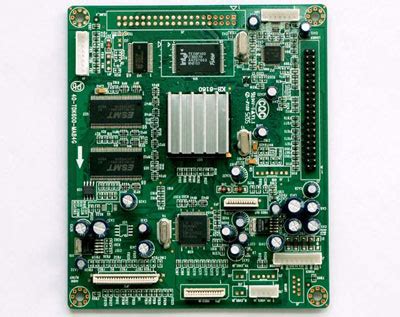
Figure 1 shows a typical superheterodyne receiver.
The received signal is filtered and then amplified by a low noise amplifier (LNA).
The signal is then mixed with the first local oscillator (LO) to convert it to an intermediate frequency (IF). The noise performance of the front-end circuitry is primarily determined by the LNA, mixer, and LO. While traditional SPICE noise analysis can be used to find the noise of the LNA, it is useless for the mixer and LO because the noise in these blocks is severely affected by the large LO signal.
The small input signal requires the receiver to have a very large amplification function, usually requiring a gain as high as 120 dB.
At such a high gain, any signal that couples back from the output to the input can cause problems. An important reason for using a superheterodyne receiver architecture is that it can distribute the gain over several frequencies to reduce the chance of coupling. This also makes the first LO frequency different from the input signal frequency, which prevents large interfering signals from “contaminating” the small input signal.
For different reasons, in some wireless communication systems, direct conversion or homodyne architecture can replace the superheterodyne architecture. In this architecture, the RF input signal is directly converted to baseband in a single step, so most of the gain is at baseband and the LO is the same frequency as the input signal. In this case, the impact of small amounts of coupling must be understood and detailed models of “stray signal paths” must be built, such as coupling through the substrate, coupling between package pins and bondwires, and coupling through power lines.
Large Interfering Signals
The receiver must be sensitive to small signals even in the presence of large interfering signals (obstructions). This situation occurs when trying to receive a weak or distant transmitted signal when there is a powerful transmitter broadcasting in an adjacent channel nearby. Interfering signals can be 60-70 dB larger than the desired signal and can block the reception of the normal signal by overwhelming the receiver input stage or causing the receiver to generate excessive noise at the input stage. If the receiver is driven into a nonlinear region by interference at the input stage, the two problems mentioned above will occur. To avoid these problems, the front end of the receiver must be very linear.
Therefore, “linearity” is also an important consideration when designing a receiver on a PCB.
Since the receiver is a narrowband circuit, nonlinearity is measured by measuring “intermodulation distortion”. This involves driving the input signal with two sine or cosine waves of similar frequency and located in the center band (in band), and then measuring the product of their intermodulation. Generally speaking, SPICE is a time-consuming and costly simulation software because it must perform many cycles before it can obtain the required frequency resolution to understand the distortion.
Interference from adjacent channels
Distortion also plays an important role in transmitters. The nonlinearity generated by the transmitter in the output circuit may cause the bandwidth of the transmitted signal to be spread in adjacent channels. This phenomenon is called “spectral regrowth”. Before the signal reaches the transmitter’s power amplifier (PA), its bandwidth is limited; but “intermodulation distortion” within the PA causes the bandwidth to increase again. If the bandwidth increases too much, the transmitter will not be able to meet the power requirements of its adjacent channels. When transmitting digital modulated signals, it is actually impossible to use SPICE to predict the regrowth of the spectrum. Because the transmission of about 1,000 digital symbols must be simulated to obtain a representative spectrum, and it is also necessary to combine high-frequency carriers, which will make SPICE transient analysis impractical.