Control Board Assembly: Key Steps for Reliable Performance

Key Takeaways
Achieving reliable control board assembly hinges on mastering foundational processes in PCB assembly (PCBA). The selection of high-grade components forms the cornerstone, requiring compatibility with operational environments and load demands. Precision soldering—whether through reflow or wave techniques—ensures secure electrical connections while minimizing thermal stress on sensitive parts. Rigorous testing protocols, including in-circuit (ICT) and functional (FCT) testing, validate signal integrity and power distribution before deployment.
Another critical aspect involves integrating automated optical inspection (AOI) systems during PCBA to detect micro-scale defects like solder bridges or misaligned resistors. Environmental stress screening (ESS) further simulates real-world conditions, exposing potential failure points in PCB assemblies under extreme temperatures or vibrations. By aligning these steps with industry standards such as IPC-A-610, manufacturers systematically reduce error rates while enhancing long-term durability. Transitioning between these phases demands meticulous documentation to maintain traceability across the production lifecycle, ensuring consistent quality in every control board assembly batch.
Control Board Assembly Essentials for Optimal Reliability
Achieving reliable performance in PCB assembly begins with meticulous planning and execution. The foundation lies in selecting components rated for operational stress and environmental conditions, such as temperature fluctuations or moisture exposure. For PCBA (Printed Circuit Board Assembly), precision in solder joint formation directly impacts electrical connectivity and mechanical stability.
"A 0.1mm misalignment in component placement can reduce solder joint integrity by up to 30%," notes a leading electronics engineer.
Critical steps include:
- Thermal profiling to ensure even heat distribution during reflow soldering.
- Automated optical inspection (AOI) to detect microscopic defects like hairline cracks.
- Functional testing under simulated load conditions to validate long-term durability.
| Factor | Traditional Approach | Advanced Best Practice |
|---|---|---|
| Soldering Accuracy | Manual inspection | Laser-guided placement systems |
| Thermal Management | Basic heat sinks | Embedded copper-core substrates |
| Contamination Control | Solvent cleaning | Ionized air purification |
To minimize failure risks, prioritize anti-static protocols during handling and storage. Conformal coating applications, such as acrylic or silicone-based layers, further shield PCB assemblies from dust and humidity. For high-reliability PCBA, integrating redundancy in critical circuits and adhering to IPC-A-610 standards ensures compliance with industrial durability benchmarks.
Tip: Regularly calibrate pick-and-place machines to maintain micron-level accuracy, especially for fine-pitch components like BGAs or QFNs. This reduces rework rates and enhances overall assembly consistency.
Precision Soldering Techniques in Control Board Manufacturing
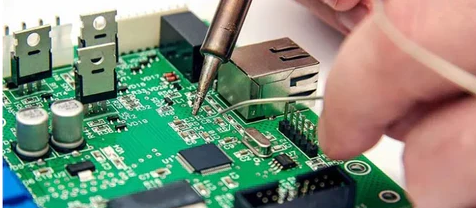
Achieving reliable PCB assembly requires meticulous attention to soldering processes, which directly impact electrical connectivity and long-term performance. Modern PCBA workflows employ advanced methods such as reflow soldering and selective soldering to ensure consistent joint quality. For surface-mount devices (SMDs), precise temperature profiling is critical—excessive heat risks damaging sensitive components, while insufficient heat leads to cold joints that compromise conductivity.
Automated systems now dominate high-volume production, leveraging laser-guided placement and nitrogen-enriched environments to minimize oxidation. However, manual soldering remains essential for prototyping or repairing complex control board assemblies, demanding technicians with expertise in micro-soldering techniques. Key parameters like solder alloy composition (e.g., SAC305 for lead-free applications) and flux activity must align with the board’s operational environment to prevent premature failure.
Quality assurance integrates automated optical inspection (AOI) and X-ray imaging to detect voids, bridging, or misaligned connections. These tools are particularly vital for multilayer PCBA designs, where hidden defects can disrupt signal integrity. By combining precision equipment with rigorous process controls, manufacturers ensure that every solder joint meets IPC-A-610 standards, laying the foundation for error-free functionality in mission-critical systems.
Component Selection Criteria for Durable Control Boards
Selecting the right components is the foundation of building durable control boards that withstand operational stresses. In PCB assembly, factors like thermal tolerance, electrical specifications, and environmental compatibility directly influence longevity. Start by prioritizing components with industry-standard certifications (e.g., AEC-Q200 for passive parts) to ensure reliability under varying conditions. For PCBA projects, opt for materials rated for high-temperature performance, such as ceramic capacitors or industrial-grade microcontrollers, to minimize failure risks in demanding applications.
Environmental factors like humidity, vibration, and exposure to corrosive elements further dictate component choices. For instance, conformal coatings or moisture-resistant substrates may be necessary for boards deployed in harsh settings. Additionally, verify solderability and mechanical stability of connectors and ICs to prevent cracks during PCB assembly or post-deployment thermal cycling. Collaborating with trusted suppliers who provide traceable, counterfeit-free parts is equally critical to maintaining consistency in PCBA quality.
Finally, align component selections with the board’s intended lifecycle. For long-term deployments, avoid obsolete or niche parts that may complicate future repairs. By integrating these criteria into the design phase, manufacturers can reduce rework, enhance control board durability, and streamline compliance with testing protocols outlined in later stages.
Testing Protocols to Ensure Control Board Longevity
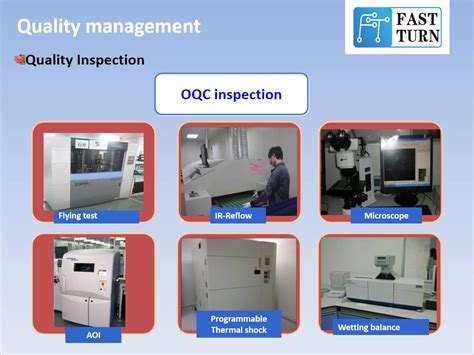
Implementing robust testing protocols is critical to extending the operational lifespan of control board assemblies. Following rigorous PCB assembly (PCBA) stages, comprehensive testing begins with automated optical inspection (AOI) to detect soldering defects, misaligned components, or micro-fractures. Advanced systems like in-circuit testing (ICT) validate electrical connectivity, ensuring resistors, capacitors, and ICs meet specified tolerances. For high-stress applications, environmental stress testing (EST) simulates extreme temperatures, humidity, and vibration to assess durability under real-world conditions.
Functional testing remains indispensable, where PCBA units undergo firmware validation and load simulations to verify performance under peak operational demands. Incorporating boundary scan testing (BST) further isolates faults in complex circuits, reducing downtime during diagnostics. To guarantee long-term reliability, thermal cycling and vibration resistance tests are repeated across multiple batches, aligning with industry standards like IPC-A-610. By integrating these protocols, manufacturers systematically eliminate latent defects, ensuring control boards deliver consistent functionality and resilience over their intended service life.
Key Steps to Achieve Error-Free Control Board Functionality
Achieving flawless performance in control board assembly begins with rigorous design validation. Engineers must verify schematic accuracy and component compatibility before initiating PCBA processes. Precision in PCB assembly relies on automated pick-and-place systems to ensure correct orientation and alignment of surface-mount devices (SMDs), particularly for temperature-sensitive components like microcontrollers or voltage regulators.
Post-placement, reflow soldering profiles require meticulous calibration to prevent cold joints or thermal stress. Implementing automated optical inspection (AOI) and X-ray scanning at this stage identifies hidden defects, such as insufficient solder voids or micro-cracks. For mission-critical applications, in-circuit testing (ICT) validates electrical continuity, while functional testing simulates real-world operating conditions.
A robust PCBA workflow incorporates design-for-manufacturability (DFM) principles to minimize human error. This includes applying failure mode and effects analysis (FMEA) to anticipate potential assembly flaws. Additionally, adhering to IPC-A-610 standards for acceptability ensures consistent quality across batches. To maintain traceability, serialized tracking of components and assembly stages becomes vital, enabling rapid root-cause analysis if anomalies emerge.
Finally, environmental stress screening (ESS) – including thermal cycling and vibration tests – exposes latent defects before deployment. By integrating these protocols, manufacturers systematically reduce error rates while enhancing the control board’s operational resilience in demanding environments.
Quality Control Processes in Circuit Board Assembly
Robust quality control (QC) protocols form the backbone of reliable PCB assembly, ensuring every PCBA meets stringent performance standards. Central to this effort is a multi-layered inspection framework that begins with critical material verification, where components are validated against specifications to prevent counterfeit or substandard parts from entering production. During assembly, automated optical inspection (AOI) systems scan solder joints and component placements at micron-level precision, flagging deviations like bridging or misalignment. For high-density boards, X-ray inspection complements AOI by examining hidden connections, such as ball grid arrays (BGAs), to detect voids or cracks.
Post-assembly, functional testing simulates real-world operating conditions, verifying signal integrity, power distribution, and communication protocols. Environmental stress testing—including thermal cycling and vibration assessments—identifies weaknesses in PCBA durability, ensuring resilience under extreme conditions. Statistical process control (SPC) tools analyze defect trends, enabling proactive adjustments to soldering profiles or placement algorithms. Finally, traceability systems document every production step, creating auditable records for compliance with industry certifications like ISO 9001 or IPC-A-610. By integrating these layered checks, manufacturers minimize failure risks while aligning with the precision demands of modern PCB assembly.
Advanced Methods for Reliable Control Board Performance
Achieving consistent reliability in PCB assembly requires integrating cutting-edge techniques with precision engineering. Modern high-density interconnect (HDI) designs demand automated optical inspection (AOI) systems to detect micro-scale soldering defects, ensuring flawless PCBA outcomes. Advanced thermal profiling during reflow soldering minimizes stress on sensitive components, a critical factor for long-term durability in harsh operating environments.
Incorporating conformal coating technologies enhances protection against moisture, dust, and chemical exposure, directly impacting PCB assembly longevity. For mission-critical applications, embedded diagnostics and real-time monitoring systems enable proactive identification of potential failures. Additionally, leveraging PCBA-specific simulation tools during design phases predicts thermal and mechanical stressors, allowing preemptive adjustments before production.
Adopting AI-driven testing protocols further elevates reliability by analyzing historical failure patterns to refine quality thresholds. Pairing this with robotic soldering systems ensures repeatable accuracy, particularly for fine-pitch components. Finally, rigorous environmental stress screening (ESS) validates performance under extreme temperatures and vibrations, closing the loop on robust PCB assembly methodologies. These advanced practices, when combined with stringent component validation, create a holistic framework for error-free control board functionality.
Ensuring Durability Through Proper Assembly Techniques
Achieving long-term reliability in PCB assembly requires meticulous attention to environmental stressors and mechanical stability. A critical step involves selecting PCBA materials that resist thermal expansion mismatches, such as high-Tg (glass transition temperature) substrates, which minimize warping under temperature fluctuations. Proper component placement ensures even stress distribution, particularly for heavy or heat-generating parts, reducing the risk of solder joint fatigue.
Precision soldering remains foundational—using reflow or wave soldering techniques with optimized temperature profiles prevents cold joints and voids, common failure points in PCB assembly. For PCBA exposed to harsh conditions, applying conformal coatings adds a protective barrier against moisture, dust, and chemical corrosion. Additionally, mechanical fastening methods, like brackets or adhesives, enhance structural integrity in vibration-prone applications.
Thermal management strategies, such as integrating heat sinks or thermal vias, further safeguard against overheating, a leading cause of premature component failure. Rigorous inspection protocols, including automated optical inspection (AOI) and X-ray analysis, verify assembly quality before final testing. By aligning these techniques with industry standards like IPC-A-610, manufacturers ensure PCB assembly processes deliver durable, high-performance boards capable of withstanding operational demands over extended periods.
Conclusion
Effective control board assembly hinges on meticulous execution of proven methodologies across design, manufacturing, and validation stages. By prioritizing PCB assembly best practices—such as adhering to PCBA standards for component placement and solder joint integrity—engineers can mitigate risks of premature failure. Rigorous testing protocols, including thermal cycling and functional validation, ensure boards meet performance benchmarks while sustaining operational demands. Equally critical is the integration of traceability systems to monitor quality throughout production, enabling rapid identification of deviations. As industries increasingly rely on compact, high-performance electronics, mastering these techniques not only enhances product longevity but also reinforces brand credibility. Ultimately, the convergence of precision in PCB assembly, adherence to PCBA guidelines, and proactive quality assurance forms the foundation for delivering control boards that excel in both functionality and durability.
FAQs
What distinguishes high-quality PCB assembly from standard processes?
Precision in component placement and adherence to industry-grade soldering techniques are critical. Advanced PCBA workflows integrate automated optical inspection (AOI) to detect micro-level defects, ensuring compliance with IPC-A-610 standards.
How does component selection impact control board longevity?
Thermally stable materials and mil-spec rated components reduce failure risks in harsh environments. PCB assembly experts prioritize ESD-safe handling and moisture-sensitive component storage to prevent latent defects.
What testing protocols validate control board reliability?
In-circuit testing (ICT) and functional testing (FCT) simulate real-world operating conditions. Burn-in testing for PCBA units identifies early-life failures, while boundary scan methods verify complex circuit interactions.
Why is traceability essential in PCB assembly?
Lot-number tracking and serialized data logging enable rapid root-cause analysis. This proactive approach in PCBA production minimizes recall risks and supports compliance with ISO 9001 quality management systems.
Can outdated equipment compromise control board performance?
Yes. Decade-old pick-and-place machines or uncalibrated reflow ovens create alignment errors and thermal inconsistencies. Modern PCB assembly lines use closed-loop feedback systems to maintain ±0.02mm placement accuracy.
Optimize Your Control Board Assembly Today
For expert-grade PCBA solutions with certified reliability testing, please click here to explore tailored services for your project requirements.