Eight Steps to Ensure Successful PCB Design
Printed circuit boards (PCBs) are the body of electronic products, and the performance, life, and reliability of the final product depend on the electrical system it constitutes. If designed properly, products with high-quality circuits will have lower field failure rates and field return rates. As a result, the product will be less expensive to produce and more profitable. In order to produce high-quality PCB boards on time without increasing design time and incurring costly rework, design and circuit integrity issues must be discovered as early as possible in the design process.
In order to bring products to market quickly and reliably, it is necessary to use design tools to automate the design process, but how can you ensure the success of the design? In order to maximize design efficiency and product quality, what details should be paid attention to? Design tools should obviously be intuitive and powerful enough to overcome complex design challenges, but what else is worth noting? This article lists eight steps that can be taken to ensure the success of PCB design.
Step 1 – Don’t stop at basic schematic input
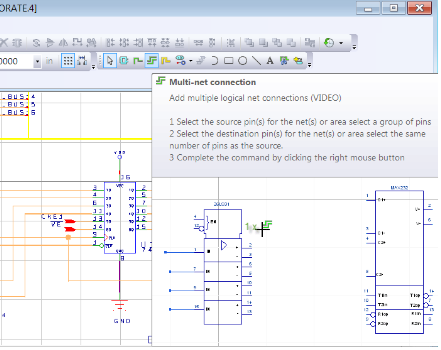
Schematic input is critical to generating the logical connections of the design, and it must be accurate, easy to use, and integrated with the layout to ensure the success of the design.
Simply entering the schematic and transferring it to the layout is not enough. In order to create a high-quality design that meets expectations, you need to ensure that the best components are used and simulation analysis can be performed to ensure that there will be no problems when the design is delivered for manufacturing.
Step 2 – Don’t ignore library management
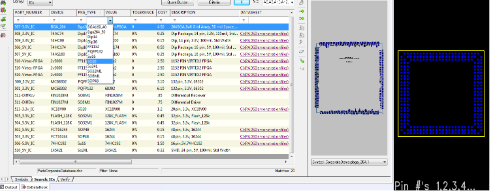
Management is an important part of the design process. In order to quickly select the best components and place them in the design, simple creation and easy management of devices are necessary.
PADS allows you to maintain all design tasks in a library and update the library in real time for ease of use and ensure accuracy in design development. You can access all component information through a single spreadsheet without worrying about data redundancy, multiple libraries, or time-consuming and laborious tool overhead.
Step 3 – Effectively manage design constraints
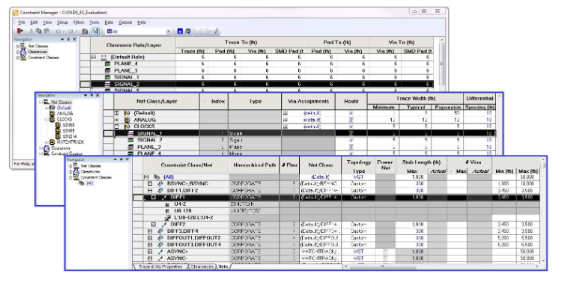
Today’s critical high-speed designs are extremely complex, and without an effective means to manage constraints, it will be extremely difficult to design, constrain and manage aspects such as routing, topology and signal delays. In order to build a successful product in the first iteration, constraints must be set early in the design process so that the design meets the required goals. Good constraint management prevents you from using expensive or unavailable components and ultimately ensures that the board meets performance and manufacturing requirements.
Step 4 – Make sure you have the layout capabilities you need
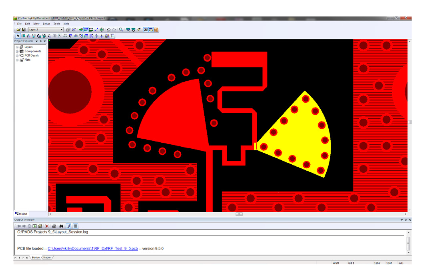
In recent years, the complexity of PCB layout design has been significantly higher than before. In order to create smaller and more portable electronic devices, the density of the design has had to increase. In addition, the operating frequency has also been increased, which requires designers to evaluate electrical characteristics that may have been overlooked before to ensure that the design is usable. To keep up with the increasing complexity, designers must have a wider range of capabilities to define advanced rule sets, create unique RF shapes and implement correction structures to improve the overall performance of the design.
During the layout process, intelligent layout tools help create efficient placement and routing strategies. Precision placement reduces violations in the later stages of design, allowing you to complete projects faster with fewer mistakes.

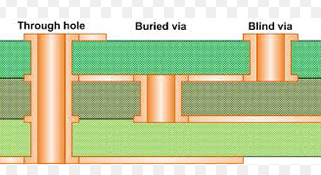
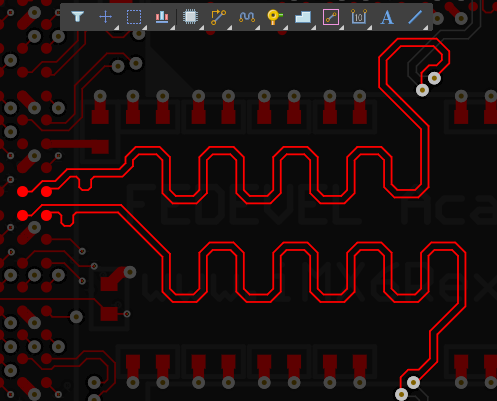
While manual routing is generally used to achieve true design intent, the effective use of interactive routing with automatic routing can help meet market deadlines and improve design quality. Automatic routing can also help with tricky tasks such as differential pair routing, network adjustments, manufacturing optimization, micro vias, and layer-adding technologies. If you plan your routing strategy in advance, the efficiency of using automatic routing will be greatly improved.
Another challenge is that modern PCBs have thousands of networks to maintain, which can make it difficult to route in critical areas of the design. The best way to avoid this problem is to group network lines into groups to create an effective routing strategy. Once you create a planning group, you can mark and filter the network group to highlight the critical networks that need to be routed.