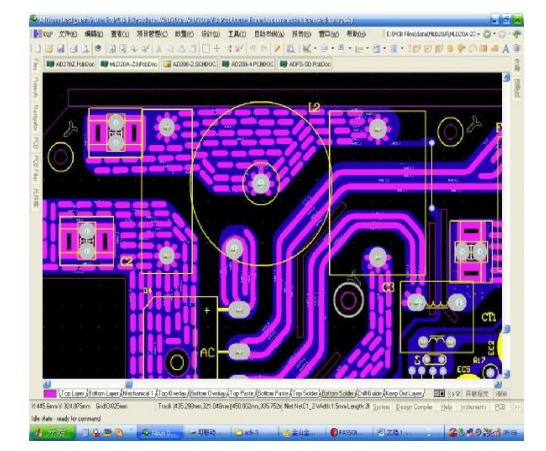
Fault diagnosis technology of circuit boards for aerospace measurement and control electronic equipment
This paper discusses the overview and development prospects of fault diagnosis technology for electronic equipment circuit boards. Combined with the HTEDS8000 electronic equipment circuit board repair test and diagnosis system, a series of products of the “Hua Tuo Electronic Clinic” of the Aerospace Measurement and Control Company, this paper introduces circuit board fault diagnosis technology and its application.
The system integrates advanced testing and fault diagnosis technologies and is suitable for board-level maintenance and comprehensive testing of electronic equipment, especially military electronic equipment.
With the rapid development of science and technology, especially the widespread application of digital technology and various ultra-large-scale integrated circuits, the structure of electronic equipment, especially military electronic equipment, is becoming more and more complex, the functions are becoming more and more perfect, and the degree of automation is becoming higher and higher.
Although the performance of electronic systems has been improved, many problems have also arisen in testing and maintenance support, such as complex testing processes, long testing time, difficult maintenance support, and high maintenance costs. These problems have seriously affected the integrity and life cycle of electronic equipment.
Circuit board fault diagnosis technology can quickly and accurately determine whether the electronic system is abnormal, quickly locate the faults that occur, and isolate the faults to the smallest replaceable unit.
The application of modern fault diagnosis technology in the maintenance and guarantee of electronic equipment can improve the reliability and effectiveness of the system, ensure that the equipment can play its maximum design capacity, extend its service life, and reduce the life cycle cost; through detection monitoring, fault statistical analysis and performance evaluation, it provides data and information for the optimization design of equipment. Therefore, research on electronic equipment, especially circuit board fault diagnosis technology, and the promotion and application of research results in products have broad application prospects.

Overview and development prospects of fault diagnosis technology
- Fault diagnosis is to analyze and process the useful information obtained from the test of the diagnosed object, determine whether the state of the diagnosed object is in an abnormal state or a fault state, determine the location of the fault, and predict the occurrence of the fault.
- Early fault diagnosis is based on people’s senses such as feeling, hearing, touch, etc. of the diagnosed object and the relevant experience accumulated in the past, analyze its state characteristics, judge the existence of certain faults, or predict the time of fault occurrence.
- Maintenance is all activities carried out to keep or restore the equipment to the specified state, that is, it not only includes the repair of the equipment when it fails (damaged) during use to restore its specified state, but also includes preventive maintenance activities to prevent faults before failure (damage) to maintain the specified state.
- In recent years, digital technology and ultra-large-scale integrated circuits have been widely used in the design of functional circuit boards. The functions and structures of electronic equipment have become increasingly complex.
Therefore, the workload of testing them is large and the quality requirements for testing are high.
Generally, it is difficult to rely on human senses and experience to check out the fault factors. Modern fault diagnosis technology is a new technology developed in recent years with the rapid development of electronic computer technology, modern testing technology and artificial intelligence technology. It refers to the use of modern instruments and high-tech equipment such as computer systems to check and identify the real-time technical status of equipment and parts through testing, and to conduct scientific diagnosis. The application of fault diagnosis technology to test and diagnose equipment can timely detect equipment failures and prevent the occurrence of malignant accidents, thereby avoiding major losses.
The United States is one of the earliest countries to conduct systematic research on fault diagnosis technology
. After the United States began to implement the Apollo program in 1961, a series of equipment failures occurred, prompting the United States Mechanical Failure Prevention Group (MFPG) hosted by the Office of Naval Research (ONR) in 1967 under the advocacy of the National Aeronautics and Space Administration (NASA) to actively engage in the research and development of fault diagnosis technology. As the world’s top military power, the United States attaches great importance to the logistics supply and maintenance of military weapons and equipment.
As weapon systems become more and more complex, equipment design increasingly considers maintenance issues to ensure that maintenance work can be carried out simply and effectively and that equipment can always remain available. Therefore, various types of fault diagnosis and maintenance expert systems have been used in the fault diagnosis and maintenance of active weapons and equipment such as the US F-15 fighter, B-1B bomber, naval ships, and army ordnance. At present, the United States has a leading position in diagnostic technology in aviation, aerospace, nuclear industry, and military departments. Some European countries have also made great progress in equipment diagnostic technology. For example, the United Kingdom began to develop and research diagnostic technology in the late 1960s and early 1970s, and has a certain advantage in industry, nuclear power generation, etc.
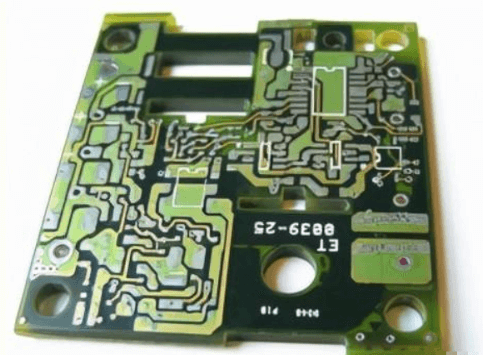
Although my country started late in the research on fault diagnosis technology, it has developed rapidly in recent years.
In the development of important systems and equipment, clear test requirements have been put forward, and national military standards such as “Equipment Testability Outline” (GJB-2547-95) and “Testing and Diagnostic Terminology” (GJB-3385-98) have been formulated. Domestic military test systems have also been gradually studied as military equipment requires test and diagnosis technology. At present, domestic research on equipment fault diagnosis technology, especially circuit board-level fault diagnosis technology, has made great progress.
Beijing Aerospace Measurement and Control Technology Development Company has made great achievements in automatic testing, fault diagnosis technology research and related product development, and has developed the “Hua Tuo Electronic Clinic” series of products with independent intellectual property rights, including HTEDS8000 electronic equipment circuit board repair test and diagnosis system, Fault Doctor fault diagnosis software platform and other products. This product comprehensively applies advanced testing and fault diagnosis technology, and is suitable for electronic equipment, especially military weapons electronic equipment, board-level maintenance test and comprehensive support, and has been promoted and applied in the Navy, Air Force, Second Artillery and other military services.

Circuit board fault diagnosis system implementation
In order to realize circuit board testing and diagnosis, the fault diagnosis system should generally have system functions such as circuit board function detection, excitation signal generation, signal testing and acquisition, information management and data analysis, and can test and diagnose various types of circuit boards, and isolate the fault to the smallest replaceable unit (such as components) where the fault occurs.
The HTEDS8000 electronic equipment circuit board maintenance test and diagnosis system independently developed by Beijing Aerospace Measurement and Control Technology Development Company is based on the VXI bus architecture and has the characteristics of open, modular and easy-to-expand structure.
The main task of the system is to simulate the actual working environment of the circuit board through the established system hardware platform, complete the acquisition of diagnostic information of the board under test, determine the fault location through analysis and judgment of the diagnostic program, and complete the purpose of fault diagnosis.
The system main control computer software controls the VXI bus instrument and IEEE488 interface instrument through standard interface software, generates the excitation required for simulation testing, and loads it to the corresponding terminals of the edge connector of the board under test through the universal signal transfer box and special adapter. At the same time, the corresponding response data is obtained, and the fault location is completed through analysis and judgment of the diagnostic software.
HTEDS8000 electronic equipment circuit board maintenance test and diagnosis system architecture
The electronic equipment circuit board maintenance test and diagnosis system is mainly composed of a main control computer, a VXI bus instrument, an IEEE488 interface instrument and special equipment. The hardware part is highly scalable and can be increased or decreased according to user needs.
The VXI bus has the characteristics of compact structure, open standards, strong data throughput, and module reuse. The virtual instrument software architecture (VISA) solves the compatibility issues between the interface between the computer and the instrument and the application software development environment. The GPIB bus, as a mature standard instrument bus, has a wide range of applications. The combination of the two bus interfaces in the system further improves the system’s versatility, test functions, expandability of measurement bandwidth, and electromagnetic compatibility.
For the test and diagnosis of various types of circuit boards, the system is connected to the circuit board under test through a dedicated adapter for the circuit board under test. The excitation signal is sent to the dedicated adapter through a universal signal transfer box and loaded into the corresponding terminal of the circuit board under test. At the same time, the measured signal is sent to the signal measurement channel of the universal signal transfer box.
After conditioning and transfer, the measurement module, functional module or GPIB measurement device in the VXI measurement and control combination realizes signal measurement, control and acquisition. The main control computer coordinates and controls the work of the data acquisition and excitation equipment. The test data is preprocessed accordingly and provided to the diagnostic expert system. Each circuit board can be tested and fault diagnosed by configuring a dedicated adapter and a test diagnostic program (TPS).
Fault Doctor fault diagnosis software platform
The HTEDS8000 electronic equipment circuit board repair test and diagnosis system is equipped with the Fault Doctor Ver1.0 fault diagnosis software platform independently developed by the measurement and control company. The software integrates advanced virtual instrument test technology, artificial intelligence analysis method, and expert knowledge base based on fault analysis theory, and can test, analyze and diagnose various types of digital, analog and mixed digital and analog circuit boards.
The software platform adopts advanced technologies such as OLE and COM, builds a functional framework through the COM interface, and then adds various functional modules according to needs within the framework, including various signal processing modules, test processing modules, instrument configuration operation modules, diagnostic algorithm processing modules, data information management modules, etc.;
the addition of each module is relatively independent, and data is exchanged through the main framework program; and new functional modules can be further improved or added. The software provides a secondary development interface and adopts the software design concept of the COM interface to solve the problem of program writing and upgrading, and improve the reliability and scalability of the system.
The software system includes test diagnosis execution platform, test diagnosis development platform, user interface editing platform, data information management platform and online help and other functional modules.
The test diagnosis development platform completes the fault diagnosis and positioning of the tested circuit board, and provides automatic monitoring and information prompt functions; the test diagnosis development platform provides a visual graphical interface environment to guide developers to input diagnostic steps, simulation excitation, data excitation, signal type, test power saving, instrument operation, etc., to complete the test diagnosis program development task; the user interface editing platform generates the display content of the diagnostic execution interface and completes the interactive setting of the human-machine interface;
the data information management platform completes the statistics of faulty circuit board models and original device statistics analysis, fault trend analysis and pre-test functions, and realizes the integration of fault diagnosis test and information analysis feedback.
The software has a visual guidance function.
Developers do not need to master complex program coding, highly professional intelligent diagnosis algorithms and expert system principles. They only need to enter expert knowledge and necessary test information through various process modules and corresponding functional components to establish a specific diagnostic software, which improves the efficiency of test diagnosis development.
Circuit board fault diagnosis expert system and diagnostic method
The HTEDS8000 electronic equipment circuit board maintenance test and diagnosis expert system is divided into two parts: knowledge base and inference engine.
For the diagnostic knowledge base, including the fault knowledge and normal knowledge of the circuit board, the knowledge base can be added, modified, deleted and optimized. The inference engine adopts a comprehensive intelligent inference engine based on ordinary reasoning, neural network and fuzzy logic, which can not only improve the speed of diagnostic reasoning, but also improve the accuracy of fault isolation. The construction of expert system is a gradual process of maturity. With the accumulation and optimization of diagnostic knowledge, the function of fault diagnosis expert system will become stronger and stronger. The system integrates multiple diagnostic knowledge representation methods such as rule reasoning, multiple neural networks, fuzzy neural networks, wavelet analysis, genetics, etc., provides a reasoning mechanism based on shallow/deep knowledge, intelligent diagnostic reasoning methods based on fuzzy neural networks and adaptive genetic algorithms, and has a complete knowledge representation model of circuit principles and network connection relationships.
In the field of diagnosis, fuzzy logic theory and neural network technology have played a great role in knowledge representation, knowledge storage, reasoning speed and overcoming the narrow step effect of knowledge. Fuzzy neural networks that combine fuzzy logic and neural networks can not only represent qualitative knowledge but also have strong self-learning ability and data processing ability, thereby greatly broadening the ability to process diagnostic information.
Fuzzy neural networks are more complicated to apply because they involve two cutting-edge fields, fuzzy theory and neural network theory. It is mainly used for the diagnosis of circuit boards with complex fault modes. Diagnostic experts understand the scope of test data and can reasonably select occasions for fuzzy subsets and fuzzy membership. The advantage of fuzzy neural networks is that after determining fuzzy subsets and fuzzy membership, network training requires very little diagnostic knowledge and can achieve high diagnostic positioning accuracy.
The system uses a diagnostic tree to explain the diagnostic reasoning process to users, and provides records and inquiries on the test process, initial data, automatic data collection, exchange data, instruments and resources used, standard data, diagnostic execution, reasoning methods, etc. involved in the diagnostic process; it has multiple debugging methods such as single step and breakpoint; for UUTs that lack technical information, it provides a comparative test function, supporting whole board function comparison test, real board simulation test, component online test, etc.
The circuit board test method is usually:
first confirm whether its information is complete and the principle is clear. If so, the tested board is classified, and the corresponding diagnostic method is used for different types of circuit boards according to the specific situation of the circuit board; if the tested board is not familiar, it is generally tested and diagnosed according to the diagnostic ideas of circuit boards with incomplete information and unclear principles.
Circuit board fault diagnosis technology provides strong protection for electronic equipment
With the development of high-tech, higher requirements have been put forward for the maintenance and protection of electronic equipment. The electronic equipment fault diagnosis system based on modern testing technology and artificial intelligence technology is one of the important means of testing and maintenance. Circuit board fault diagnosis technology improves the maintenance and protection capabilities of board-level products, accelerates the design, production and maintenance process of modern electronic products, and enhances the service life of electronic equipment. It is of great significance in the maintenance and protection of military weapon electronic equipment and civilian electronic equipment, and has broad application prospects.