Functional segmentation of high-speed PCBs
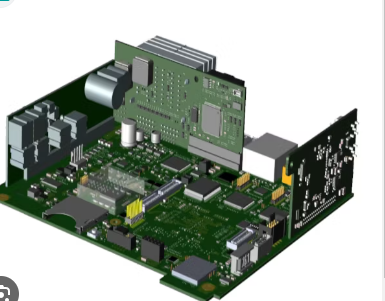
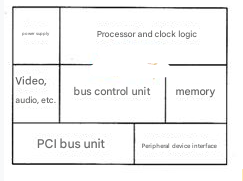
Most PCBs contain some functional subsystems or areas, each of which consists of a group of devices and their supporting circuits. For example, a typical motherboard can be divided into the following areas: processor, clock logic, memory, bus controller, bus interface, PCT bus, peripheral device interface and video/audio processing module. On the one hand, all devices on the PCB need to be placed closely together, which can shorten the trace length, reduce crosstalk, reflection, and electromagnetic radiation, and ensure signal integrity; on the other hand, the spectrum of RF energy generated by different logic devices is different, especially in high-speed systems, the higher the signal frequency, the wider the frequency band of RF energy generated by operations related to digital signal transitions, and it is necessary to prevent mutual interference between devices with different working frequency bands, especially the interference of high-bandwidth devices on other devices.
The solution to the above problems is to adopt functional segmentation, that is, to physically segment subsystems with different functions on the PCB. Different segmentation methods are adopted according to different products, usually using multiple PCBs, component isolation and Layout FE isolation. Proper segmentation can optimize signal quality, simplify wiring and reduce interference. Engineers must clearly know which functional partition a component belongs to. This information can be obtained from component suppliers.
Functional partitioning can be considered as separating one functional area from another so that circuits with different functions can be isolated, as shown in Figure 1. In PCB design, the goal is to limit the electromagnetic field associated with a specific sub-area to the area where this energy is needed. For example, the designer hopes that the electromagnetic energy from the processor area cannot be transmitted to the I/O circuit. There is a potential difference between the processor and the I/O. As long as there is a potential difference, common-mode energy will be transferred between the two areas, so the partition between them must be well decoupled.
Functional partitioning requires attention to two aspects: handling conducted and radiated RF energy. Conducted RF energy will be transmitted between the functional sub-area and the power distribution system through signal lines, and radiated H energy will be coupled through free space. Reasonable PCB functional partitioning is to seek a reasonable solution to transmit useful signals to where they are needed and keep unnecessary ones out.
PCB partitioning to achieve the above functions includes two aspects: isolation and interconnection.
Isolation can be achieved by using a “trench” to form an empty area without copper on all layers. The minimum width of the “trench” is 50 mil. The “trench” is like a moat, dividing the entire PCB into “islands” according to their functions. One of the functional areas (such as the isolation transformer in Figure 6-17 – it is like an “excluded” area for those signal lines and paths on the PCB that are not connected to it). Obviously, the “trench” will divide the mirror layer to form independent power and ground for each area, which can prevent RF energy from entering another area from one area through the power distribution system.
However, the division is for better arrangement of layout and wiring, and better interconnection, not complete “isolation”. Channels must be provided for those lines that need to be connected to each sub-functional area. There are two methods here: one is to use an independent transformer, optical isolator or common mode data line to cross the “trench”, as shown in Figure 2 (a); the other is to build a “bridge” on the “trench”, and only those signals with “bridge passes” can enter (signal current) and exit (return current), as shown in Figure 2 (b).
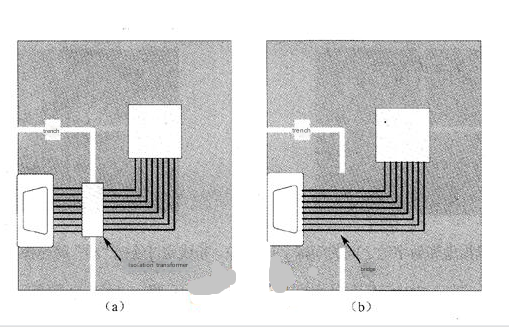
Figure 2 Isolation and bridging
It is impossible to design an optimal split layout. Another way is to metal shield the part that generates unwanted V energy, thereby controlling radiation and enhancing the anti-interference ability of the PCB.