Hdi technology in pcb
Advancements In HDI Technology in PCB Manufacturing
High-Density Interconnect (HDI) technology has emerged as a pivotal advancement in the field of printed circuit board (PCB) manufacturing, offering a multitude of benefits that cater to the ever-evolving demands of modern electronics. As electronic devices continue to shrink in size while increasing in functionality, the need for more compact and efficient PCBs has become paramount. HDI technology addresses this need by enabling the design and production of PCBs with higher wiring densities, smaller vias, and finer lines and spaces, thereby facilitating the development of more sophisticated electronic products.
One of the primary advantages of HDI technology is its ability to support miniaturization.
By utilizing microvias, blind vias, and buried vias, HDI PCBs can achieve a higher layer count without increasing the board’s overall thickness. This is particularly beneficial for applications in consumer electronics, such as smartphones and tablets, where space is at a premium. The use of microvias, which are significantly smaller than traditional vias, allows for more components to be placed on the board, enhancing the device’s functionality without compromising its size.
Moreover, HDI technology contributes to improved electrical performance.
The shorter interconnect paths and reduced parasitic effects associated with HDI PCBs result in lower signal loss and better signal integrity. This is crucial for high-speed applications, where maintaining signal quality is essential. As a result, HDI technology is increasingly being adopted in industries such as telecommunications and computing, where high-speed data transmission is a critical requirement.
In addition to miniaturization and enhanced electrical performance, HDI technology also offers increased design flexibility.
The ability to incorporate multiple layers and complex routing patterns allows designers to create more intricate and innovative PCB layouts. This flexibility is particularly advantageous in the development of advanced technologies such as wearable devices and Internet of Things (IoT) applications, where unique form factors and functionalities are often required.
Furthermore, the advancements in HDI technology have led to improvements in manufacturing processes.
Techniques such as laser drilling and sequential lamination have become more refined, enabling the production of HDI PCBs with greater precision and reliability. These advancements have also contributed to cost reductions, making HDI technology more accessible to a wider range of industries. As manufacturing techniques continue to evolve, it is expected that the cost-effectiveness and efficiency of HDI PCB production will further improve.
Despite the numerous benefits, the implementation of HDI technology does present certain challenges.
The complexity of HDI designs requires advanced design tools and expertise, which can pose a barrier for some manufacturers. Additionally, the inspection and testing of HDI PCBs can be more demanding due to their intricate structures. However, ongoing research and development efforts are focused on addressing these challenges, ensuring that the advantages of HDI technology can be fully realized.
In conclusion, the advancements in HDI technology have significantly transformed PCB manufacturing, enabling the production of smaller, more efficient, and higher-performing electronic devices. As the demand for compact and powerful electronics continues to grow, HDI technology is poised to play an increasingly important role in the industry. By offering solutions that meet the needs of modern applications, HDI technology not only enhances the capabilities of electronic products but also drives innovation across various sectors.
Benefits Of HDI PCBs In Modern Electronics
High-Density Interconnect (HDI) technology has revolutionized the design and functionality of printed circuit boards (PCBs) in modern electronics. As electronic devices continue to shrink in size while increasing in complexity and performance, the demand for more efficient and compact circuit board solutions has grown exponentially. HDI PCBs have emerged as a pivotal innovation in this context, offering numerous benefits that cater to the evolving needs of the electronics industry.
One of the most significant advantages of HDI technology is its ability to accommodate a higher density of components on a smaller board area.
This is achieved through the use of finer lines and spaces, smaller vias, and capture pads, as well as higher connection pad density. Consequently, HDI PCBs enable the design of more compact and lightweight electronic devices without compromising on functionality. This is particularly beneficial in the development of portable consumer electronics such as smartphones, tablets, and wearable devices, where space is at a premium.
Moreover, HDI PCBs enhance the electrical performance of electronic devices.
The reduced size of the components and the shorter distances between them result in lower signal loss and faster signal transmission. This is crucial in high-speed applications where signal integrity is paramount. Additionally, the use of microvias in HDI PCBs minimizes parasitic inductance and capacitance, further improving the overall performance of the circuit. As a result, HDI technology is increasingly being adopted in applications that require high-speed data processing and communication, such as telecommunications and computing.
Another notable benefit of HDI PCBs is their contribution to improved thermal management.
The compact design and efficient layout of HDI boards facilitate better heat dissipation, which is essential for maintaining the reliability and longevity of electronic components. This is particularly important in high-power applications where excessive heat generation can lead to component failure. By effectively managing thermal performance, HDI PCBs help ensure the stability and durability of electronic devices.
In addition to these technical advantages, HDI technology also offers economic benefits.
Although the initial cost of manufacturing HDI PCBs may be higher due to the advanced fabrication processes involved, the long-term savings can be substantial. The increased functionality and performance of HDI boards can lead to reduced material costs and lower power consumption, ultimately resulting in cost-effective solutions for manufacturers and consumers alike. Furthermore, the ability to integrate more features into a single board can reduce the need for additional components, simplifying the assembly process and reducing production time.
The versatility of HDI PCBs is another factor contributing to their widespread adoption.
They can be customized to meet the specific requirements of various applications, from consumer electronics to automotive and aerospace industries. This adaptability makes HDI technology an attractive option for designers and engineers seeking to push the boundaries of innovation in electronic design.
In conclusion, the benefits of HDI PCBs in modern electronics are manifold, encompassing improved component density, enhanced electrical performance, better thermal management, economic advantages, and versatility. As the demand for more compact, efficient, and high-performing electronic devices continues to grow, HDI technology is poised to play an increasingly critical role in shaping the future of the electronics industry. By leveraging the capabilities of HDI PCBs, manufacturers can meet the challenges of modern electronic design and deliver cutting-edge solutions that cater to the needs of today’s tech-savvy consumers.
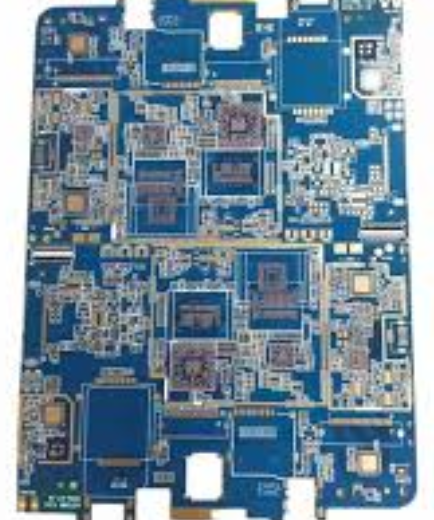
Design Challenges And Solutions In HDI PCB Development
High-Density Interconnect (HDI) technology has revolutionized the design and manufacturing of printed circuit boards (PCBs), enabling the development of more compact, efficient, and powerful electronic devices. As consumer demand for smaller and more capable gadgets continues to rise, HDI technology has become increasingly essential in the electronics industry. However, the development of HDI PCBs presents a unique set of design challenges that require innovative solutions to overcome.
One of the primary challenges in HDI PCB design is the need to accommodate a higher number of components and interconnections within a limited space.
This necessitates the use of finer lines and spaces, smaller vias, and more layers, which can complicate the design process. To address this, designers often employ advanced computer-aided design (CAD) tools that allow for precise control over the layout and routing of the PCB. These tools facilitate the optimization of space and ensure that all components are efficiently placed and interconnected.
Another significant challenge is the thermal management of HDI PCBs.
As the density of components increases, so does the potential for heat generation, which can adversely affect the performance and reliability of the device. Effective thermal management is crucial to prevent overheating and ensure the longevity of the PCB. Solutions to this challenge include the use of thermal vias, heat sinks, and advanced materials with superior thermal conductivity. Additionally, simulation software can be used to model and predict thermal behavior, allowing designers to make informed decisions about the placement of components and the design of heat dissipation mechanisms.
Signal integrity is also a critical concern in HDI PCB design.
The close proximity of traces and components can lead to issues such as crosstalk, electromagnetic interference (EMI), and signal attenuation. To mitigate these problems, designers must carefully consider the routing of high-speed signals and the placement of ground planes. Techniques such as differential signaling, controlled impedance routing, and the use of shielding can help maintain signal integrity and ensure reliable performance.
Moreover, the manufacturing process of HDI PCBs presents its own set of challenges.
The precision required for drilling microvias and the complexity of multilayer stacking demand advanced fabrication techniques and equipment. Manufacturers must ensure that their processes are capable of producing the fine features and tight tolerances required by HDI designs. This often involves the use of laser drilling, sequential lamination, and other cutting-edge technologies. Collaboration between designers and manufacturers is essential to ensure that the design is manufacturable and that any potential issues are addressed early in the development process.
Finally, cost considerations play a significant role in HDI PCB development.
The advanced materials and processes required for HDI technology can lead to higher production costs. Designers must balance the need for performance and miniaturization with budget constraints. This often involves making strategic decisions about which features are essential and which can be optimized or eliminated to reduce costs without compromising functionality.
In conclusion, while HDI technology offers significant advantages in terms of miniaturization and performance, it also presents a range of design challenges that must be carefully managed. Through the use of advanced design tools, effective thermal management strategies, careful attention to signal integrity, and collaboration with manufacturers, these challenges can be successfully addressed. As HDI technology continues to evolve, it will undoubtedly play a pivotal role in the advancement of electronic devices, driving innovation and meeting the ever-growing demands of consumers.

Future Trends In HDI Technology For Printed Circuit Boards
High-Density Interconnect (HDI) technology has become a cornerstone in the evolution of printed circuit boards (PCBs), driving advancements in electronic devices by enabling more compact, efficient, and powerful designs. As the demand for smaller, faster, and more reliable electronic products continues to grow, the future trends in HDI technology for PCBs are poised to play a pivotal role in meeting these challenges. To understand the trajectory of HDI technology, it is essential to explore the innovations and developments that are shaping its future.
One of the most significant trends in HDI technology is the increasing use of microvias, which are tiny holes that connect different layers of a PCB.
Microvias allow for greater component density and improved electrical performance, which are crucial for modern electronic devices. As the industry moves forward, the development of even smaller microvias is anticipated, enabling further miniaturization of PCBs. This trend is driven by the need for more compact devices, such as smartphones and wearables, which require intricate and densely packed circuitry.
In addition to microvias, the integration of advanced materials is another trend that is expected to influence the future of HDI technology.
Materials such as liquid crystal polymer (LCP) and polytetrafluoroethylene (PTFE) are being explored for their superior electrical properties and thermal stability. These materials can enhance the performance of HDI PCBs by reducing signal loss and improving heat dissipation, which are critical factors in high-frequency applications. As research and development in this area continue, the adoption of these advanced materials is likely to become more widespread, further enhancing the capabilities of HDI technology.
Moreover, the rise of 5G technology is set to have a profound impact on HDI PCBs.
The high data rates and low latency requirements of 5G networks necessitate PCBs that can handle increased signal integrity and power efficiency. HDI technology, with its ability to support high-speed data transmission and complex routing, is well-suited to meet these demands. Consequently, the proliferation of 5G technology is expected to drive further advancements in HDI PCBs, leading to innovations that will support the next generation of wireless communication.
Another emerging trend is the use of additive manufacturing techniques in the production of HDI PCBs.
Additive manufacturing, or 3D printing, offers the potential to revolutionize PCB fabrication by enabling more flexible and cost-effective production processes. This approach allows for the creation of complex geometries and customized designs that are difficult to achieve with traditional manufacturing methods. As additive manufacturing technology matures, it is likely to become an integral part of HDI PCB production, offering new possibilities for design and functionality.
Furthermore, the increasing focus on sustainability and environmental responsibility is influencing the development of HDI technology.
Manufacturers are seeking ways to reduce waste and energy consumption in PCB production, leading to the exploration of eco-friendly materials and processes. This trend is expected to continue, as the industry strives to balance technological advancement with environmental stewardship.
In conclusion, the future trends in HDI technology for printed circuit boards are characterized by a convergence of miniaturization, material innovation, 5G integration, additive manufacturing, and sustainability. These trends are set to redefine the capabilities of HDI PCBs, enabling the creation of more advanced and efficient electronic devices. As the industry continues to evolve, HDI technology will remain at the forefront of PCB innovation, driving progress and shaping the future of electronics.