High-Power PCB Thermal Design Guide
Introduction
As electronic devices continue to demand higher power and performance, managing heat dissipation in printed circuit boards (PCBs) has become a critical challenge. Excessive heat can lead to component failure, reduced efficiency, and shorter product lifespans. Effective thermal management is essential for ensuring reliability, especially in high-power applications such as power electronics, automotive systems, and industrial equipment.
This guide explores key strategies for optimizing PCB thermal design, including material selection, layout techniques, and advanced cooling solutions.
1. Understanding Heat Generation in PCBs
Heat in PCBs is primarily generated by:
- Active components (e.g., power transistors, voltage regulators, and processors)
- Trace resistance (I²R losses in high-current paths)
- Switching losses (in high-frequency circuits)
To prevent overheating, designers must:
- Identify high-power components
- Calculate power dissipation
- Monitor thermal resistance (θJA, θJC)
2. PCB Material Selection for Thermal Management
2.1 Substrate Materials
- FR-4: Standard material with moderate thermal conductivity (~0.3 W/mK). Suitable for low-power designs.
- Metal-Core PCBs (MCPCBs): Use aluminum or copper cores (5-400 W/mK) for better heat spreading.
- Ceramic Substrates (AlN, BeO): Excellent thermal conductivity (150-300 W/mK) but expensive.
- High-Tg FR-4: Improved thermal stability for high-temperature environments.
2.2 Copper Weight and Thickness
- Thicker copper (2 oz, 3 oz, or more) reduces resistive losses and improves heat dissipation.
- Use heavy copper in power planes and high-current traces.
2.3 Thermal Vias
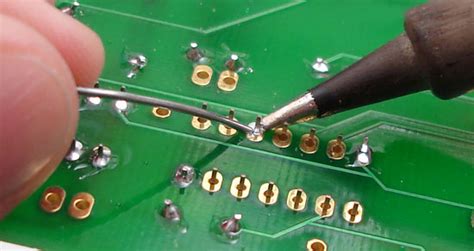
- Plated through-hole (PTH) vias transfer heat from surface components to inner layers or heatsinks.
- Design Tips:
- Use arrays of small vias under hot components.
- Fill vias with thermally conductive epoxy for better performance.
3. PCB Layout Optimization for Heat Dissipation
3.1 Component Placement
- Group high-power components to localize heat sources.
- Avoid placing heat-sensitive parts near hot components.
- Use thermal relief pads for soldering while maintaining heat transfer.
3.2 Trace Design
- Wider Traces: Reduce resistance and heat generation.
- Copper Pouring: Large copper areas act as heat spreaders.
- Avoid Sharp Corners: Smooth bends minimize current crowding and hotspots.
3.3 Power and Ground Planes
- Use solid planes for low-impedance current paths.
- Multiple ground layers improve heat distribution.
4. Advanced Cooling Techniques
4.1 Heatsinks and Thermal Pads
- Attach heatsinks to high-power components (e.g., MOSFETs, regulators).
- Thermal interface materials (TIMs) (e.g., thermal paste, pads) improve conduction.
4.2 Forced Air Cooling (Fans & Blowers)
- Use axial or centrifugal fans for active cooling in enclosed systems.
- Optimize airflow paths to avoid recirculation.
4.3 Liquid Cooling
- Cold plates or heat pipes for extreme power densities.
- Ideal for high-performance computing and electric vehicle systems.
4.4 Phase-Change Cooling
- Heat pipes and vapor chambers for efficient heat transport.
5. Simulation and Testing
5.1 Thermal Simulation Tools
- Finite Element Analysis (FEA): Tools like Ansys Icepak, COMSOL, and SolidWorks Flow Simulation predict thermal behavior.
- PCB-Specific Tools: Cadence Allegro, Altium Designer with thermal analysis plugins.
5.2 Infrared Thermography & Thermal Testing
- Use IR cameras to identify hotspots in prototypes.
- Validate thermal models with real-world testing.
6. Industry Standards and Best Practices
- IPC-2152: Guidelines for current-carrying capacity in PCB traces.
- JEDEC JESD51: Thermal testing standards for semiconductor packages.
- Military/Aerospace (MIL-STD-810): Rigorous thermal cycling requirements.
Conclusion
Effective thermal management in high-power PCBs requires a multi-faceted approach, combining material selection, intelligent layout design, and advanced cooling methods. By leveraging simulation tools and adhering to industry best practices, engineers can ensure reliable operation and extended product life.
As power demands continue to rise, innovative thermal solutions—such as embedded cooling and advanced materials—will play an increasingly vital role in PCB design.