High-Speed Rigid-Flex PCB Manufacturing for Reliable Prototypes
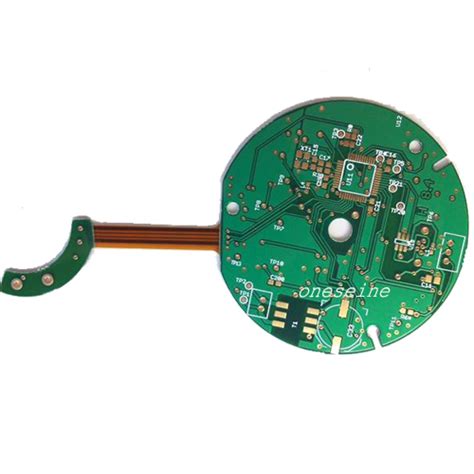
Key Takeaways
When selecting PCB manufacturing companies for high-speed applications, understanding PCB manufacturing cost drivers becomes critical. Modern PCB manufacturing business models prioritize rapid prototyping—particularly for medical and industrial devices requiring 2.0mm rigid-flex stackups. Here’s what you need to consider:
| Factor | Impact on Prototyping |
|---|---|
| Material Selection | Affects signal integrity and durability |
| Lead Time Optimization | Reduces time-to-market by 30-50% |
| DFM Checks | Prevents 80% of design-related delays |
Tip: Always request free DFM checks to identify impedance mismatches or thermal stress points early in your design phase.
Advanced PCB manufacturing techniques, like laser-drilled microvias, enable tighter tolerances for high-frequency circuits. Partnering with experts in rigid-flex solutions ensures seamless integration of turnkey assembly services, minimizing manual handling risks. For industrial applications, prioritize vendors offering 24/7 production monitoring to maintain consistency across batches.
By balancing PCB manufacturing cost with quality assurance protocols, you avoid costly revisions. Opt for suppliers specializing in quick-turn rigid-flex PCBs—these teams often streamline workflows to deliver reliable prototypes within 5-7 days, even for complex 12-layer designs.
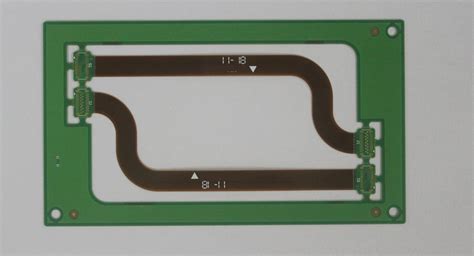
High-Speed Rigid-Flex PCB Production Solutions
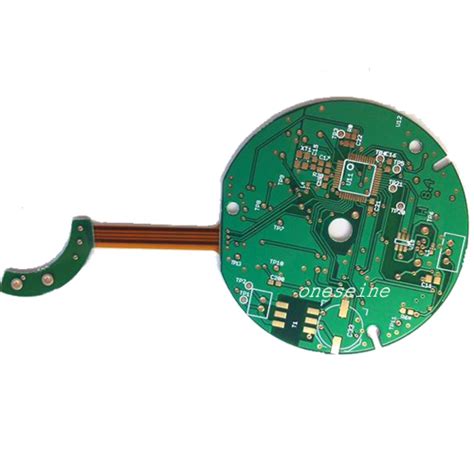
When designing advanced electronics, selecting the right PCB manufacturing partner ensures your rigid-flex circuits meet both performance and reliability demands. Modern PCB manufacturing companies leverage precision laser drilling and automated optical inspection (AOI) to achieve tight tolerances in 2.0mm configurations, critical for high-speed signal integrity. By optimizing layer stackups and material selection, these specialized manufacturers reduce PCB manufacturing cost while maintaining compliance with industrial or medical-grade standards.
For time-sensitive projects, streamlined workflows—from free DFM checks to rapid prototyping—help identify potential fabrication issues early, minimizing rework delays. Advanced PCB manufacturing business models now integrate turnkey assembly services, allowing you to consolidate suppliers and accelerate deployment. Whether you require impedance-controlled routing for RF applications or flexible sections for compact designs, partnering with experts who understand high-speed rigid-flex PCB production ensures your prototypes transition seamlessly to full-scale manufacturing. This approach not only shortens lead times but also aligns with stringent quality requirements for mission-critical systems.
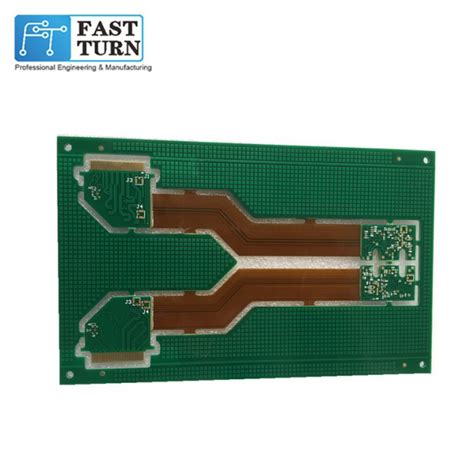
Quick-Turn Prototyping for Medical Electronics
When developing medical devices, time-sensitive prototyping is critical to meet stringent regulatory timelines while ensuring reliability and signal integrity. PCB manufacturing companies specializing in rigid-flex solutions enable you to accelerate iterations without compromising on precision. By leveraging advanced PCB manufacturing processes, such as laser-drilled microvias and controlled impedance routing, you can achieve functional prototypes in as few as 5-7 days—even for complex 2.0mm stackups with mixed materials.
For medical applications, managing PCB manufacturing cost requires balancing speed with compliance. Reputable providers integrate free DFM checks to preemptively address issues like flex-to-rigid transition zones or thermal management in implantable devices. This proactive approach reduces re-spins, ensuring your designs meet ISO 13485 certification standards from the first prototype.
Turnkey PCB manufacturing business models further streamline deployment by combining fabrication, component sourcing, and medical-grade assembly under one roof. Whether you’re building patient monitors or surgical tools, this end-to-end integration minimizes supply chain delays while maintaining traceability for FDA audits. By prioritizing signal integrity testing and biocompatible materials, you ensure prototypes mirror production-grade performance—a necessity in life-critical systems.
Transitioning to volume production becomes seamless when your prototyping partner already understands the unique demands of medical electronics, from EMI shielding to sterilization compatibility.
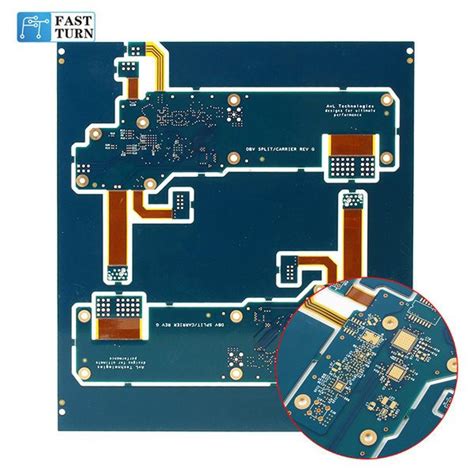
2.0mm Rigid-Flex PCB Stackup Advantages
When designing high-performance electronics, the choice of PCB manufacturing materials and stackup configurations directly impacts reliability and functionality. A 2.0mm rigid-flex PCB stackup offers distinct advantages for applications demanding durability and precision, particularly in medical or industrial environments. By combining rigid and flexible layers at this thickness, PCB manufacturing companies can achieve optimal mechanical stability while maintaining the bendability required for compact designs.
This configuration enhances signal integrity in high-speed circuits, as thicker copper layers (up to 2 oz) reduce impedance variations and crosstalk. For prototypes, the 2.0mm profile supports robust thermal management, which is critical for devices operating in fluctuating temperatures. Additionally, the balanced stackup minimizes warping during assembly, reducing PCB manufacturing cost by lowering scrap rates and rework needs.
Transitioning from design to production, the 2.0mm structure simplifies integration with turnkey services. Its standardized layer count (typically 6-12 layers) ensures compatibility with automated assembly processes, accelerating timelines without compromising quality. For PCB manufacturing business clients, this translates to faster iterations and predictable performance—key factors when deploying industrial control systems or medical diagnostics equipment.
Another advantage lies in the ease of achieving impedance control, a necessity for high-frequency applications. The rigid sections provide stable grounding planes, while flexible zones allow dynamic routing around mechanical constraints. By leveraging these benefits, you can optimize both functionality and scalability in mission-critical prototypes.
Free DFM Checks for Error-Free Designs
When developing rigid-flex PCB prototypes, design flaws can lead to costly delays and rework. That’s why leading PCB manufacturing companies prioritize Design for Manufacturability (DFM) checks to identify potential issues before production begins. By integrating free DFM analysis into your workflow, you ensure your designs align with manufacturing capabilities, minimizing risks like improper layer alignment or insufficient clearances.
Advanced PCB manufacturing workflows leverage automated DFM tools to scan for over 200+ parameters, including trace spacing, via placement, and material compatibility. These checks are critical for maintaining PCB manufacturing cost efficiency—catching errors early avoids wasted materials and reduces time-to-market. For high-speed applications, such as medical or industrial systems, even minor oversights in impedance control or flex-to-rigid transitions can compromise reliability.
A trusted PCB manufacturing business will provide detailed DFM reports highlighting recommended adjustments, such as optimizing copper distribution or adjusting bend radii. This collaborative approach ensures your design meets both performance goals and production realities. For projects requiring tight timelines, combining DFM validation with quick-turn services creates a seamless path from concept to functional prototypes. By addressing manufacturability upfront, you eliminate guesswork and build confidence in your final product’s quality.
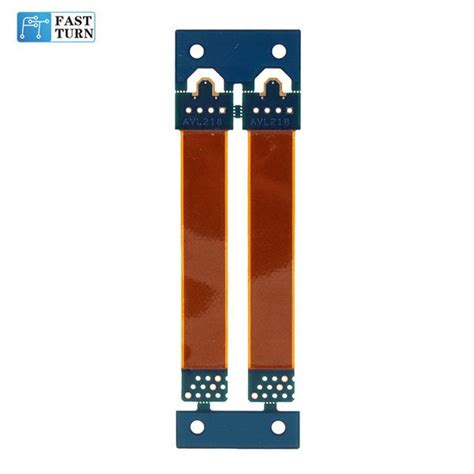
Turnkey Assembly Services for Rapid Deployment
When accelerating product development, partnering with PCB manufacturing companies that offer full-service solutions ensures seamless transition from design to deployment. Turnkey assembly services eliminate logistical bottlenecks by integrating PCB manufacturing, component sourcing, and final testing under one roof. This approach not only reduces PCB manufacturing cost through bulk procurement and optimized workflows but also guarantees faster time-to-market—critical for medical or industrial applications requiring precision and reliability.
By opting for a PCB manufacturing business with turnkey capabilities, you avoid the complexities of coordinating multiple vendors. Advanced facilities handle everything from micro-component placement to functional validation, ensuring compliance with stringent industry standards. Free DFM checks further streamline the process, identifying potential issues before production begins. Whether you’re scaling prototypes or preparing for high-volume runs, integrated services minimize risks while maintaining the quality demanded by mission-critical systems.
For rapid deployment, prioritize partners offering end-to-end support—this transforms fragmented workflows into a cohesive, time-efficient strategy. The result? Reliable rigid-flex PCBs delivered faster, without compromising on performance or durability.
Reliable Rigid-Flex Circuits for Industrial Use
When designing electronics for industrial environments, you need circuits that withstand extreme conditions—whether it’s high-vibration machinery, fluctuating temperatures, or exposure to contaminants. PCB manufacturing companies specializing in rigid-flex solutions address these challenges by combining durability with precision. For industrial applications, PCB manufacturing cost optimization often hinges on selecting materials like polyimide or liquid crystal polymer (LCP), which offer superior thermal stability and mechanical resilience while minimizing long-term failure risks.
Advanced PCB manufacturing processes ensure seamless integration of rigid and flexible sections, critical for compact control systems or sensor arrays in automation. For example, dynamic flexing zones in motor controllers or robotic arms require precise layer alignment and stress-resistant adhesives to prevent delamination. By partnering with PCB manufacturing businesses that prioritize rigorous testing—such as thermal cycling or bend endurance—you reduce downtime and maintenance expenses.
Moreover, industrial-grade rigid-flex PCBs demand error-free designs to avoid costly revisions. Leading providers incorporate automated DFM checks to validate trace spacing, impedance matching, and solder mask tolerances specific to harsh environments. This becomes particularly critical when balancing PCB manufacturing cost with compliance to standards like IPC-6013 for industrial electronics. By leveraging turnkey services, you streamline prototyping to production, ensuring reliable performance even in the most demanding settings.
Optimizing Lead Times with Advanced PCB Tech
When accelerating production timelines, leveraging cutting-edge technologies in PCB manufacturing becomes critical. Modern PCB manufacturing companies integrate automation, AI-driven design validation, and IoT-enabled process monitoring to compress development cycles without compromising quality. For instance, AI-powered DFM (Design for Manufacturability) analysis identifies potential fabrication issues in minutes—drastically reducing iterative revisions. Advanced routing algorithms optimize panel utilization, which directly lowers PCB manufacturing cost while maintaining precision in 2.0mm rigid-flex stackups.
To further streamline workflows, top-tier suppliers deploy modular assembly lines that support just-in-time component sourcing. This approach minimizes idle time between prototyping and full-scale production, ensuring your PCB manufacturing business meets tight deadlines for medical or industrial applications. Real-time collaboration tools also bridge communication gaps between design teams and fabrication experts, enabling instant feedback loops. By adopting these innovations, you eliminate bottlenecks that traditionally inflate lead times, securing a competitive edge in high-speed electronics development.
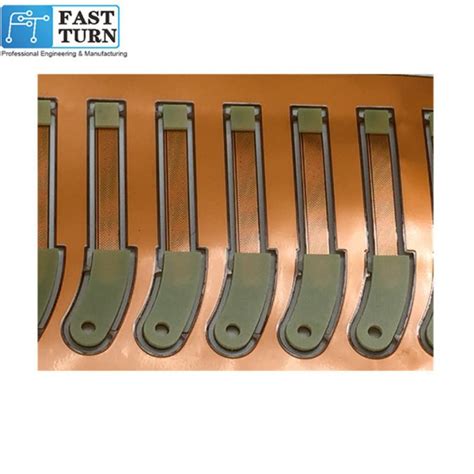
XPCB’s Expertise in High-Quality Flex PCBs
When selecting PCB manufacturing companies for advanced flexible circuits, you need partners capable of balancing precision with scalability. XPCB excels in delivering high-quality flex PCBs through optimized processes that address critical factors like PCB manufacturing cost and design complexity. Their expertise lies in leveraging hybrid rigid-flex stackups to ensure signal integrity while maintaining mechanical durability, even in demanding environments like medical or industrial systems.
By combining automated DFM validation with material-grade testing, XPCB minimizes errors that often inflate PCB manufacturing business timelines. Their engineers specialize in fine-tuning impedance control and thermal management for 2.0mm configurations, ensuring prototypes meet both performance benchmarks and rapid turnaround expectations. This approach not only reduces rework but also streamlines transitions to volume production—a key advantage for projects requiring quick scalability.
What sets XPCB apart is their ability to integrate PCB manufacturing workflows with turnkey assembly, allowing you to consolidate suppliers without compromising quality. Whether you’re prototyping high-speed interfaces or ruggedized industrial controls, their solutions prioritize reliability-first design principles. This focus on end-to-end optimization ensures your flexible circuits perform consistently, even as application requirements evolve.
Conclusion
By leveraging modern PCB manufacturing capabilities, you gain access to solutions that balance speed, precision, and cost-effectiveness for demanding applications. When selecting PCB manufacturing companies, prioritize those offering quick-turn services and free DFM checks to eliminate design flaws early, ensuring your 2.0mm rigid-flex PCB prototypes meet stringent medical or industrial standards. While PCB manufacturing cost remains a critical factor, integrating turnkey assembly streamlines production, reducing deployment timelines and minimizing overhead. For businesses scaling their PCB manufacturing business, advanced stackup configurations and material optimizations enable reliable performance in high-vibration or thermally challenging environments.
Leading providers like XPCB demonstrate how expertise in high-speed rigid-flex PCB production translates into consistent quality, even under tight deadlines. By aligning with partners who specialize in industrial-grade circuits and medical-grade compliance, you secure prototypes that transition seamlessly to full-scale production. This approach not only accelerates development cycles but also ensures long-term reliability—a cornerstone for success in sectors where precision and durability are non-negotiable.
FAQs
What makes rigid-flex PCBs suitable for high-speed applications?
Rigid-flex designs combine durability and signal integrity, critical for medical and industrial systems. By integrating PCB manufacturing techniques that minimize impedance fluctuations, these boards maintain performance in demanding environments while reducing assembly complexity.
How does PCB manufacturing cost affect prototyping timelines?
While thicker 2.0mm stackups may increase material expenses, partnering with specialized PCB manufacturing companies optimizes costs through bulk pricing and process efficiencies. Many providers offer tiered pricing for quick-turn orders, balancing speed and budget.
Why are free DFM checks important in PCB manufacturing business workflows?
Automated design-for-manufacturability analysis identifies layout errors early, preventing costly revisions. This step ensures your rigid-flex prototypes meet industry-grade reliability standards before production, reducing risks in medical or industrial deployments.
How do turnkey services accelerate product development?
Turnkey PCB manufacturing streamlines sourcing, assembly, and testing into a single workflow. This approach eliminates vendor coordination delays, letting you focus on refining high-speed designs rather than logistical hurdles.
Ready to Start Your Project?
For tailored solutions in high-speed rigid-flex PCB manufacturing, please click here: https://www.andwinpcb.com/pcb-manufacturing/. Our team ensures seamless prototyping, from DFM reviews to rapid assembly.