How Much Gold is Present on Circuit Boards?
Introduction to Gold in Electronics
Gold has been a prized material for thousands of years, valued for its beauty, malleability, and resistance to corrosion. In modern times, this precious metal has found an unexpected but critical application in the electronics industry. Circuit boards, the fundamental building blocks of all electronic devices, contain small amounts of gold that serve important functional purposes.
The use of gold in electronics accounts for approximately 7% of the world’s annual gold consumption, making the technology sector one of the largest industrial users of this precious metal. While the quantity of gold in any single circuit board may seem insignificant, the massive scale of electronic device production means that substantial amounts of gold are tied up in our phones, computers, and other gadgets.
This article will examine how much gold is actually present on typical circuit boards, where this gold is located, why it’s used, and whether recovering this gold is economically viable. We’ll also explore the environmental implications of gold in electronics and potential future trends in materials usage.
Why Use Gold in Circuit Boards?
Before examining quantities, it’s important to understand why gold is used in electronics at all, given its high cost. Gold offers several unique properties that make it invaluable for certain electronic applications:
- Excellent Conductivity: Gold is an outstanding conductor of electricity, second only to silver and copper in pure form. However, unlike these other metals, gold doesn’t oxidize or corrode easily.
- Corrosion Resistance: Gold doesn’t tarnish or corrode when exposed to air, moisture, or most chemicals. This ensures reliable electrical connections over long periods.
- Malleability: Gold can be drawn into extremely thin wires or plated in very thin layers, making it economical to use despite its high cost per ounce.
- Solderability: Gold forms reliable connections with solder and maintains these connections well over time.
- Contact Reliability: Gold-to-gold contacts maintain low electrical resistance, which is crucial for connectors and switches that may be operated thousands of times.
These properties make gold particularly valuable for use in connectors, switch contacts, and other critical areas where reliability is paramount. In circuit boards, gold is most commonly used for edge connectors (like those on RAM modules), bonding wires in integrated circuits, and certain surface finishes.
Typical Gold Content in Circuit Boards
The amount of gold present in circuit boards varies significantly depending on the type and age of the board. Here’s a general breakdown:
1. Modern Consumer Electronics (Smartphones, Tablets, Laptops)
Modern consumer electronics are designed with cost efficiency in mind, so they use the absolute minimum amount of gold necessary:
- Smartphone circuit boards: 0.034 grams (34 milligrams) of gold on average
- Laptop motherboards: 0.1 to 0.3 grams of gold
- Tablet circuit boards: Similar to smartphones, around 0.03-0.05 grams
2. Desktop Computer Motherboards
Desktop computer motherboards typically contain more gold than mobile devices:
- Average gold content: 0.2 to 0.5 grams
- High-end server motherboards may contain up to 1 gram or more
3. Older Electronics (Pre-2000s)
Older electronics often contain significantly more gold:
- 1980s-1990s computer boards: 1 to 5 grams of gold
- Military and aerospace electronics: Up to 10 grams or more in some cases
4. Specialized Electronics
Certain specialized electronics contain higher gold concentrations:
- Telecommunications equipment
- Medical devices
- Aerospace and military applications
- High-reliability industrial equipment
These may contain several grams of gold per board due to their stringent reliability requirements.
Where is the Gold Located on Circuit Boards?
Gold isn’t uniformly distributed across circuit boards. It’s concentrated in specific components and areas:
- Edge Connectors: The gold-plated fingers along the edges of many boards (like RAM modules) are the most visible gold elements.
- Integrated Circuit (IC) Pins: Many chips have gold-plated pins or leads.
- Bonding Wires: Thin gold wires inside chips that connect the silicon die to the package leads.
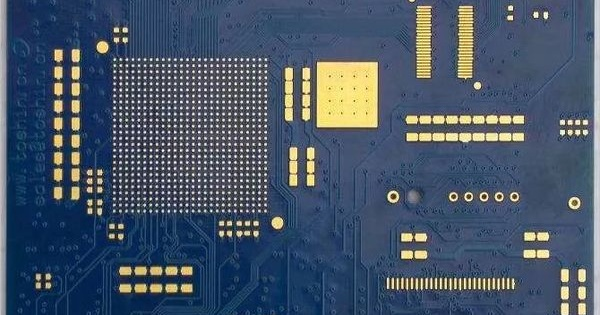
- Surface Finishes: Some boards use gold plating (often electroless nickel immersion gold or ENIG) as a surface finish.
- Connectors and Sockets: High-quality connectors frequently use gold plating.
- Switches and Relays: Contacts in high-end switches often use gold for reliability.
Calculating Gold Content: A Detailed Example
Let’s examine a typical desktop computer motherboard weighing about 500 grams to estimate its gold content:
- Edge Connectors:
- Area: ~10 cm² total
- Gold thickness: ~0.5 microns (0.00005 cm)
- Volume: 10 × 0.00005 = 0.0005 cm³
- Gold density: 19.32 g/cm³
- Weight: 0.0005 × 19.32 = 0.00966 grams (9.66 mg)
- IC Pins:
- ~100 ICs with 20 pins each = 2000 pins
- Each pin has ~0.1 mm² gold plating at 0.25 microns
- Total volume: 2000 × (0.0001 × 0.000025) = 0.000005 cm³
- Weight: 0.000005 × 19.32 = 0.0000966 grams (0.0966 mg)
- Bonding Wires:
- ~100 ICs with 2 mg gold wire each = 200 mg (0.2 grams)
- Surface Finish:
- Board area ~200 cm²
- ENIG thickness ~0.05 microns
- Volume: 200 × 0.000005 = 0.001 cm³
- Weight: 0.001 × 19.32 = 0.01932 grams (19.32 mg)
Total Estimated Gold:
- Edge connectors: 9.66 mg
- IC pins: 0.0966 mg
- Bonding wires: 200 mg
- Surface finish: 19.32 mg
- Total: ~229 mg (0.229 grams)
This estimate suggests about 0.229 grams of gold in a typical motherboard, which aligns with industry averages. Note that bonding wires account for most of this total.
Economic Value of Gold in Circuit Boards
Given that gold trades at approximately $60 per gram (as of 2023), let’s calculate the intrinsic gold value in various devices:
- Smartphone: 0.034g × $60 = ~$2.04
- Laptop: 0.2g × $60 = ~$12
- Desktop Motherboard: 0.23g × $60 = ~$13.80
- Old Computer (1990s): 2g × $60 = ~$120
While these values may seem significant, the cost and difficulty of extraction must be considered when evaluating recycling potential.
Gold Recovery from Circuit Boards
The process of extracting gold from circuit boards is complex and typically involves:
- Collection and Sorting: Gathering sufficient quantities of boards.
- Physical Processing: Shredding and separating components.
- Chemical Treatment: Using acids or other chemicals to dissolve metals.
- Refining: Purifying the recovered gold.
Challenges include:
- High costs of safe chemical processing
- Environmental regulations
- Need for large quantities to be economical
- Health hazards from toxic materials in e-waste
Professional refiners typically need at least 500 grams of gold-bearing material to make recovery economically viable, which would require processing thousands of modern circuit boards.
Environmental Considerations
The presence of gold in electronics creates both challenges and opportunities:
Negative Impacts:
- Gold mining is environmentally destructive
- Improper e-waste disposal leads to toxic pollution
- Most e-waste isn’t properly recycled
Positive Aspects:
- Urban mining (recycling e-waste) could reduce need for new mining
- Gold recovery can be part of comprehensive e-waste recycling
- Promotes development of more sustainable recycling technologies
Future Trends in Gold Usage
Several factors are influencing gold usage in electronics:
- Material Substitution: Manufacturers are finding ways to use less or no gold:
- Thinner platings (from 1 micron to 0.1 micron or less)
- Alternative materials like palladium or specialized alloys
- Improved designs that reduce need for gold contacts
- Rising Gold Prices: Make recycling more attractive but also drive substitution.
- Environmental Regulations: May increase recycling requirements.
- Miniaturization: Smaller devices mean less gold per unit, but more units overall.
Conclusion
While circuit boards do contain gold, the quantities in modern devices are quite small – typically measured in milligrams rather than grams. A smartphone might contain about $2 worth of gold, while a desktop computer motherboard holds around $10-15 worth. Older electronics often contain significantly more gold, making them more attractive for recycling.
The gold is primarily concentrated in connectors, bonding wires, and surface finishes rather than being evenly distributed. While recovering gold from circuit boards is technically possible, it’s generally not economically viable for individuals or small-scale operations due to the processing costs and required volumes.
As electronics manufacturing becomes more efficient and gold prices remain high, manufacturers continue to reduce the amount of gold used in each device. However, with billions of electronic devices produced annually, the total amount of gold tied up in electronics remains substantial, highlighting the importance of developing effective e-waste recycling systems to recover these valuable materials.
For those interested in gold recovery, the most practical approach is usually to collect and sell e-waste to professional refiners rather than attempting extraction at home. This ensures proper handling of hazardous materials while still contributing to the recovery of valuable resources.