How to do the RF work well
A RF product engineer should have what knowledge, how to do the RF product work well. There is a dozens of discussion stickers on this issue, it seems this is a common problem.
So how can the RF products work well?
Can say that no one would say that this or that way, we can learn radio products, radio products; very simple, if your college teacher, your mentor such professional theory If teachers do not make you feel good about RF product technology, it’s hard to tell how other people will let you know how to learn RF product technology.
RF product engineer’s specific job content
The human resources field now divides the engineers involved in the technical aspects of microwave and radio frequency products into several names, generally the name of the RF Engineer who works for it. For example, if a job is a “microwave engineer” or a “radio product engineer,” and the company is telecom equipment, then the job should be small-signal LNAs, frequency synthesizers, mixers and power amplifiers Unit circuit and circuit system design work; if a position is “RF product engineer”, and the company is doing RFID, then either do microstrip antenna and power amplifier, low noise amplifier, frequency synthesizer design work ( 900MHz above the high-frequency), is only the electric field antenna and power amplifier design work (below 30MHz band); others, such as mobile phone companies are specialized “mobile phone RF product engineer” and so on.
So what is the specific content of these RF product engineers? Nothing less than the following:
1. Circuit analysis, some communications equipment company’s project.
the RF product engineer responsible for the entire RF system circuit analysis, guidance system design indicators, the allocation of module indicators, standardize the EMC design principles, with the annex to the function and performance Request
2. Circuit design, including the block diagram design and circuit design
which is RF products engineers must have the basic skills. This is also derived from the system design, and how to achieve the goal of system design is the purpose of the circuit design, it is also the “antecedents” of device selection evaluation, because the process of designing the circuit is also a process of device selection.
3. Device selection and evaluation, to achieve the circuit’s index requirements
select the appropriate device is essential, this process is in fact with the circuit design is carried out at the same time. How to choose the corresponding device, which one is more suitable for the same type of device compared to our product design? Cost, performance, process requirements, packaging, supplier quality, delivery time and so on, it is more factors to be considered.
4 software simulation, whether it is ADS, MWO, Ansoft or CST, HFSS, anyway, you will always have one or two simulation software to use it.
Simulation software does not give you 100% accuracy in your design, but it does not always keep your designs off the basics, at least they are accurate in qualitative simulation. So be sure to learn to use one or two or more simulation software. Its basic function is to enable you to analyze your design qualitatively. The error is always there, but it can enhance your confidence.
5.PCB LAYOUT, the principle is like a theoretical basis, ten thousand applications can only be based on a theory, several products may also have only one schematic.
as long as it is not the same wiring, such as cell phones, the same cell phone programs used by many companies Design, schematic is the same, but different companies cloth the PCB is not the same, one is not the same appearance, one is the performance is different. The difference in performance, in fact, is the difference PCB LAYOUT. Meet the requirements of the PCB, its layout and wiring both performance, appearance, technology, EMC and so on. Therefore, PCB LAYOUT is also a very important skill.
Debugging analysis, this debugging and production debugging is not the same.
Production debugging is prescriptive, and debugging of R & D products focuses on spotting and problem solving. Debugging is a process of summing up and accumulating experience, not to say that debugging experience is accumulated through debugging, but rather that debugging experience accumulates. Many problems may not be discovered at design time, so after debugging, we know that later at design time How to circumvent these problems, how to improve these problems. Debugging is also the most effective way of practicing theory, and we can qualitatively understand theoretical knowledge through the debugging process.
7. Test, in fact, the test is for debugging services, debugging is designed for the service (design is for the market).
RF product engineers must be proficient in using a wide range of RF product testers, be they spectrum analyzers, network analyzers, signal sources, oscilloscopes, power meters, noise figure testers, synthesis testers, and more. It is difficult to test the effective debugging, can not find how to improve the problem? So do not underestimate the test technology, in fact, look at foreign RF companies, the real masters are from design to test technology, the middle of the reasons we worth thinking.
8. If you can, please do more hands-on, do more grass-roots work, to welding their own soldering it yourself, you can not debug time to find someone to stay in your side for you to change the capacitor for the right? So, Do not underestimate the eyes of experts look down on welding, capable of welding their own right.
How to learn RF products in practical work
After we know your job responsibilities, how to further study in the workplace and practice? There are many cases in the real work, not how many integral calculus equations we can easily solve. This is not to say that the microwave equation makes no sense in actual work, but rather that many people repeat it. “Theory needs to be tested by practice.”
The first day you step into social work is not the first day you’re done, but the first day you actually study the textbook, the first day you test the knowledge in the classroom.
Many of my friends hope to get into a good company and a good department soon after graduation. They want to be the first choice institute of technology, choose a good company, want to enter the central research department of the company, At least get into the work of a development department; into the research and development department does not matter, many of my friends think of it as a “research” of the work, stay in front of the computer all day long, on the Internet, find information, or else is to draw Two schematic LAYOUT engineers to draw board, free time to write two articles published.
In fact, this started into a misunderstanding.
This is why many technicians with many years of work experience only find out when they walk out of a company that they know very little or because it is entirely technical abuses for others. Why, they forgot, the essence of technology lies in practice. Therefore, do technical work, do not underestimate the technicians who stay in the laboratory all day long, do not think they stay in front of the computer than in the front of the colleagues in the instrument and so on. Actually, fundamentally, they are real technicians who can understand theoretical knowledge in practice.
For just entering the RF products
Engineers in the field, first of all should be a laboratory technician, which is a little modest, lower-order attitude; whether designed by others or their own design products, we must know that each resistor and capacitor inductance its role, each root The significance of the alignment should be clear. You must know why you want to use it so that you should not go wrong. Do not talk about experience. Do not say that experience is wrong. It means that if you are real If you want to make progress, you must understand that you can not make any progress if you explain everything with experience. More hands-on, you can do it yourself, do not hands-on practice?
The first part: hardware knowledge
First, the digital signal
1, TTL and buffered TTL signal: logic gate circuit
2, RS232 and definition: Asynchronous transfer standard interface, usually 9 pins (DB-9) or 25 pins (DB-25) type appearance, the general personal computer will have two RS-232 interface , Respectively called COM1 and COM2. Data rates are 50, 75, 100, 150, 300, 600, 1200, 2400, 4800, 9600, 19200 baud per second.
3, RS485 / 422 (balanced signal) half duplex / full duplex
4, dry contact signal: Passive switch, with two closed and disconnected state, there is no polarity between the two contacts, interchangeable. Various switches such as limit switches, limit switches, foot switches, rotary switches, temperature switches, level switches, etc .; various keys; various sensor output, such as: environmental power monitoring sensors, flooding sensors, Fire alarm sensor, broken glass, vibration, smoke and condensation sensor; Relays, reed pipe output.
Wet contact signal: active switch; with electricity and no electricity in two states; polarity between the two contacts can not be reversed.
Second, the analog signal video
1, unbalanced signal: non-stationary signal refers to the distribution of parameters or distribution law changes over time signal.
Most of the signals we encounter in the real world are non-stationary signals. Stabilization and non-stationary are all aimed at stochastic signals. The general methods of non-stationary signal analysis and processing are time domain analysis, frequency domain analysis and time-frequency joint analysis.
2, the balance signal: the signal in the transmission process, if it is directly transmitted is unbalanced signal, if the signal is inverted, and then send the inverted signal and the original signal, it is called the balanced signal, balanced signal into the differential amplifier, The subtraction of the original signal and the inverse phase signal results in a stronger original signal. Since the two lines are subject to similar disturbances during transmission, the same interference signal is subtracted during the subtraction, thus making the original signal more resistant to interference. This phenomenon of suppressing common noise in bipolar wires in balanced signal lines is called common mode rejection. Therefore, only a balanced line in the input and output signals to add a differential amplifier can be achieved.
Third, the chip
1, package
2,7407: TTL open collector six positive phase high voltage driver. 1 into 2 out 3 into 4 output 5 into 6 output 9 into 8 output 11 into 10 output 13 into 12 output.
3,7404: Six sets of inverters. 1 into 2 out 3 into 4 output 5 into 6 output 9 into 8 output 11 into 10 output 13 into 12 output.
4,7400: four groups and the door. 1.2 into 3 out, 4.5 into 6 out, 9.10 into 8 out, 12.13 into 11 out.
5,74 LS573: eight three state output D flip-flop.
6, ULN2003: High voltage, high current Darlington display, consisting of seven silicon NPN Darlington tubes.
7,74LS244: 3-state 8-bit buffer, generally used as a bus driver, no latching function.
8,74 LS240: 3-state bus converter, generally used for bus level matching problem, for one-way transmission.
9,74 LS245: 3-state bus converter, the general level bus for the issue of matching for the two-way transmission.
10, 74LS138: 3 line -8 line decoder
74LS238: Adder
11, CPLD (EPM7128)
12,1161
13, max691
14, max485 / 75176
15, mc1489
16, mc1488
17, ICL232 / max232
18,89C51
Fourth, discrete devices
1, package
2, resistance: power consumption and capacitance
3, capacitance
1) monolithic capacitor
2) ceramic capacitors
3) electrolytic capacitor
4, inductance
5, power conversion module
6, terminals
7, LED LED
8,8 words (a total of yang and yin yin)
9, transistor 2N5551
10, buzzer
Fifth, the smallest single-chip system
1, microcontroller
2, watchdog and power-on reset circuit
3, crystal and ceramic capacitors
Six, serial interface chip
1, eeprom
2, serial I / O interface chip
3, serial AD, DA
4, serial LED driver, max7129
Seven, power design
1, switching power supply: the device selection
2, linear power supply:
1) Transformer
2) Bridge
3) electrolytic capacitor
3, power protection
1) Bridge protection
2) Single diode protection
Eight, maintenance
1, power
2, watchdog
3, the signal
Nine, design ideas
1, power supply: voltage and current
2, Interface: serial port, digital input, digital output
3, switch signal output conditioning
1) TTL- “relay
2) TTL- “relay (reverse logic)
3) TTL- “Solid State Relays
4) TTL- “LED (8 words)
5) Relay – “Relay
6) Relay – “Solid State Relays
4, the switch signal input conditioning
1) Dry contact – “optocoupler
2) TTL- “optocoupler
5, CPU processing capacity considerations
6, become a product of consideration:
1) Board shape: size size, shaped, connectors, space volume
2) circuit board modular design
3) cost analysis
4) device redundancy
1. Resistance of the power
2 capacitor voltage value
5) Chassis
6) the power of choice
7) modular design
8) Cost accounting
1. How to calculate the cost of the circuit board?
2. How to reduce costs? Selection of features to meet the cheap devices
Ten, thinking questions
1, how to detect and indicate RS422 signal
2, how to detect and indicate RS232 signal
3, design a 4 8-character display board
1) Power: DC12
2) Interface: RS232
3) 4 digits 3 “8 characters (connected together)
4) Brightness detection
5) two dimming
4, design a 33 1 “8 word display board
1) Power: DC5V
2) Interface: RS232
3) 3 rows of 11 8 characters, divided into 4, 3, 4 3 groups, with a line between the line and the interval
4) the smallest single-chip system
5) Decoding logic
6) Display drive and drive components
5, design a PCL725 and MOXAC168P interface board
1) Power: DC5V
2) Interface: PCL725 / MOXA8 RS232
1.PCL725, upright DB37, hole
2.MOXAC168P, DB62 curved
3) Switching output signal conditioning: 6 solid state relays and 8 relays, can be any signal control and drive, interface: solid state relays 5.08 upright, relay 3.81 upright
4) switch input conditioning: dry contact closed to 1 or 0 optional, interface: 3.81 upright
5) RS232 conditioning:
1.LED instructions
2. The first 4 RS232 full signal, the latter 4 only need TX, RX, 0
3. No optical isolation
4. Interface: DB9 (needle) upright
The second part: software knowledge
First, the assembly language
Second, C51
This part can be bought from the market N kinds of development board to learn, as the first part, you need to bring it.
Why should we master these knowledge?
In fact, engineers put a bunch of devices together, inject ideas (program), to complete the original separation of these devices can not be completed function, made of a finished product. The higher the skills needed, the more complex the functions, the lower the cost and the greater the market demand for the corresponding stuff, the more successful it is. This is the engineer’s own value. From the cost to the sale of the product, the difference between the pursuit of the enterprise.
As a business owner, is to find such applications in the market; for engineers, the boss put forward the demand or application in accordance with certain principles of conception (the lowest cost, the highest reliability, the smallest circuit board, the most powerful and so on) In the shortest time to complete. The shortest time, with the engineer’s proficiency, work efficiency and working hours directly related.
This is the value of an engineer Abstracting an electronic product into a hardware model has about the following components:
1) Enter
2) Processing core
3) Output
The basic input is the following possible:
1) keyboard
2) Serial interface (RS232 / 485 / canbus / Ethernet / USB)
3) switch (TTL, current loop, dry contact)
4) Analog (4 ~ 20ma, 0 ~ 10ma, 0 ~ 5V (balanced and unbalanced signal))
The output basically has the following composition:
1) Serial interface (RS232 / 485 / canbus / Ethernet / USB)
2) switch (TTL, current loop, dry contact, power drive)
3) Analog (4 ~ 20ma, 0 ~ 10ma, 0 ~ 5V (balanced and unbalanced signal))
4) LED display: LED, character
5) liquid crystal display
6) buzzer
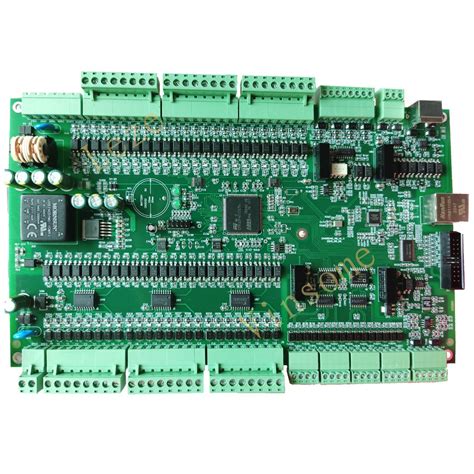
Processing core are:
1) 8-bit microcontroller, the main is the 51 series
2) 32-bit ARM microcontroller, there are atmel and Samsung series
51 series MCU Now, it can only do some simple applications, plainly, this chip is to do a single thing, do more, it is better to use the arm to do; you can also add an operating system on the arm, the program Reliable and easy to write recent arm of the Samsung was sought after, cheap, Ethernet and USB interface also, Zhou Ligong development system is also cheaper, as learning ARM products, it should be the best; as an industrial control , Is not appropriate, there are different views and controversies in the users.
But for beginners, should start from 51, on the one hand, 51 or entry-level chip, as a beginner to practice is better, you can walk the above concept again; many special microcontroller is also the basis of the 51 nuclear On the increase of some I / O and A / D, D / A; also learn a higher level of future microcontroller and ARM to lay the foundation.
Again, which boss will ARM-level development on even 51 novice novice to do 51 in the above complex parallel expansion is not necessary, for example, to expand the I / O port and A / D, D / A, etc. There are some examples of parallel extensions in some of the older books in the market, such as RAM, EPROM, A / D, D / A, etc. I think there is no need to read it anymore, It’s all right This knowledge is essential for all products. So to learn, and then specific application.