How to reverse the schematic diagram of PCB board
In the research of PCB reverse technology, reverse schematic diagram refers to reversely deducing the PCB circuit diagram based on the PCB file diagram or directly drawing the PCB circuit diagram based on the actual product, aiming to explain the principle and working condition of the PCB board. In addition, this circuit diagram is also used to analyze the functional characteristics of the product itself.
In forward design, the general product development must first carry out schematic design, and then carry out PCB design based on the schematic diagram.
Whether it is used to analyze the circuit board principle and product working characteristics in reverse research, or reused as the basis and basis of PCB design in forward design, the PCB schematic diagram has a special role. So, according to the file diagram or the actual object, how to reverse the PCB schematic diagram, and what details should be paid attention to in the reverse process?
1.Reasonable division of functional areas
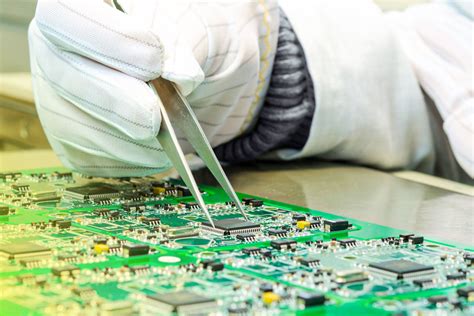
When reverse designing the schematic diagram of a complete PCB circuit board, reasonable division of functional areas can help engineers reduce some unnecessary troubles and improve the efficiency of drawing. Generally speaking, components with the same function on a PCB board will be arranged in a concentrated manner, and dividing the area by function can provide a convenient and accurate basis for reverse schematic diagram.
However, the division of this functional area is not arbitrary.
It requires engineers to have a certain understanding of electronic circuit related knowledge. First, find out the core components in a certain functional unit, and then find out other components of the same functional unit according to the wiring connection to form a functional partition. The formation of functional partitions is the basis for schematic drawing. In addition, in this process, don’t forget to cleverly use the serial numbers of components on the circuit board, which can help you to partition functions faster.
2.Find the right reference parts
This reference part can also be said to be the main component PCB network city used at the beginning of schematic drawing. After determining the reference parts, drawing according to the pins of these reference parts can ensure the accuracy of the schematic to a greater extent.
For engineers, the determination of reference parts is not a very complicated matter. In general, components that play a major role in the circuit can be selected as reference parts. They are generally larger in size and have more pins, which is convenient for drawing. For example, integrated circuits, transformers, transistors, etc. can all be used as suitable reference parts.

3.Correctly distinguish between lines and draw wiring reasonably
For the distinction between ground wires, power lines, and signal lines, engineers also need to have relevant power supply knowledge, circuit connection knowledge, PCB wiring knowledge, etc. The distinction between these lines can be analyzed from the connection of components, the width of the copper foil of the lines, and the characteristics of the electronic products themselves.
In wiring drawing, in order to avoid crossing and interlacing of lines, a large number of grounding symbols can be used for ground lines. Different lines of different colors can be used for various lines to ensure clarity. Special signs can also be used for various components. Unit circuits can even be drawn separately and then combined.
4.Master the basic framework and learn from similar schematics
For the framework composition and schematic drawing of some basic electronic circuits, engineers need to master them proficiently. They should not only be able to directly draw the basic composition forms of some simple and classic unit circuits, but also be able to form the overall framework of the electronic circuit.
On the other hand, don’t ignore that the same type of electronic products have certain similarities in the schematic diagram. Engineers can use the accumulation of experience and fully learn from similar circuit diagrams to reverse the schematic diagram of new products.
5.Verification and optimization
After the schematic diagram is drawn, it must go through the testing and verification links before the reverse design of the PCB schematic diagram can be said to be over. The nominal values of components that are sensitive to PCB distribution parameters need to be checked and optimized. According to the PCB file diagram, the schematic diagram is compared, analyzed and checked to ensure that the schematic diagram is completely consistent with the file diagram.
If the schematic layout is found to be inconsistent with the requirements during the check, the schematic diagram will be adjusted until it is completely reasonable, standardized, accurate and clear.