Introduction to the reflow process
Reflow is a process technology used to solder electronic components to PCB boards. It is named because its heating method is similar to river reflow. This process mainly transfers heat to the solder by heat conduction, so that the solder melts and metallurgically combines with the component pins and the copper foil on the PCB board to achieve reliable connection between the components and the PCB board. The reflow process has the advantages of high degree of automation and stable and reliable welding quality, and is widely used in the field of electronic manufacturing. This article will give a detailed introduction to the process of reflow.
2.Reflow process
Preparation stage
In the preparation stage, the operator needs to debug the reflow equipment to ensure that it operates normally. At the same time, it is also necessary to prepare the PCB board, electronic components, solder paste and other materials to be soldered, and clean the PCB board to remove impurities and oxides on the surface to ensure the quality of welding.
Printing solder paste
Printing solder paste on the PCB board is one of the important steps in the reflow process. The operator uses screen printing or dot coating to evenly apply the solder paste on the pads of the PCB board. The main components of solder paste are solder alloy powder and flux, which is used to connect component pins and copper foil on PCB board.
Mounting components
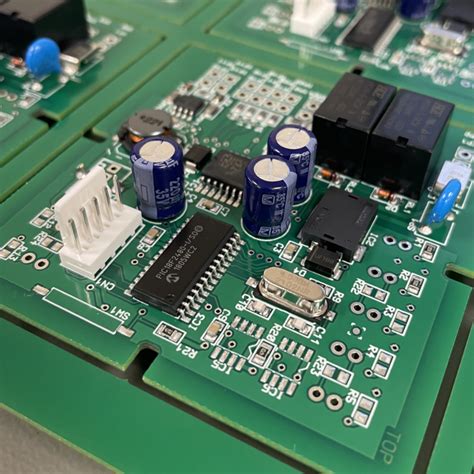
After printing solder paste, the operator places the electronic components on the corresponding positions of PCB board. This step is usually completed by automatic placement machine to ensure the accuracy and consistency of component placement. When placing components, it is necessary to pay attention to the polarity and direction of the components to ensure that they are consistent with the design on the PCB board.
Reflow soldering
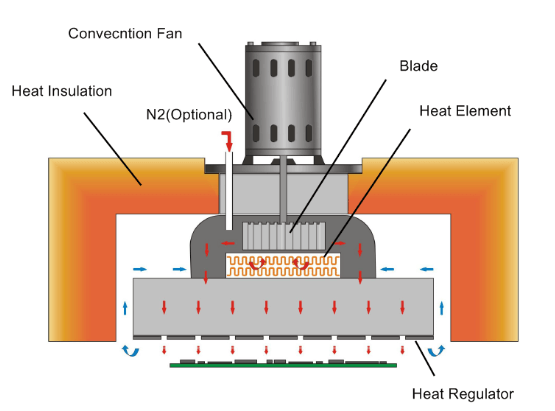
After the mounting is completed, the PCB board is placed in the reflow soldering equipment for heating and soldering. In this process, the solder powder in the solder paste melts and diffuses between the component pins and the copper foil on the PCB board to form a soldering point. At the same time, the flux volatilizes or remains, which helps to enhance the reliability and durability of the soldering point. The temperature curve (heating and cooling process) of reflow soldering is crucial to the quality of soldering. The common temperature curve includes four stages: preheating, soldering, thermal cycle and cooling. The purpose of preheating is to gradually heat the PCB board to a suitable soldering temperature to avoid component damage or poor soldering due to sudden temperature changes. The soldering stage is the process of melting solder, which is usually carried out at 220-240℃ for several minutes. The thermal cycle stage is to cool the soldered PCB board to promote the crystallization of the solder joints and enhance the mechanical strength. The last is the cooling stage, when the solder joints gradually cool down and harden. During the entire reflow soldering process, the operator needs to monitor the temperature curve of the equipment to ensure that it meets the process requirements and deal with any abnormalities in a timely manner.
Cooling and inspection
After the heating process is completed, the PCB board is cooled naturally or quickly cooled through the cooling zone. When the temperature drops to room temperature, the operator needs to visually or use relevant inspection equipment to inspect the soldered PCB board to confirm whether the soldering quality meets the requirements. Common inspection methods include visual inspection, X-ray inspection, and flying probe inspection. For unqualified solder joints, repair or reprocessing is required.
Subsequent processing and testing
Finally, the soldered PCB board is subjected to necessary subsequent processing and testing. This includes cleaning, identification, detection of functions and performance, etc. The test can verify the effect of the reflow soldering process and ensure that the soldering quality is reliable and meets the design requirements. At the same time, the test results can also provide a basis for improvement and experience summary for subsequent production.

3.Precautions for reflow soldering process
Temperature control: The key to the reflow soldering process is to control the temperature curve to ensure that the temperature is moderate and not too high or too low. Too high temperature may cause component damage or poor soldering, while too low temperature may cause loose soldering or the formation of cold solder joints. Therefore, the operator needs to pay close attention to the temperature curve of the equipment and take corresponding measures to adjust it.
Solder paste selection: The selection of solder paste is crucial for the reflow soldering process. Solder pastes of different compositions have different parameters such as melting point, viscosity and flux characteristics, and need to be selected according to actual needs. At the same time, attention should be paid to the storage and use conditions of solder paste to avoid performance degradation due to moisture or expiration.
PCB board cleaning: In the reflow soldering process, the cleanliness of the PCB board has a great influence on the welding quality. If there are impurities such as dirt, oxides or residues on the surface of the PCB board, it will cause poor soldering or defects such as false soldering. Therefore, the operator needs to clean and maintain the equipment regularly, and carefully inspect and clean the PCB board with printed solder paste.
Component placement and mounting: When mounting components, it is necessary to pay attention to factors such as the polarity, direction and position of the components to ensure that they are consistent with the design of the PCB board. At the same time, the operator needs to take corresponding measures to improve the mounting accuracy and efficiency, such as using high-precision placement machines and automated production lines and other equipment and technical means.
Safe operation: Reflow soldering equipment will produce dangerous factors such as high temperature and toxic gases during use, and operators need to comply with safe operating procedures.
To improve the welding quality of the reflow soldering process, you can pay attention to the following aspects:
Optimize the temperature curve: The temperature curve of reflow soldering has an important influence on the welding quality. By accurately controlling the temperature and time of the preheating, reflow, cooling and other stages, it can ensure that the solder is fully melted and well crystallized, thereby improving the welding quality.
Select appropriate solder and flux: The selection of solder and flux is also an important factor affecting the welding quality. According to the specific process requirements and product characteristics, the appropriate solder and flux should be selected to ensure the reliability and stability of welding.
Improve component mounting accuracy: The mounting accuracy of components directly affects the welding quality. Using high-precision mounting equipment and processes to ensure accurate placement of components can reduce welding defects and improve welding quality.
Control the welding environment: Factors such as temperature, humidity, and cleanliness in the welding environment will affect the welding quality. The welding environment should be ensured to meet the process requirements to reduce the adverse effects of environmental factors on welding quality.
Strengthen equipment maintenance and care: The state of the reflow soldering equipment also has a great impact on the welding quality. Regular maintenance and care of the equipment to ensure the normal operation and good condition of the equipment can improve the stability and consistency of welding quality.
Strengthen process monitoring and inspection: By strengthening process monitoring and inspection, timely discovering and handling problems in the welding process, the occurrence of welding defects can be effectively avoided, thereby improving welding quality.
Carry out continuous improvement and innovation: With the development of technology and the market, new welding technologies and methods are constantly emerging. Through continuous improvement and innovation, the introduction of new technologies and methods can further improve the welding quality of the reflow soldering process.
In short, improving the welding quality of the reflow soldering process requires multiple aspects, including optimizing the temperature curve, selecting suitable solder and flux, improving component placement accuracy, controlling the soldering environment, strengthening equipment maintenance and care, strengthening process monitoring and inspection, and continuous improvement and innovation.