Isola pcb stackup
Importance Of Isola PCB Stackup In High-Frequency Applications
In the realm of high-frequency applications, the importance of Isola PCB stackup cannot be overstated. As electronic devices continue to evolve, the demand for higher performance, greater reliability, and enhanced signal integrity has become paramount. Isola, a leading manufacturer of advanced laminate materials, offers a range of products specifically designed to meet these stringent requirements. The stackup configuration of these materials plays a crucial role in determining the overall performance of the printed circuit board (PCB).
One of the primary reasons why Isola PCB stackup is vital in high-frequency applications is its impact on signal integrity.
High-frequency signals are particularly susceptible to various forms of interference and loss, which can degrade the performance of the entire system. By carefully selecting and arranging the layers within the PCB, engineers can minimize signal loss and crosstalk, ensuring that the signals maintain their integrity as they travel through the board. Isola materials are engineered to provide low dielectric loss and stable dielectric constants, which are essential for maintaining signal integrity at high frequencies.
Moreover, the thermal management capabilities of Isola PCB stackup are critical in high-frequency applications.
As the frequency of operation increases, so does the power dissipation within the PCB. Effective thermal management is necessary to prevent overheating, which can lead to component failure and reduced reliability. Isola materials are designed to offer excellent thermal conductivity, allowing for efficient heat dissipation. This ensures that the PCB can operate within safe temperature limits, even under demanding conditions.
In addition to signal integrity and thermal management, the mechanical properties of the PCB stackup are also of great importance.
High-frequency applications often involve complex and dense circuitry, which requires a robust and reliable substrate. Isola materials provide superior mechanical strength and dimensional stability, which are essential for maintaining the structural integrity of the PCB. This is particularly important in applications where the PCB may be subjected to mechanical stress or vibration.
Furthermore, the choice of Isola materials in the PCB stackup can significantly influence the manufacturability and cost-effectiveness of the final product. Isola offers a wide range of materials with varying properties, allowing engineers to select the most appropriate combination for their specific application. This flexibility enables the optimization of the PCB design for both performance and cost. Additionally, Isola materials are compatible with standard PCB manufacturing processes, ensuring that the production of high-frequency PCBs can be carried out efficiently and reliably.
The environmental stability of Isola PCB stackup is another critical factor in high-frequency applications.
Electronic devices are often exposed to varying environmental conditions, including changes in temperature and humidity. Isola materials are designed to exhibit minimal variation in their electrical and mechanical properties under different environmental conditions. This ensures that the performance of the PCB remains consistent, regardless of the operating environment.
In conclusion, the importance of Isola PCB stackup in high-frequency applications is multifaceted.
It encompasses signal integrity, thermal management, mechanical properties, manufacturability, cost-effectiveness, and environmental stability. By carefully selecting and configuring Isola materials within the PCB stackup, engineers can achieve the high performance and reliability required for advanced electronic devices. As technology continues to advance, the role of Isola PCB stackup in high-frequency applications will undoubtedly remain a critical factor in the success of electronic systems.
Best Practices For Designing Isola PCB Stackup
When designing an Isola PCB stackup, adhering to best practices is crucial for ensuring optimal performance, reliability, and manufacturability of the printed circuit board. The stackup configuration plays a significant role in determining the electrical characteristics, mechanical strength, and thermal management of the PCB. Therefore, a methodical approach to stackup design is essential.
To begin with, understanding the material properties of Isola laminates is fundamental.
Isola offers a range of high-performance materials tailored for various applications, including high-frequency, high-speed digital, and RF/microwave circuits. Selecting the appropriate Isola material based on the specific requirements of your application is the first step. For instance, materials with low dielectric constant (Dk) and low dissipation factor (Df) are preferred for high-frequency applications to minimize signal loss and ensure signal integrity.
Once the material is selected, the next step involves determining the layer count and arrangement.
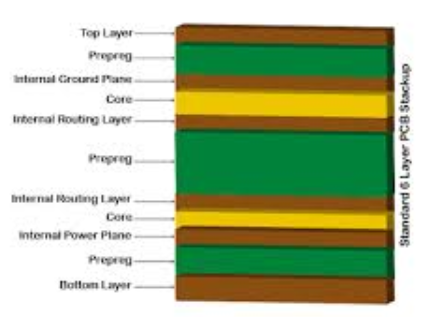
A balanced stackup is critical to prevent warping and ensure mechanical stability. Typically, a symmetrical stackup, where the layers are mirrored around the center, is recommended. This symmetry helps in maintaining even distribution of stress during the manufacturing process and in the operational environment.
Incorporating ground and power planes strategically within the stackup is another best practice.
These planes serve multiple purposes, including providing a return path for signals, reducing electromagnetic interference (EMI), and enhancing thermal management. Placing ground planes adjacent to signal layers can significantly reduce crosstalk and improve signal integrity. Additionally, ensuring that power and ground planes are closely coupled can lower the impedance and enhance the performance of high-speed circuits.
The thickness of each layer and the overall board thickness are also critical parameters.
The dielectric thickness between layers affects the impedance of signal traces, which is particularly important for high-speed designs. Utilizing impedance-controlled design techniques, such as specifying precise trace widths and spacing, can help achieve the desired impedance values. Moreover, maintaining a consistent dielectric thickness across the board ensures uniform electrical performance.
Thermal management is another key consideration in PCB stackup design.
Isola materials are known for their excellent thermal properties, but proper stackup design can further enhance heat dissipation. Incorporating thermal vias and ensuring adequate copper thickness in power and ground planes can help manage heat effectively. Additionally, considering the placement of heat-generating components and their proximity to thermal vias can optimize thermal performance.
Signal integrity and power integrity are paramount in high-speed and high-frequency designs.
To mitigate issues such as signal reflection, crosstalk, and power noise, it is essential to follow best practices in trace routing and layer arrangement. For instance, routing high-speed signals on inner layers sandwiched between ground planes can provide shielding and reduce EMI. Similarly, using decoupling capacitors and proper power distribution network (PDN) design can enhance power integrity.
In conclusion, designing an Isola PCB stackup requires a comprehensive understanding of material properties, layer arrangement, impedance control, thermal management, and signal integrity considerations. By following these best practices, designers can achieve a robust and reliable PCB that meets the stringent demands of modern electronic applications. Careful planning and attention to detail in the stackup design phase can lead to improved performance, manufacturability, and longevity of the final product.
Comparing Isola PCB Stackup With Other Materials
When comparing Isola PCB stackup with other materials, it is essential to consider various factors that influence the performance, reliability, and cost-effectiveness of printed circuit boards (PCBs). Isola, a renowned manufacturer of high-performance laminate materials, offers a range of products designed to meet the stringent requirements of modern electronic applications. To understand the advantages and limitations of Isola PCB stackup, it is beneficial to juxtapose it with other commonly used materials in the industry.
One of the primary considerations in PCB stackup is the dielectric constant (Dk) of the material, which affects signal integrity and impedance control.
Isola materials, such as FR408HR and I-Tera MT40, are engineered to provide stable Dk values over a wide frequency range, ensuring consistent electrical performance. In contrast, traditional FR-4 materials, while cost-effective, may exhibit variations in Dk, leading to potential signal integrity issues in high-speed applications. This makes Isola materials particularly advantageous for designs requiring precise impedance control and minimal signal loss.
Thermal performance is another critical factor in PCB stackup comparison.
Isola laminates are known for their excellent thermal stability and low coefficient of thermal expansion (CTE). For instance, Isola’s Astra MT77 offers a low CTE, which is crucial for maintaining dimensional stability during thermal cycling. This characteristic is especially important in applications involving high power or rapid temperature changes. On the other hand, standard FR-4 materials may suffer from higher CTE, leading to potential reliability concerns such as delamination or warping under thermal stress.
Furthermore, the mechanical properties of PCB materials play a significant role in determining their suitability for various applications.
Isola laminates are designed to provide superior mechanical strength and durability. For example, Isola’s Tachyon 100G is known for its high glass transition temperature (Tg) and excellent mechanical robustness, making it ideal for high-reliability applications such as aerospace and defense. In comparison, other materials like polyimide, while offering high thermal resistance, may not match the mechanical strength and ease of processing provided by Isola laminates.
Cost considerations also influence the choice of PCB stackup materials.
While Isola products may come at a premium compared to standard FR-4, their enhanced performance characteristics can lead to long-term cost savings by reducing the need for rework and improving overall product reliability. Additionally, the availability of a wide range of Isola materials allows designers to select the most appropriate laminate for their specific application, balancing performance and cost effectively.
Environmental and regulatory compliance is another aspect where Isola materials excel.
Many Isola laminates are designed to meet stringent environmental standards, such as RoHS and REACH, ensuring that they are free from hazardous substances. This compliance is crucial for manufacturers aiming to produce environmentally friendly and globally compliant products. In contrast, some other materials may require additional processing or certification to meet these standards, potentially increasing the overall production cost and complexity.
In conclusion, when comparing Isola PCB stackup with other materials, it becomes evident that Isola offers significant advantages in terms of dielectric properties, thermal performance, mechanical strength, and regulatory compliance. While the initial cost may be higher, the long-term benefits in terms of reliability and performance make Isola laminates a compelling choice for high-performance and high-reliability applications. By carefully considering these factors, designers can make informed decisions that optimize the performance and cost-effectiveness of their PCB designs.
How To Optimize Signal Integrity Using Isola PCB Stackup
Optimizing signal integrity in printed circuit boards (PCBs) is a critical aspect of modern electronic design, and the choice of materials plays a pivotal role in achieving this goal.
One of the most effective ways to enhance signal integrity is through the strategic use of Isola PCB stackup.
Isola, a renowned manufacturer of high-performance laminate materials, offers a range of products that can significantly improve the electrical performance of PCBs. By understanding the principles of PCB stackup and leveraging Isola materials, designers can minimize signal loss, reduce electromagnetic interference (EMI), and ensure reliable operation of high-speed circuits.
To begin with, the concept of PCB stackup refers to the arrangement of conductive and insulating layers within a PCB.
This arrangement is crucial because it directly impacts the electrical characteristics of the board, including impedance control, signal propagation, and crosstalk. A well-designed stackup can mitigate many of the issues that degrade signal integrity. Isola materials, known for their low dielectric constant (Dk) and low dissipation factor (Df), are particularly advantageous in this context. These properties help maintain signal speed and reduce signal attenuation, which are essential for high-frequency applications.
Transitioning to the practical aspects of optimizing signal integrity, it is important to consider the specific requirements of the application.
For instance, high-speed digital circuits demand precise impedance control to prevent signal reflections and ensure signal integrity. Isola’s advanced laminates, such as the FR408HR and I-Tera MT40, offer excellent impedance stability, making them ideal for such applications. By carefully selecting the appropriate Isola material and configuring the stackup to match the impedance requirements, designers can achieve optimal signal performance.
Moreover, the placement of power and ground planes within the stackup is another critical factor.
These planes provide a return path for signals and help reduce EMI by containing electromagnetic fields within the PCB. Isola materials with high thermal stability and low moisture absorption, such as the Astra MT77, are particularly beneficial for maintaining the integrity of power and ground planes. By incorporating these materials into the stackup, designers can enhance the overall robustness of the PCB and minimize the risk of signal degradation due to environmental factors.
In addition to material selection and layer configuration, the thickness of the dielectric layers also plays a significant role in signal integrity.
Thinner dielectric layers can reduce the distance between signal layers and their corresponding reference planes, thereby lowering the inductance and improving signal performance. Isola’s laminates are available in various thicknesses, allowing designers to fine-tune the stackup to meet specific design criteria. By optimizing the dielectric thickness, it is possible to achieve a balance between signal integrity and mechanical stability.
Furthermore, the use of Isola materials can also aid in thermal management, which is crucial for maintaining signal integrity in high-power applications.
Effective thermal management ensures that the PCB operates within safe temperature limits, preventing thermal-induced signal degradation. Isola’s high-performance laminates, such as the P95/P25, offer excellent thermal conductivity, enabling efficient heat dissipation and maintaining signal integrity under demanding conditions.
In conclusion, optimizing signal integrity using Isola PCB stackup involves a comprehensive approach that includes careful material selection, precise layer configuration, and attention to dielectric thickness. By leveraging the advanced properties of Isola laminates, designers can achieve superior electrical performance, reduce EMI, and ensure the reliable operation of high-speed circuits. Through thoughtful design and strategic use of Isola materials, it is possible to overcome the challenges associated with signal integrity and create PCBs that meet the stringent demands of modern electronic applications.