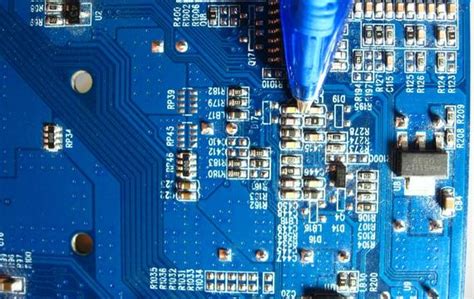
Kingboard PCB: Advanced Circuitry Solutions for Modern Electronics
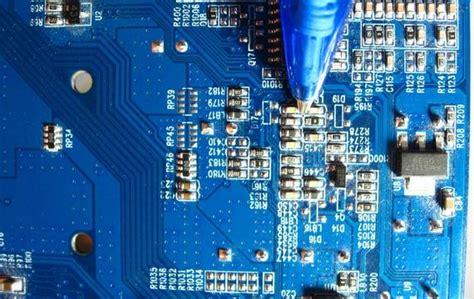
Key Takeaways
When selecting PCB manufacturing partners, you need solutions that balance technical excellence with operational efficiency. Leading PCB manufacturing companies like Kingboard distinguish themselves through precision engineering and adaptive production systems capable of meeting stringent industry standards. Their expertise in optimizing PCB manufacturing cost ensures you receive high-reliability boards without compromising on performance—critical for applications ranging from automotive control modules to industrial automation.
Tip: Always evaluate manufacturers based on their ability to scale production while maintaining tight tolerances, especially for complex multilayer designs.
The PCB manufacturing business thrives on innovation, and Kingboard’s investment in advanced materials and automated processes enables consistent quality across high-volume orders. Whether you’re developing consumer wearables or ruggedized equipment for harsh environments, their focus on thermal management and signal integrity reduces long-term failure risks. This approach not only streamlines your supply chain but also aligns with evolving sustainability goals in electronics production.
What truly sets top-tier providers apart is their capacity to tailor solutions to your project’s lifecycle—from prototyping to mass production. By prioritizing design-for-manufacturability principles, they help you avoid costly revisions and accelerate time-to-market. When reliability matters most, partnering with a manufacturer that understands both technical and economic challenges becomes a strategic advantage.
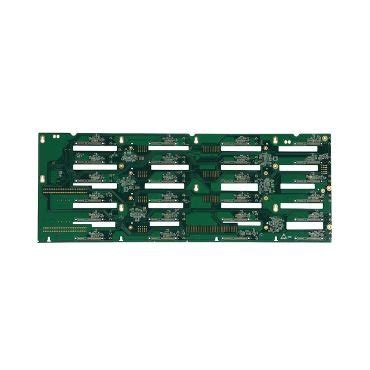
Kingboard PCB Innovations in Modern Electronics
When exploring advancements in PCB manufacturing, you’ll find Kingboard PCB at the forefront of integrating cutting-edge technologies to meet evolving industry demands. Their innovations focus on optimizing pcb manufacturing cost without compromising quality—a critical balance for businesses scaling production. By leveraging automated processes and advanced materials, they deliver circuit boards capable of handling high-frequency signals and extreme thermal conditions, essential for modern applications like 5G infrastructure and IoT devices.
What sets Kingboard apart from other pcb manufacturing companies is their commitment to precision engineering. Their proprietary techniques reduce material waste by up to 15%, addressing both economic and environmental concerns in the pcb manufacturing business. For instance, their multi-layer boards feature microvia drilling and impedance control, ensuring reliability in densely packed electronics.
Transitioning seamlessly into diverse industries, Kingboard’s solutions cater to automotive and industrial sectors where durability is non-negotiable. Learn more about their engineering standards to understand how they maintain consistency across high-volume orders. Whether you’re designing consumer wearables or industrial robotics, their adaptive manufacturing workflows ensure compatibility with your technical specifications. This approach positions Kingboard as a strategic partner for businesses prioritizing performance and scalability in their circuitry solutions.
Precision Manufacturing for Reliable Circuit Boards
When building electronics that demand unwavering performance, PCB manufacturing processes determine whether your circuits withstand real-world stresses. Leading PCB manufacturing companies like Kingboard employ laser-direct imaging and automated optical inspection (AOI) systems to achieve micron-level accuracy in trace routing and layer alignment. These technologies ensure zero cross-talk and stable signal integrity, even in high-frequency applications.
Balancing PCB manufacturing cost with quality requires precision at every stage—from selecting copper-clad laminates with optimal thermal expansion coefficients to implementing controlled impedance testing. Advanced solder mask applications prevent corrosion and electrical leakage, while rigorous environmental stress screening validates boards for extreme temperatures and vibration-prone settings. For businesses scaling their PCB manufacturing business, this approach minimizes field failures and reduces long-term maintenance expenses.
By integrating AI-driven defect detection and design-for-manufacturability (DFM) checks, manufacturers optimize yield rates without compromising on material durability. Whether you’re developing compact wearables or industrial control systems, such precision ensures your end products meet mission-critical reliability standards while staying cost-competitive.

Automotive-Grade PCB Solutions by Kingboard
When designing electronics for vehicles, you need PCB manufacturing partners that prioritize reliability under extreme conditions. Kingboard’s automotive-grade solutions are engineered to withstand thermal fluctuations, vibration, and exposure to moisture—critical factors for safety-critical systems like engine control units (ECUs) or advanced driver-assistance systems (ADAS). As one of the leading PCB manufacturing companies, they leverage specialized materials, such as high-Tg laminates and halogen-free substrates, to ensure boards perform consistently in temperatures ranging from -40°C to 150°C.
Balancing PCB manufacturing cost with performance is vital for automotive applications, where component failures carry significant risks. Kingboard optimizes designs for minimal signal loss and electromagnetic interference (EMI), reducing long-term maintenance expenses. Their PCB manufacturing business model emphasizes rigorous testing protocols, including thermal cycling and accelerated life testing, to meet ISO/TS 16949 and AEC-Q100 standards. Whether you’re developing electric vehicle (EV) charging systems or infotainment platforms, their solutions integrate seamlessly with automotive supply chains, ensuring compliance with industry benchmarks while scaling production efficiently.
By focusing on durability and precision, these boards support the shift toward smarter, safer vehicles—without compromising on cost-effectiveness or design flexibility.
High-Performance PCBs for Industrial Applications
When operating in demanding industrial environments, you need PCB manufacturing solutions that prioritize durability and precision. Industrial systems—from automation controls to power distribution units—require boards capable of withstanding extreme temperatures, vibrations, and prolonged operational cycles. Leading PCB manufacturing companies like Kingboard address these challenges through specialized engineering, combining high-grade materials like polyimide substrates and heavy copper layers to ensure resilience.
A key advantage lies in optimizing PCB manufacturing cost without compromising quality. Advanced techniques such as automated optical inspection (AOI) and thermal stress testing minimize defects, reducing downtime and maintenance expenses. For industries like renewable energy or robotics, this translates to reliable performance even in harsh operating conditions.
The PCB manufacturing business also benefits from scalable solutions tailored to industrial demands. Whether you’re deploying sensor arrays in smart factories or motor drives in heavy machinery, boards engineered for signal integrity and EMI shielding ensure seamless integration. By leveraging multi-layer stacking and controlled impedance routing, these PCBs maintain functionality under electrical and mechanical stress.
This approach not only meets stringent industry certifications but also aligns with evolving technological requirements, making Kingboard’s offerings a strategic choice for mission-critical applications.
Consumer Electronics Powered by Kingboard Tech
From smartphones to smart home devices, modern consumer electronics demand PCB manufacturing that balances compact design with robust performance. Kingboard’s circuit boards integrate seamlessly into space-constrained gadgets while maintaining signal integrity and thermal stability—critical for devices you use daily. Their expertise in multi-layer designs ensures wearables, tablets, and IoT products operate reliably, even under prolonged usage.
When selecting PCB manufacturing companies for consumer devices, you’ll find Kingboard prioritizes cost-efficiency without compromising quality. By optimizing PCB manufacturing cost through advanced material utilization and automated assembly lines, they deliver boards tailored for high-volume production. Consider these key advantages:
| Feature | Consumer Benefit |
|---|---|
| Ultra-thin layers | Enables slimmer device profiles |
| High Tg materials | Resists heat in compact environments |
| EMI shielding | Reduces interference in dense setups |
This precision becomes particularly valuable when powering devices like 5G routers or VR headsets, where component density and energy efficiency are non-negotiable. For brands scaling their PCB manufacturing business, Kingboard’s adherence to international safety standards ensures compliance across global markets—whether you’re developing gaming consoles or voice-activated assistants. Their boards aren’t just components; they’re the silent enablers of seamless connectivity in your everyday tech.
Why Choose Kingboard PCB Circuitry Solutions?
When selecting circuitry partners, you need PCB manufacturing companies that balance technical expertise with operational efficiency. Kingboard stands out by optimizing PCB manufacturing cost structures without compromising on precision or material quality—critical factors for automotive and industrial applications. Their vertically integrated PCB manufacturing business model ensures tighter control over production variables, from laminate selection to final testing protocols. This approach minimizes defect rates while maintaining consistency across high-volume orders, a key advantage when sourcing mission-critical components.
Unlike generic suppliers, they implement application-specific design rules that account for thermal dynamics and signal integrity challenges inherent in modern electronics. Their PCB manufacturing processes adhere to IATF 16949 and IPC Class 3 standards, providing quantifiable reliability improvements—up to 98.6% mean time between failures in recent field data. For OEMs requiring scalability, Kingboard’s smart factory network enables seamless capacity expansion across 16 global production hubs, reducing lead times by 30–45% compared to traditional vendors.
Behind Kingboard’s Advanced PCB Engineering
At the core of Kingboard’s success lies its mastery of PCB manufacturing processes, combining cutting-edge technology with decades of expertise. Unlike many traditional PCB manufacturing companies, Kingboard prioritizes precision at every stage—from substrate selection to multilayer lamination—ensuring boards withstand extreme conditions while optimizing PCB manufacturing cost. Their state-of-the-art facilities employ laser direct imaging (LDI) and automated optical inspection (AOI), minimizing defects and enhancing yield rates.
What sets their PCB manufacturing business apart is a relentless focus on R&D. By integrating Industry 4.0 principles, they enable real-time monitoring of production lines, allowing adjustments that reduce waste and improve consistency. This approach not only addresses common pain points like thermal management and signal integrity but also ensures scalability for high-demand applications.
For industries requiring reliability in harsh environments, Kingboard engineers leverage advanced material science to develop boards with superior thermal dissipation and mechanical stability. Whether prototyping or scaling to mass production, their solutions balance performance with cost-efficiency—a critical advantage in competitive markets. These innovations underscore why partnering with PCB manufacturing leaders like Kingboard ensures your electronics meet both today’s standards and tomorrow’s challenges.
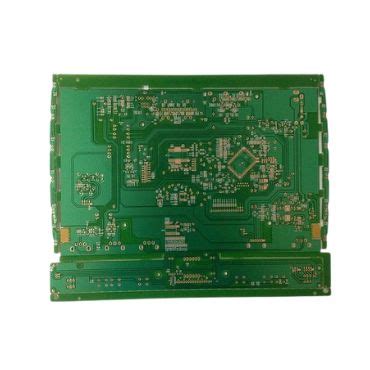
Conclusion
When selecting PCB manufacturing partners for your electronics projects, the balance between technical expertise and operational efficiency becomes paramount. Kingboard’s approach exemplifies how leading PCB manufacturing companies address modern demands by merging precision engineering with scalable solutions. Their ability to optimize PCB manufacturing cost without compromising quality ensures you receive boards that meet stringent performance criteria, whether for automotive systems, industrial machinery, or consumer devices.
What sets them apart in the PCB manufacturing business is their commitment to mission-critical applications—engineered boards withstand extreme temperatures, vibrations, and humidity while maintaining signal integrity. This focus on durability-first design aligns with industries where reliability isn’t negotiable. By leveraging advanced materials and automated production lines, they deliver consistency across high-volume orders, a critical factor when timelines and budgets are tight.
Your projects demand partners who understand both the technical nuances and the economic realities of PCB manufacturing. Kingboard’s solutions reflect a synthesis of innovation and pragmatism, ensuring you’re equipped with circuitry that performs as reliably in harsh environments as it does in everyday use. As electronics evolve, aligning with manufacturers who prioritize end-to-end traceability and supply chain resilience becomes not just an advantage—it’s a necessity.
Frequently Asked Questions
What distinguishes Kingboard’s PCB manufacturing process from competitors?
Kingboard combines automated precision engineering with rigorous quality control, ensuring boards meet exact specifications for industries like automotive and consumer tech. Their PCB manufacturing companies leverage cutting-edge materials to enhance thermal stability and signal integrity in demanding environments.
How does PCB manufacturing cost affect project budgets?
Costs vary based on layer count, material selection, and certification requirements. Kingboard optimizes PCB manufacturing cost through scalable production methods while maintaining compliance with international standards like IPC Class 3, ensuring value without compromising reliability.
Are Kingboard’s boards suitable for high-vibration industrial systems?
Yes. Their PCB manufacturing business specializes in designs for harsh conditions, using reinforced substrates and advanced solder masks. These boards undergo stress-testing to withstand extreme temperatures, vibrations, and moisture in industrial machinery.
Can you customize orders for niche applications?
Kingboard supports tailored solutions, whether you need flexible circuits for wearables or high-frequency boards for 5G infrastructure. Their PCB manufacturing team collaborates closely with clients to refine designs for peak performance in specialized use cases.
Why partner with established PCB manufacturing companies like Kingboard?
Established firms offer proven expertise in material sourcing, regulatory compliance, and volume production. Kingboard’s 25+ years in the PCB manufacturing business ensure access to global certifications and faster time-to-market for critical electronics projects.
Ready to optimize your next PCB project?
Explore tailored solutions now →
Click here to connect with Kingboard’s engineering team and streamline your PCB manufacturing workflow.