Machines required for pcb manufacturing
Essential Drilling Machines for PCB Manufacturing
In the intricate world of printed circuit board (PCB) manufacturing, precision and efficiency are paramount. Among the myriad of processes involved, drilling stands out as a critical step that requires meticulous attention to detail. The drilling process in PCB manufacturing is essential for creating vias and through-holes, which are necessary for establishing electrical connections between different layers of the board. To achieve this, manufacturers rely on a range of specialized drilling machines, each designed to meet specific requirements and ensure the highest quality output.
One of the most fundamental machines in PCB drilling is the CNC (Computer Numerical Control) drilling machine.
These machines are renowned for their precision and ability to handle complex drilling patterns with ease. CNC drilling machines are equipped with advanced software that allows for the programming of intricate designs, ensuring that each hole is drilled with exacting accuracy. This precision is crucial, as even the slightest deviation can lead to faulty connections and compromised functionality of the PCB. Moreover, CNC machines are capable of high-speed operations, significantly reducing production time and increasing overall efficiency.
In addition to CNC drilling machines, laser drilling machines have gained prominence in the PCB manufacturing industry.
Laser drilling offers several advantages, particularly when dealing with high-density interconnect (HDI) PCBs, which require extremely small and precise holes. The laser technology allows for the creation of microvias, which are essential for modern electronic devices that demand compact and efficient designs. Laser drilling machines utilize focused laser beams to vaporize material, resulting in clean and precise holes without the mechanical stress associated with traditional drilling methods. This non-contact process minimizes the risk of damage to the delicate layers of the PCB, ensuring a higher yield of functional boards.
Another essential machine in the PCB drilling arsenal is the mechanical drilling machine.
While not as advanced as CNC or laser drilling machines, mechanical drilling machines are still widely used due to their cost-effectiveness and reliability for less complex drilling tasks. These machines employ drill bits to physically remove material, making them suitable for larger holes and less intricate designs. Despite their simplicity, mechanical drilling machines have evolved over the years, incorporating features such as automatic tool changers and improved spindle speeds to enhance their performance and adaptability to various PCB requirements.
Transitioning from the types of machines to their operational considerations, it is important to note that the choice of drilling machine depends on several factors, including the complexity of the PCB design, the materials used, and the production volume. For instance, high-volume production runs with complex designs may benefit from the speed and precision of CNC or laser drilling machines, while smaller batches with simpler designs might find mechanical drilling machines more economical. Additionally, the material composition of the PCB, such as the presence of fiberglass or other composites, can influence the selection of the appropriate drilling technology to ensure optimal results.
In conclusion, the selection of drilling machines in PCB manufacturing is a critical decision that impacts the quality, efficiency, and cost-effectiveness of the production process.
By understanding the capabilities and limitations of CNC, laser, and mechanical drilling machines, manufacturers can make informed choices that align with their specific needs and objectives. As technology continues to advance, the evolution of drilling machines will undoubtedly play a pivotal role in shaping the future of PCB manufacturing, driving innovation and enabling the development of increasingly sophisticated electronic devices.
The Role of Solder Paste Printers in PCB Production
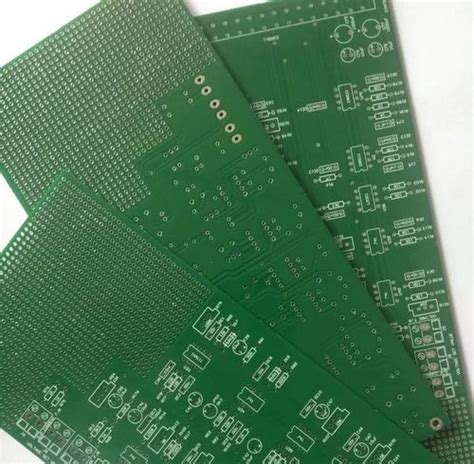
In the intricate world of printed circuit board (PCB) manufacturing, the role of solder paste printers is both pivotal and indispensable. As the demand for smaller, more efficient electronic devices continues to rise, the precision and accuracy required in PCB production have become more critical than ever. Solder paste printers serve as the initial step in the surface mount technology (SMT) assembly process, setting the stage for subsequent operations and ultimately influencing the quality and functionality of the final product.
Solder paste printers are responsible for applying solder paste onto the PCB’s surface, specifically onto the pads where components will be mounted.
This process is crucial because the solder paste acts as an adhesive that holds components in place and provides the necessary electrical connections once reflowed. The precision with which the solder paste is applied can significantly impact the performance and reliability of the PCB. Therefore, the choice of solder paste printer and its operational parameters are of utmost importance.
Modern solder paste printers are equipped with advanced features that enhance their accuracy and efficiency.
For instance, many machines now incorporate vision systems that ensure precise alignment of the stencil with the PCB. This alignment is critical because even the slightest misalignment can lead to defects such as solder bridging or insufficient solder, which can compromise the entire assembly. Additionally, these printers often include automated cleaning systems that maintain stencil cleanliness, thereby ensuring consistent paste deposition throughout the production run.
Transitioning from manual to automated solder paste printing has been a significant advancement in PCB manufacturing.
Automated printers offer several advantages, including increased throughput, reduced labor costs, and improved repeatability. These benefits are particularly important in high-volume production environments where consistency and speed are paramount. Moreover, automated systems can be programmed to handle a variety of PCB designs and sizes, providing manufacturers with the flexibility needed to meet diverse customer requirements.
Another critical aspect of solder paste printing is the selection of the appropriate solder paste.
The composition and viscosity of the solder paste can affect its application and the subsequent reflow process. Manufacturers must carefully consider factors such as the type of components being used, the operating environment of the final product, and any specific industry standards that must be met. By selecting the right solder paste and optimizing printer settings, manufacturers can minimize defects and enhance the overall quality of the PCB.
Furthermore, the integration of Industry 4.0 technologies into solder paste printers is revolutionizing PCB manufacturing.
With the advent of smart manufacturing, these machines can now collect and analyze data in real-time, allowing for predictive maintenance and process optimization. This capability not only reduces downtime but also enhances the overall efficiency of the production line. By leveraging data analytics, manufacturers can gain insights into their processes, identify potential issues before they arise, and make informed decisions to improve product quality.
In conclusion, solder paste printers play a crucial role in the PCB manufacturing process, serving as the foundation for successful SMT assembly.
Their ability to apply solder paste with precision and consistency directly impacts the performance and reliability of electronic devices. As technology continues to evolve, the integration of advanced features and smart manufacturing capabilities will further enhance the role of solder paste printers, ensuring that they remain a vital component in the ever-advancing field of electronics manufacturing.
Understanding Pick and Place Machines in PCB Assembly
In the intricate world of printed circuit board (PCB) manufacturing, the role of pick and place machines is pivotal. These machines are essential in the assembly process, where precision and efficiency are paramount. Understanding the function and importance of pick and place machines requires a closer look at their operation and the benefits they bring to PCB assembly.
Pick and place machines are automated devices designed to accurately position electronic components onto a PCB.
The process begins with the machine picking up components from a feeder or tray using a vacuum or mechanical gripper. Subsequently, it places these components onto the PCB with remarkable precision. This task, which once required manual labor, is now performed with high speed and accuracy, thanks to advancements in automation technology.
The significance of pick and place machines in PCB assembly cannot be overstated.
They are integral to the surface mount technology (SMT) process, which is the most common method for assembling PCBs today. SMT allows for the placement of components directly onto the surface of the board, as opposed to inserting them through holes. This method not only saves space but also enhances the performance and reliability of the final product. Pick and place machines are specifically designed to handle the delicate and precise nature of SMT, ensuring that components are placed correctly and securely.
Moreover, the efficiency of pick and place machines is a major advantage in PCB manufacturing.
These machines can place thousands of components per hour, significantly reducing the time required for assembly. This speed is crucial in meeting the demands of modern electronics production, where time-to-market is a critical factor. Additionally, the automation provided by pick and place machines minimizes human error, leading to higher quality and consistency in the final product.
Transitioning from manual assembly to automated pick and place systems also offers economic benefits.
While the initial investment in these machines can be substantial, the long-term savings in labor costs and increased production capacity often justify the expense. Furthermore, the ability to quickly adapt to different PCB designs and component types makes pick and place machines a versatile asset in any manufacturing facility.
In addition to their speed and precision, pick and place machines are equipped with advanced features that enhance their functionality. For instance, many modern machines come with vision systems that ensure components are placed with exact alignment and orientation. This technology reduces the likelihood of defects and improves the overall yield of the assembly process. Additionally, some machines offer real-time monitoring and feedback, allowing operators to make adjustments on the fly and maintain optimal performance.
As the electronics industry continues to evolve, the demand for more complex and compact PCBs grows.
Pick and place machines are continually being developed to meet these challenges, with improvements in speed, accuracy, and flexibility. The integration of artificial intelligence and machine learning into these systems is an emerging trend, promising even greater efficiency and adaptability in the future.
In conclusion, pick and place machines are indispensable in the realm of PCB assembly. Their ability to rapidly and accurately place components has revolutionized the manufacturing process, offering significant advantages in terms of speed, quality, and cost-effectiveness. As technology advances, these machines will undoubtedly continue to play a crucial role in the production of electronic devices, driving innovation and efficiency in the industry.
The Importance of Reflow Ovens in PCB Manufacturing
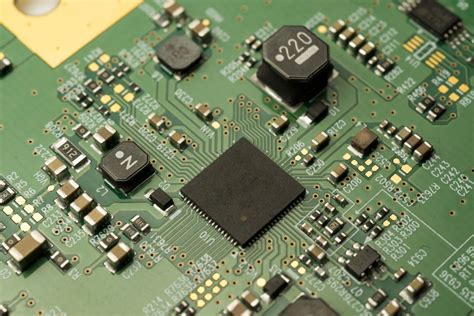
In the intricate world of printed circuit board (PCB) manufacturing, the reflow oven stands as a pivotal piece of machinery, playing a crucial role in ensuring the quality and reliability of the final product. As the demand for smaller, more efficient electronic devices continues to grow, the importance of precision in PCB manufacturing cannot be overstated. Reflow ovens are integral to this process, as they are responsible for soldering the surface-mounted components onto the PCB, a task that requires both accuracy and consistency.
To understand the significance of reflow ovens, it is essential to first consider the broader context of PCB assembly.
The assembly process involves several stages, beginning with the application of solder paste onto the PCB. This is followed by the placement of components, which are typically mounted using automated machines for precision. Once the components are in place, the PCB is ready for the reflow soldering process, where the reflow oven comes into play.
Reflow ovens operate by heating the PCB to a temperature that melts the solder paste, allowing it to flow and form a secure bond between the components and the board.
This process is not as simple as it may seem, as it requires careful control of temperature profiles to ensure that the soldering is effective without damaging the components or the board itself. The temperature profile typically consists of several stages, including preheating, soaking, reflow, and cooling. Each stage must be meticulously controlled to achieve optimal results.
The preheating stage gradually raises the temperature of the PCB to prevent thermal shock, which could damage sensitive components.
Following this, the soaking stage ensures that the entire board reaches a uniform temperature, allowing the solder paste to activate properly. The reflow stage is where the solder paste melts and forms the necessary connections. Finally, the cooling stage solidifies the solder, securing the components in place. The precision with which these stages are executed can significantly impact the performance and reliability of the final product.
Moreover, the choice of reflow oven can influence the efficiency and quality of the PCB manufacturing process.
There are several types of reflow ovens, including infrared, convection, and vapor phase ovens, each with its own advantages and limitations. Convection ovens, for instance, are widely used due to their ability to provide uniform heating and accommodate a variety of PCB sizes and complexities. On the other hand, vapor phase ovens offer superior heat transfer and are particularly effective for complex boards with high thermal mass.
In addition to the type of oven, factors such as the control system, throughput capacity, and energy efficiency are also critical considerations.
Advanced reflow ovens are equipped with sophisticated control systems that allow for precise temperature management and real-time monitoring, ensuring that each PCB is processed under optimal conditions. Furthermore, as manufacturers strive to reduce costs and environmental impact, energy-efficient ovens that minimize power consumption without compromising performance are increasingly in demand.
In conclusion, reflow ovens are indispensable in the PCB manufacturing process, providing the necessary precision and reliability required to meet the demands of modern electronics. As technology continues to evolve, the role of reflow ovens will remain central, underscoring their importance in producing high-quality, dependable electronic devices. Through careful selection and operation of these machines, manufacturers can ensure that their products meet the highest standards of performance and durability.