Methods for quickly detecting PCB board faults – Full text
Making PCB boards is not as simple as following the process to make the board, drilling a hole and putting in components. The production of PCB is not difficult, but the difficulty lies in the troubleshooting after the production is completed. Whether it is a personal enthusiast or an industry engineer, it is quite a headache for PCB circuit boards to encounter problems during debugging, just like programmers encountering bugs.
Some people have a strong interest in debugging PCB circuit boards, just like programmers solving bugs. There are many common PCB circuit board problems. In addition to circuit board design, damage to electronic components, line short circuits, component quality, and PCB circuit board disconnection failures are not rare.
Damaged diode ring color resistor
Common PCB circuit board failures are mainly concentrated on components, such as capacitors, resistors, inductors, diodes, triodes, field effect transistors, etc., and obvious damage to integrated chips and crystal oscillators. The more intuitive way to judge the failure of these components is to observe them with your eyes. There are obvious burn marks on the surface of electronic components that are obviously damaged. For such failures, simply replacing the problematic components with new ones can solve them.
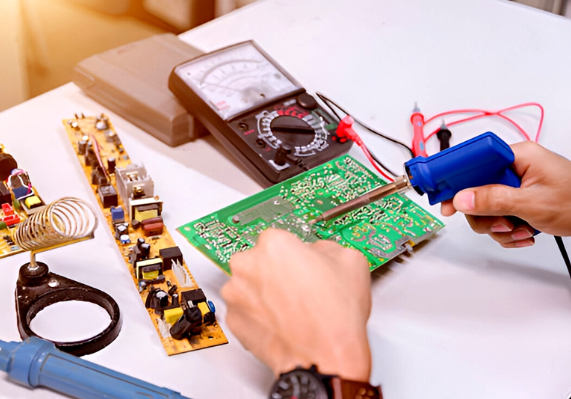
Suspected damaged components? In fact, it is not the component that is damaged.
Of course, not all electronic component damage can be observed with the naked eye. For example, the resistors, capacitors, diodes, and triodes mentioned above, in some cases, the damage cannot be seen from the surface, and professional inspection tools are needed for repair. Common inspection tools include: multimeter, capacitance meter, etc. If the voltage or current of a certain electronic component is detected to be out of the normal range, it means that there is a problem with the component or the previous component. Replace it directly and check whether it is normal.
Circuit board with no damage on the appearance and no fault can be detected
If the component is broken, it can be detected whether it is observed with the eyes or detected with instruments, but sometimes when we put the components on the PCB board, we will encounter the situation that the problem cannot be detected, but the circuit board cannot work normally. Many novices have no choice when encountering this problem, and can only make a new board or buy one. In fact, in this case, many times during the installation of the components, due to the problem of coordinated work of various components, the performance may be unstable.
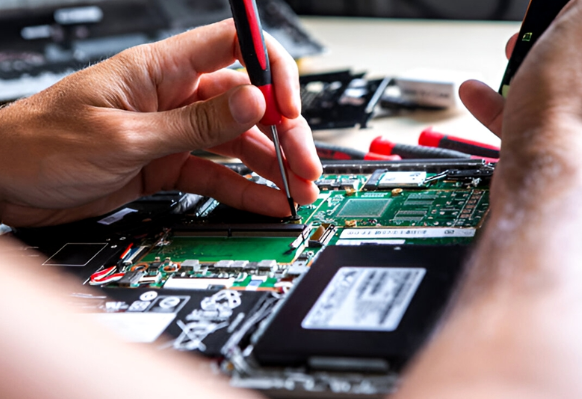
Circuit board circuit block division
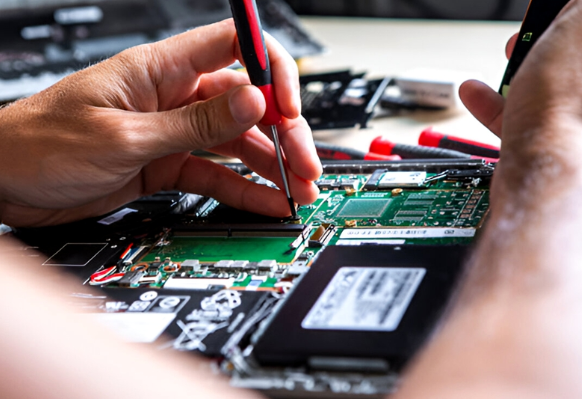
In this case, the instrument can no longer help. You can try to determine the possible scope of the fault based on the current and voltage, and try to narrow it down. Experienced engineers may be able to quickly determine the fault area, but they cannot be 100% sure which specific component is broken. The only way is to try to replace the suspected component until the faulty component is found. Last year, my laptop motherboard was flooded. When I repaired it for the master, I also encountered the problem of not being able to detect the fault. During the repair process, the components were replaced three times, namely the power supply chip, the diode, and the USB charging component (the one with the blue laptop socket, which can charge the device when the computer is turned off). Finally, after a wave of detection and investigation, the suspected chip was replaced, and it was finally determined that a component on the side of the south bridge chip was short-circuited.
Circuit board flying wire
The above are actually all problems with electronic components. Of course, since the PCB circuit board is the foothold of the components, the circuit board failure must also exist. The simplest example is the dead tin-plated part. Due to the manufacturing process, there may be a broken line problem during the PCB corrosion process. In this case, if the line cannot be repaired, it can only be solved by using thin copper wire flying wire.
PS: It is really troublesome to check if the PCB circuit board is not obviously damaged. During the troubleshooting process, there will be a sense of concentration, and there will be an inexplicable sense of accomplishment after finding the problem. This is the feeling when programmers solve bugs. I often like to troubleshoot some difficult-to-repair boards. I think that is a pleasure.