
Moisture Sensitivity Level (MSL) and PCB Storage Requirements: Complete Guide
Moisture-related failures account for 30-40% of PCB assembly defects, with absorbed humidity causing popcorning, delamination, and cracks during reflow soldering at 260°C. Components exposed beyond their MSL floor life absorb moisture that expands rapidly under high temperature, damaging both packages and solder joints. Understanding IPC/JEDEC J-STD-033 storage requirements prevents costly rework and field failures in consumer electronics, automotive, and medical devices.
What is Moisture Sensitivity Level (MSL)?
Moisture Sensitivity Level classifies how much exposure time plastic-encapsulated components can tolerate at 30°C/60% RH before requiring baking or dry storage. IPC/JEDEC J-STD-020 and J-STD-033 define eight levels (MSL 1 through MSL 6 plus 5a and 2a) based on package thickness, volume, and material composition.
When a component absorbs moisture and enters reflow at 245-260°C lead-free temperatures, trapped water vaporizes instantly. Vapor pressure exceeds 40 atmospheres, causing internal delamination between die and substrate, package cracking (popcorning), and solder joint failures. These defects appear immediately or emerge as latent failures within 6-24 months in the field.
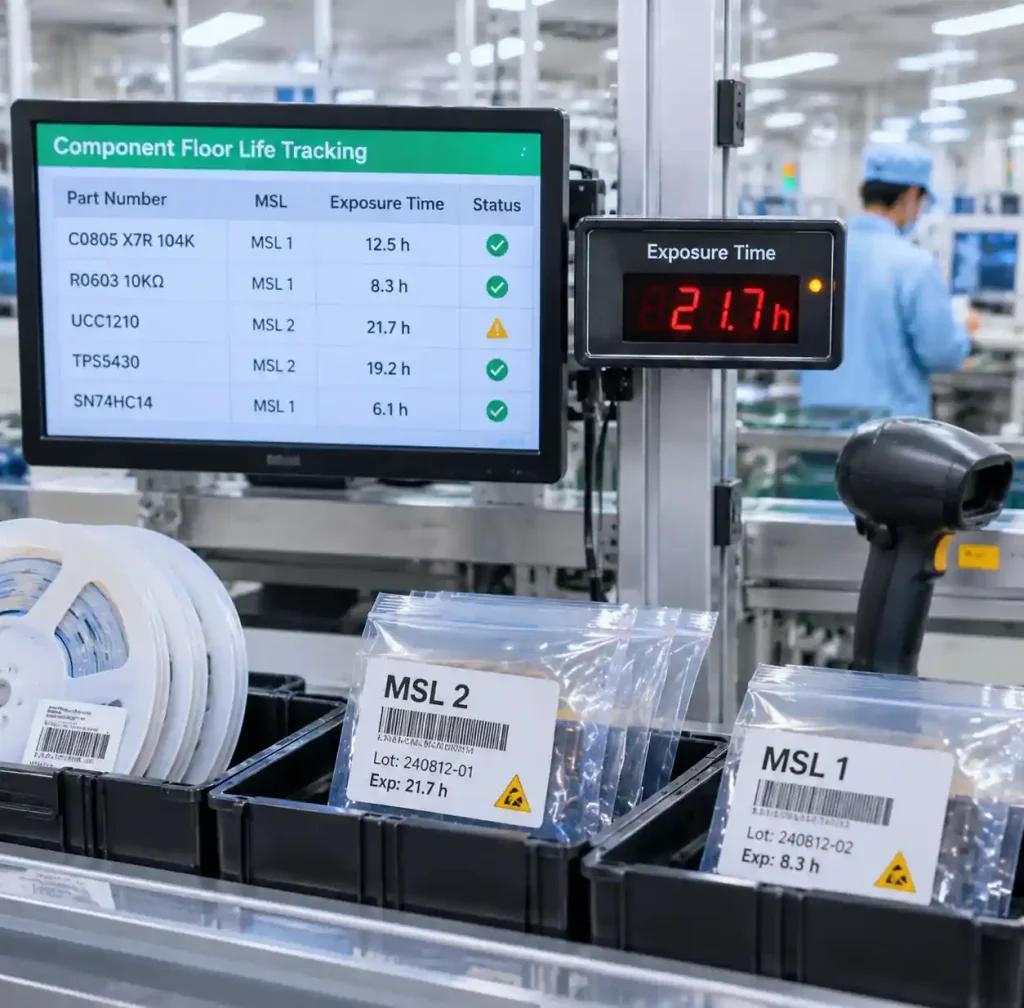
MSL ratings determine floor life—the maximum time components can remain on the assembly floor after opening moisture barrier bags. MSL 3 components allow 168 hours (7 days) exposure at 30°C/60% RH, while MSL 5a restricts floor life to 24 hours. Exceeding floor life requires baking at 40°C for 24 hours or 125°C for specified durations per component datasheets.
MSL Classification and Floor Life Requirements
| MSL Level | Floor Life @ 30°C/60% RH | Typical Packages | Storage Requirement |
|---|---|---|---|
| MSL 1 | Unlimited | Ceramic, metal can | No moisture bag required |
| MSL 2 | 1 year (12 months) | SOIC, QFP, standard BGA | Sealed bag with desiccant |
| MSL 2a | 4 weeks | Large BGA, CSP | Sealed bag, <10% RH storage |
| MSL 3 | 168 hours (7 days) | Fine-pitch BGA, QFN | Dry cabinet <5% RH |
| MSL 4 | 72 hours (3 days) | Ultra-fine-pitch, thin packages | Dry cabinet <5% RH |
| MSL 5 | 48 hours (2 days) | Very thin packages, PoP | Dry cabinet <5% RH, pre-bake |
| MSL 5a | 24 hours (1 day) | Advanced packaging | Nitrogen cabinet <5% RH |
| MSL 6 | Time on label (TOL) | Extremely sensitive | Immediate baking required |
Most modern surface-mount components fall into MSL 3 or MSL 4 categories. BGAs with pitch below 0.5mm and thickness under 1.4mm typically rate MSL 4 or higher, requiring strict humidity control during PCB assembly. Through-hole components generally show no moisture sensitivity (MSL 1) because ceramic and metal can packages resist moisture penetration.
IPC/JEDEC J-STD-033 Storage Requirements
J-STD-033 specifies three storage methods: sealed moisture barrier bags, dry cabinets, and nitrogen storage. Each method maintains different humidity levels and serves specific MSL ratings and production volumes.
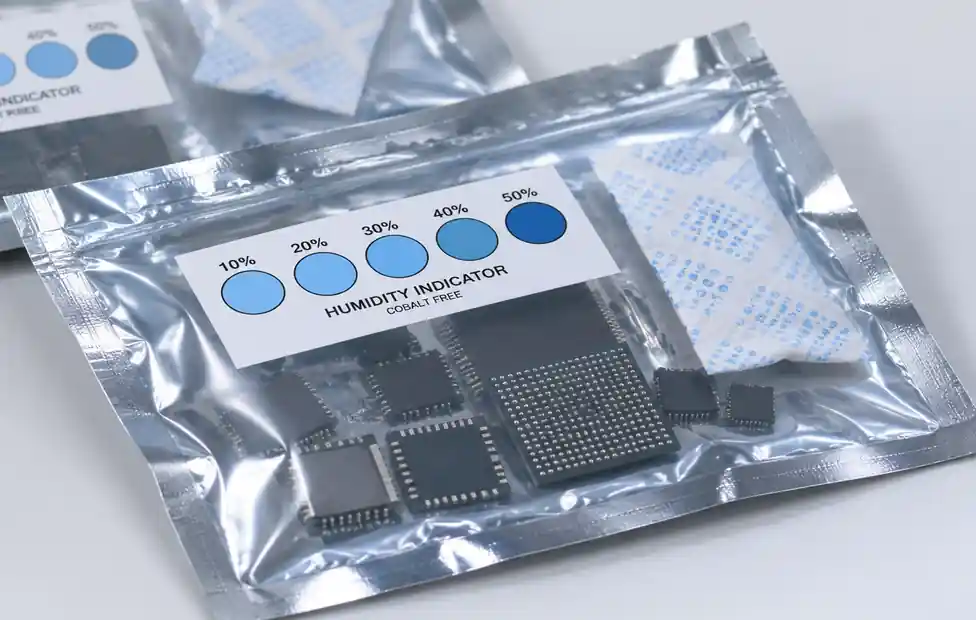
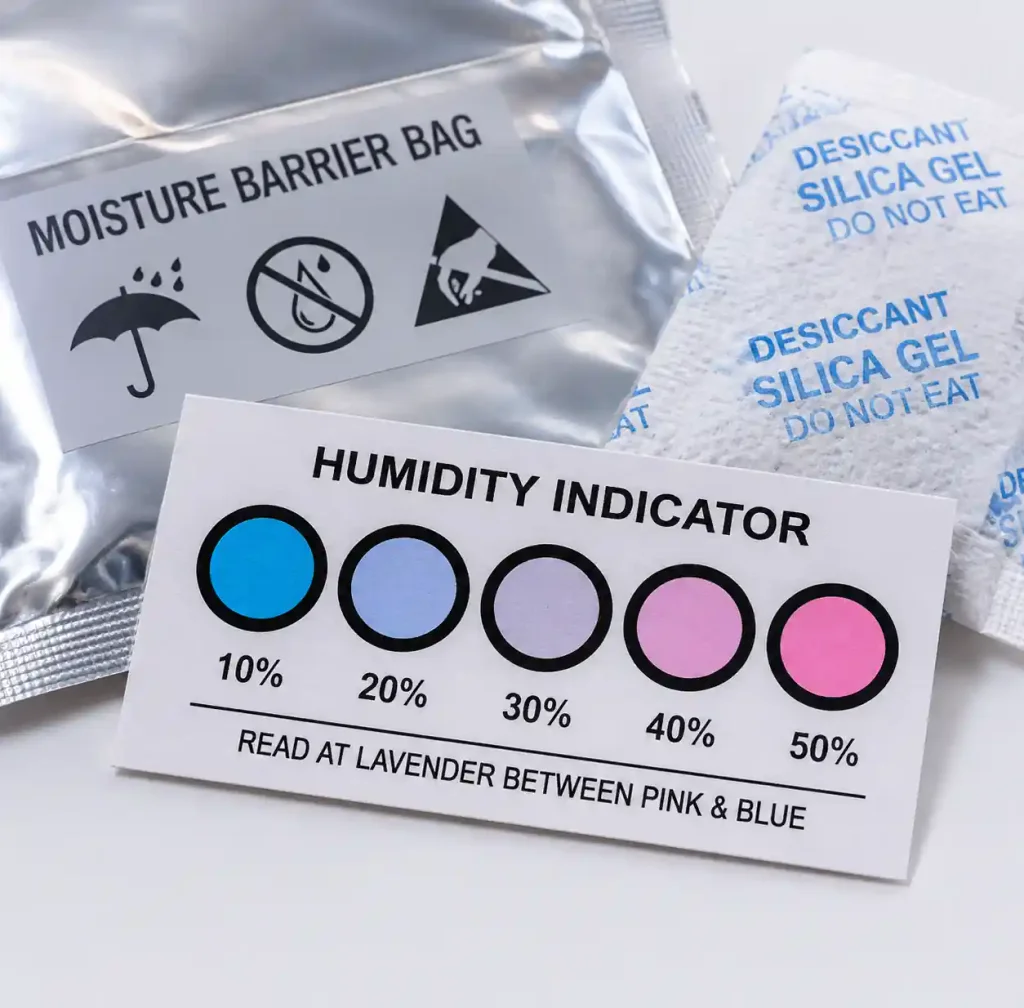
Moisture Barrier Bags (MBB): Components ship in sealed aluminum-polyester bags with desiccant packs and humidity indicator cards (HIC). Bags must remain sealed until production, with HICs showing blue (safe) versus pink (moisture exceeded). Once opened, the exposure timer starts. Resealing requires evacuating air, adding fresh desiccant, and heat sealing within 2 hours of opening.
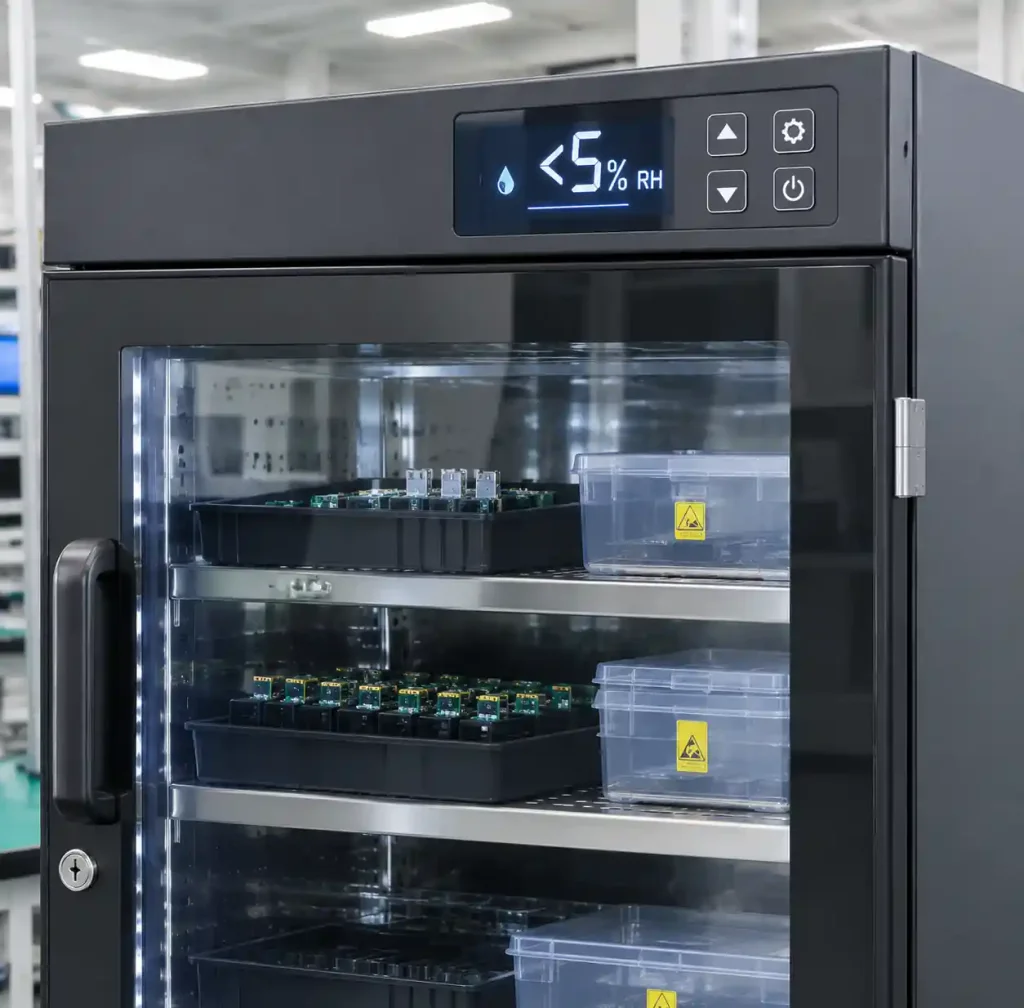
Dry Cabinets: Electronic cabinets actively maintain <5% RH using desiccant regeneration or nitrogen purging. MSL 3-5a components require dry cabinet storage after bag opening. Cabinets cost $1,000-$5,000 depending on capacity (50-1,000 liters) and offer real-time humidity monitoring. Components must enter cabinets within 30 minutes of bag opening to preserve floor life.
Nitrogen Storage: Inert gas cabinets maintain <1% RH for MSL 5a and critical aerospace applications. Nitrogen displaces oxygen and moisture, preventing oxidation of component leads and pads. This method suits high-reliability PCB where moisture and oxidation both threaten reliability over 15-20 year lifespans.
Pre-Bake Procedures and Temperature Profiles
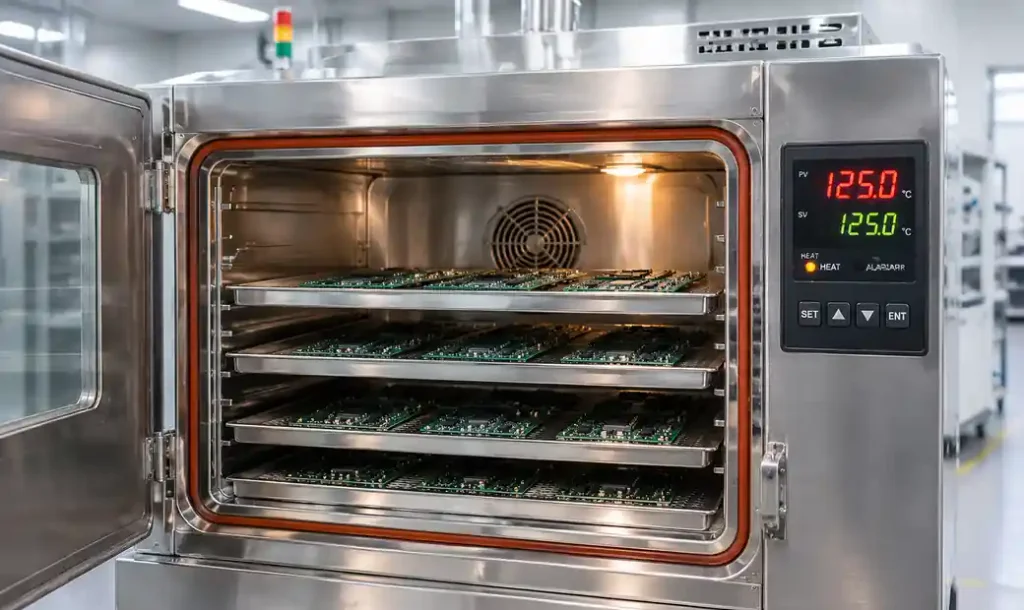
Components exceeding floor life require baking to remove absorbed moisture before reflow. J-STD-033 specifies two baking profiles: low-temperature (40°C/192 hours for extended bake) and high-temperature (125°C/24 hours for fast bake). High-temperature baking risks component damage through thermal stress and dimensional changes.
Standard Baking Profile (125°C/24 hours): Suitable for most MSL 3-5 components. Place components in convection ovens with circulating air at 125°C ±5°C for 24 hours minimum. Monitor oven temperature at component level, not air temperature. Temperature non-uniformity should stay within ±5°C across the oven volume. Allow gradual cooling to room temperature over 2-4 hours to prevent thermal shock.
Low-Temperature Baking (40°C/192 hours): Recommended for temperature-sensitive components including batteries, electrolytic capacitors, and some optocouplers. Extended time compensates for lower driving force. This method prevents damage to plastic molding compounds and avoids premature aging of internal materials.
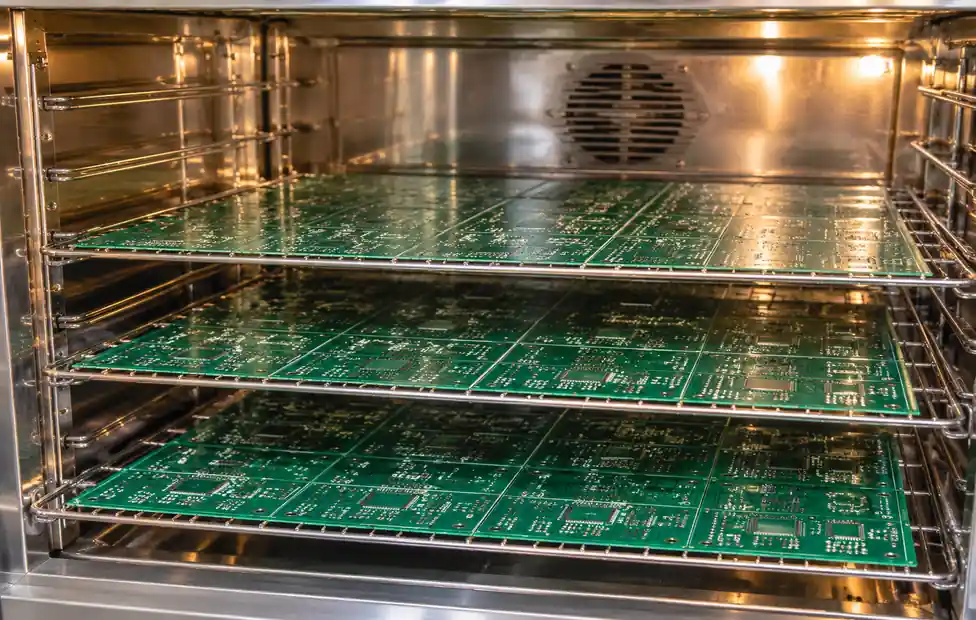
Bare PCBs also absorb moisture during storage, typically 0.2-0.5% by weight in standard FR4 laminates per IPC-4101. Boards stored over 6 months in uncontrolled environments require baking at 105-120°C for 2-4 hours before PCB assembly. Moisture in PCBs causes delamination, measling (white spots), and pink ring around vias during reflow.
| Baking Profile | Temperature | Duration | Suitable Components |
|---|---|---|---|
| Standard High-Temp | 125°C ±5°C | 24 hours | MSL 3-5, standard packages |
| Extended High-Temp | 125°C ±5°C | 48 hours | MSL 5a, thick packages |
| Low-Temp | 40°C ±5°C | 192 hours | Temperature-sensitive parts |
| PCB Pre-Bake | 105-120°C | 2-4 hours | FR4 boards, high-Tg laminates |
Humidity Indicator Cards and Monitoring
Humidity Indicator Cards inside moisture barrier bags provide visual confirmation of storage conditions. Cards change color from blue (<10% RH) through intermediate shades to pink (>60% RH) using cobalt chloride chemistry. Three-dot cards show 10%, 20%, and 30% RH thresholds, while five-dot and six-dot cards add 40%, 50%, and 60% RH indicators.
Reading HICs requires proper lighting—examine cards under fluorescent or natural light, not LED which distorts color perception. If any dot shows pink, moisture has compromised the bag seal. Components require immediate baking per their MSL rating before assembly.
Modern facilities implement automated humidity monitoring in dry cabinets and storage areas. Data loggers record temperature and humidity continuously, generating alerts when conditions exceed setpoints. IPC-1601 requires manufacturers document storage conditions, including temperature range, humidity range, and exposure duration for traceability in automotive and medical device production.
Humidity sensors should calibrate annually against NIST-traceable references. Sensor drift of 2-3% RH per year is common, potentially causing false confidence in storage conditions. Replace sensors every 3-5 years even with calibration to ensure measurement accuracy critical for MSL compliance.
MSL Impact on PCB Assembly Process
Floor life management affects production scheduling significantly. Small assembly operations often struggle with MSL compliance when component kits arrive with mixed MSL ratings. MSL 3 parts allow 7-day window, but MSL 5 components require assembly within 48 hours of bag opening or mid-process baking.
Kitting Strategy: Separate components by MSL rating during receiving inspection. Store MSL 1-2 at room temperature, MSL 3-4 in dry cabinets, and MSL 5-6 in nitrogen cabinets. Open bags just-in-time for production, tracking exposure time with physical tags or barcode systems. Some manufacturers maintain perpetual floor life tracking in ERP systems.
Line Balance: Schedule MSL 4-5a assemblies for continuous production to avoid mid-shift baking delays. If production interrupts beyond floor life, return components to dry storage immediately. Partial reels require vacuum resealing with fresh desiccant and new HICs—costs add $5-15 per reel in materials and labor.
Inspection and Rework: Components placed on boards continue absorbing moisture until reflow. Profile optimization reduces time above liquidus (TAL) to 60-90 seconds for lead-free, minimizing thermal stress on moisture-laden packages. X-ray inspection after reflow identifies voids and cracks caused by moisture vaporization during soldering.
For high-layer-count PCB with MSL 5 BGAs, some manufacturers pre-bake both boards and components immediately before assembly, then complete reflow within 24 hours to eliminate moisture-related defects entirely.
FAQ
How long can I store components in sealed moisture barrier bags?
MSL 2 components remain stable for 12 months in sealed bags at <30°C, while MSL 3-5a require usage within bag shelf life printed on labels (typically 12-24 months). Bags stored beyond shelf life or damaged seals require baking before opening. Temperature during storage matters—exposure above 40°C accelerates desiccant saturation even in sealed bags.
Can I reseal moisture barrier bags with a standard heat sealer?
You can reseal bags using heat sealers (impulse or constant-heat type) at 150-200°C for 2-3 seconds, but proper resealing requires vacuuming air and replacing desiccant packs and HICs. Simple resealing without vacuum and fresh desiccant only maintains existing moisture level, not removing absorbed moisture. Use vacuum sealers designed for moisture-sensitive devices for reliable resealing.
What humidity level do dry cabinets need for different MSL ratings?
MSL 3-4 components require <10% RH storage, while MSL 5-5a demand <5% RH. MSL 6 and aerospace applications specify <1% RH using nitrogen purge cabinets. Standard desiccant cabinets maintain 2-5% RH, adequate for most electronics manufacturing. Ultra-low humidity (<1% RH) requires nitrogen or dry air purge systems costing $5,000-$15,000.
Does baking reset floor life completely?
Baking per J-STD-033 removes absorbed moisture, resetting floor life to zero. However, multiple bake cycles (more than 3-4 times) risk degrading component performance through thermal stress, oxidation of leads, and aging of plastic molding compounds. Track bake count using labels or ERP systems, and limit reuse of repeatedly baked components in critical applications.
How do I determine MSL rating for unlabeled components?
Check manufacturer datasheets—MSL rating appears in packaging specifications. If unavailable, contact manufacturers for MSL documents. Distributors like Digi-Key display MSL ratings. For unknown parts, treat as MSL 3 (7-day floor life) requiring dry storage.
Are PCB boards themselves moisture sensitive?
Yes, bare PCBs absorb moisture over time, particularly high-layer-count boards. Boards stored over 6 months in uncontrolled humidity require baking at 105-120°C for 2-4 hours before assembly. Moisture causes delamination and measling during reflow. IPC-1601 recommends storing bare boards below 50% RH.
Conclusion
MSL compliance protects assembly yield and long-term reliability by preventing moisture-induced failures during reflow soldering. Following IPC/JEDEC J-STD-033 storage requirements—sealed bags, dry cabinets, floor life tracking, and proper baking procedures—eliminates popcorning, delamination, and solder joint cracks. Understanding your components’ MSL ratings and implementing appropriate storage systems reduces scrap rates and field returns significantly.
If you need high-quality PCB assembly services with strict MSL compliance for your electronic products, Andwin Circuits offers ISO 9001 and IATF 16949 certified manufacturing with advanced humidity-controlled facilities. Our experienced team manages moisture-sensitive components per J-STD-033, maintaining <5% RH dry storage and comprehensive floor life tracking for automotive, medical, and industrial applications. We manufacture multilayer PCB up to 50 layers with fast turnaround in 7 days and provide complete turnkey assembly including component sourcing, baking, and quality inspection.
Contact us today for custom PCB assembly solutions with professional MSL management and factory-direct pricing.