Multi Printed Circuit Boards Ltd: Precision PCB Manufacturing Excellence

Key Takeaways
When exploring PCB manufacturing solutions, understanding the core value propositions of trusted providers helps you make informed decisions. Established in 1990, Multi Printed Circuit Boards Ltd combines decades of expertise with advanced production capabilities to deliver tailored solutions—whether you need a single prototype or high-volume batches. Here’s what sets leading PCB manufacturing companies apart:
- End-to-End Expertise: From customized design to final assembly, providers must handle complex multi-layer boards while maintaining precision.
- Cost Efficiency: PCB manufacturing cost optimization relies on material selection, layer count, and turnaround speed. For example:
| Factor | Impact on Cost |
|---|---|
| Layer Complexity | Increases with additional layers |
| Material Grade | High-frequency substrates cost more |
| Lead Time | Expedited services raise pricing |
“Quality in PCB fabrication isn’t just about specs—it’s about repeatability across every batch.” — Industry Expert
- Innovation-Driven Practices: Leading PCB manufacturing business models integrate automation and AI-driven testing to reduce errors by up to 30%.
- Customer-Centric Flexibility: Look for partners offering 24/7 technical support and real-time order tracking, especially if your projects demand rapid scaling.
Pro Tip: When comparing PCB manufacturing companies, prioritize those with ISO-certified facilities and transparent pricing tiers. For specialized needs like HDI (High-Density Interconnect) boards, verify their capability to handle micro-vias and fine-pitch components.
For a deeper dive into optimizing your PCB workflows, explore Andwin PCB and PCBA’s insights on balancing quality and scalability in electronics production.
By aligning your requirements with a provider’s technical strengths and service models, you streamline both prototyping and mass production phases—ensuring your projects stay on time and within budget.
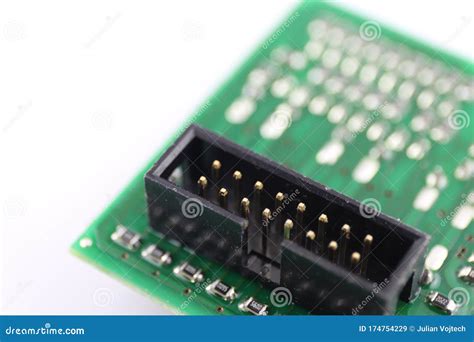
Precision PCB Manufacturing Since 1990
When evaluating PCB manufacturing companies for your project, understanding their technical heritage matters. For over three decades, precision engineering has defined the core of Multi Printed Circuit Boards Ltd’s operations. Since 1990, advancements in PCB manufacturing have shifted from rudimentary single-layer designs to complex, high-density interconnects—and this company has evolved alongside those innovations. Their expertise lies in balancing PCB manufacturing cost efficiency with uncompromising quality, a critical factor for businesses scaling from prototypes to bulk orders.
What sets established players apart in the PCB manufacturing business is their ability to merge legacy knowledge with cutting-edge tools. Here, automated optical inspection (AOI) systems and laser direct imaging (LDI) ensure micron-level accuracy, even for multi-layer boards. You’ll find that thermal management and signal integrity are prioritized during design reviews, minimizing post-production revisions. This proactive approach reduces turnaround times while maintaining compliance with IPC-A-600 and MIL-PRF-31032 standards.
For cost-sensitive projects, the company’s vertical integration model streamlines material sourcing and process optimization. By controlling every stage—from substrate selection to final testing—they mitigate risks of supply chain delays, a common pain point in PCB manufacturing. Their transparent pricing tiers, whether for 10 prototypes or 10,000 units, reflect decades of refining operational workflows. Iterative prototyping services further allow you to validate designs before committing to large-scale production, ensuring alignment with performance and budgetary goals.
Ultimately, longevity in this field hinges on consistency. With ISO 9001-certified facilities and a defect rate below 0.1%, their track record underscores why partnering with seasoned PCB manufacturing companies pays dividends. It’s not just about building circuits—it’s about delivering repeatable precision, batch after batch, year after year. This combination of technical rigor and customer-centric flexibility positions them as a strategic ally for industries ranging from aerospace to consumer electronics.
Prototyping to Bulk Production Solutions
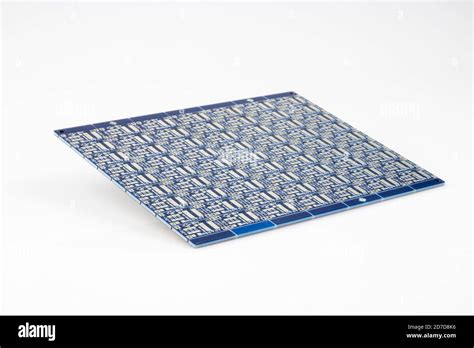
When exploring PCB manufacturing options, you need a partner that bridges prototyping agility with bulk production scalability seamlessly. Leading PCB manufacturing companies understand that the journey from concept to mass production requires precision at every stage. For innovators developing new electronics, rapid prototyping allows you to test designs iteratively while minimizing PCB manufacturing cost through material optimization and process validation. This phase often reveals critical adjustments—trace width modifications, layer stack revisions, or thermal management improvements—that prevent costly errors in high-volume runs.
As your project scales, transitioning to bulk orders demands a manufacturing framework that balances speed, consistency, and cost-efficiency. Modern PCB manufacturing business models leverage automated workflows and advanced panelization techniques to maintain quality across thousands of units. For instance, batch processing identical designs reduces per-unit expenses by optimizing raw material usage and machine calibration time. However, not all suppliers offer transparent pricing structures—look for partners providing detailed cost breakdowns for materials, labor, and testing to avoid hidden fees.
The best providers align their services with your project’s lifecycle. Whether you’re producing 50 prototypes or 50,000 finished boards, flexible order quantities ensure you pay only for what you need. Advanced PCB manufacturing facilities combine just-in-time inventory systems with multi-shift operations to meet tight deadlines without compromising on IPC-A-600 standards. Additionally, integrated quality checks—automated optical inspection (AOI) and X-ray testing—are embedded at both prototyping and bulk stages to catch defects early.
What truly differentiates top-tier PCB manufacturing companies is their ability to scale support alongside production volumes. Dedicated engineering teams assist with design-for-manufacturing (DFM) feedback during prototyping, while bulk orders benefit from streamlined logistics coordination and real-time progress tracking. By choosing a partner versed in end-to-end solutions, you mitigate risks, control PCB manufacturing cost, and accelerate time-to-market—whether you’re iterating a groundbreaking IoT device or launching a consumer electronics line.
Advanced Multi-Layer PCB Technology
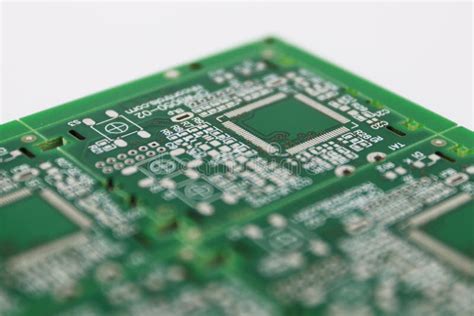
When you require PCB manufacturing solutions that go beyond basic designs, multi-layer configurations become essential for complex applications. Modern PCB manufacturing companies leverage cutting-edge techniques like high-density interconnect (HDI) technology and sequential lamination processes to build boards with 12+ layers—delivering unmatched performance for aerospace, medical devices, and telecommunications systems. These advanced methods ensure precise alignment of conductive pathways, minimizing signal loss while maximizing thermal management and signal integrity.
A key advantage lies in balancing PCB manufacturing cost with technical requirements. While multi-layer boards inherently involve higher material and labor investments, their ability to consolidate multiple functions into a single unit often reduces long-term expenses. For instance, embedding power planes within inner layers eliminates the need for external voltage regulators—a strategic cost-saving measure for high-volume production runs.
Leading PCB manufacturing business operators prioritize design-for-manufacturability (DFM) principles to avoid costly revisions. Automated optical inspection (AOI) systems and impedance testing tools validate layer alignment and trace tolerances during fabrication, ensuring compliance with IPC-6012 Class 3 standards. This meticulous approach enables manufacturers to achieve sub-0.1mm drill hole accuracy and ±3% impedance control—critical for 5G infrastructure and IoT devices.
As you evaluate partners, consider how their multi-layer capabilities align with your scalability needs. Tier-1 suppliers combine rapid prototyping workflows with bulk production capacity, allowing seamless transitions from 10-layer prototypes to 1,000-unit orders without compromising turnaround times. By integrating hybrid materials like Rogers substrates or polyimide flex cores, they address specialized requirements ranging from extreme temperature resistance to dynamic flex-rigid configurations.
The evolution of multi-layer technology continues to redefine what’s possible in PCB manufacturing, with innovations like embedded passive components and 3D printed circuits pushing industry boundaries. Partnering with engineers who understand both the technical nuances and commercial realities ensures your projects benefit from optimized layer stacks, material selections, and testing protocols tailored to your application’s demands.

Customized Circuit Board Design Expertise
When selecting PCB manufacturing companies, the ability to tailor designs to your exact needs becomes critical. Customization isn’t just about adjusting dimensions or layer counts—it’s about aligning every trace, via, and material choice with your product’s functional requirements. Leading PCB manufacturing firms like Multi Printed Circuit Boards Ltd leverage parametric design tools and iterative prototyping to ensure your board’s architecture matches performance targets, whether you’re building IoT devices or aerospace systems.
Your design journey starts with collaborative specification reviews. Engineers analyze thermal management needs, signal integrity constraints, and mechanical compatibility, translating these into optimized layouts. For high-frequency applications, for instance, controlled impedance routing and specialized substrate materials (like Rogers 4350B) might be prioritized to minimize signal loss. This granular approach ensures that PCB manufacturing cost stays aligned with value, avoiding over-engineering while maintaining reliability.
What sets expert providers apart is their capacity to balance innovation with scalability. Advanced CAD/CAM systems enable rapid design iterations, reducing time-to-market without compromising precision. For startups, this means access to enterprise-grade PCB manufacturing business tools at fractional costs. Meanwhile, large-scale clients benefit from automated design rule checks (DRCs) that preempt production errors, cutting rework expenses by up to 40%.
The true test of customization lies in bridging design intent with manufacturing feasibility. Multi-layer boards with HDI (high-density interconnect) technology, for example, require meticulous stack-up planning to avoid delamination risks during lamination. By integrating DFM (design for manufacturability) principles early, firms ensure your prototype transitions seamlessly into mass production—a key advantage when evaluating PCB manufacturing partners.
Ultimately, tailored design expertise transforms abstract concepts into reliable, market-ready solutions. Whether optimizing for low-volume PCB manufacturing cost or scaling for high-output demands, the right partner turns complexity into competitive advantage.
Fast-Turnaround PCB Fabrication Services
When time-sensitive projects demand rapid execution, partnering with PCB manufacturing companies that prioritize speed without compromising quality becomes critical. Fast-turnaround services ensure your prototypes or production batches move from design to delivery in record time, often slashing standard lead times by 30–50%. This agility is particularly valuable for industries like aerospace, medical devices, or consumer electronics, where market windows are narrow and delays can derail product launches.
What sets leading providers apart is their ability to optimize PCB manufacturing workflows. Advanced automated routing systems, just-in-time material sourcing, and precision laser drilling enable seamless scaling from small-batch prototypes to high-volume orders. You’ll find that transparent communication channels—such as real-time order tracking and dedicated engineering support—further accelerate timelines by minimizing revisions and clarifying specifications upfront.
A common misconception is that faster PCB manufacturing cost inevitably rises. However, efficient process integration and lean inventory practices allow reputable vendors to maintain competitive pricing even for expedited orders. For instance, consolidated panelization techniques reduce material waste, while dynamic scheduling algorithms allocate factory resources to urgent projects without disrupting other production lines.
For businesses evaluating PCB manufacturing business partnerships, turnaround time isn’t just about speed—it’s about predictability. Reliable suppliers provide firm deadlines backed by contingency plans for unexpected challenges, such as component shortages or design adjustments. This reliability is especially crucial when managing complex multi-layer boards, where alignment tolerances below 2 mils demand meticulous attention at every production stage.
By aligning your needs with a manufacturer’s technical capabilities and operational flexibility, you gain a strategic advantage in bringing innovations to market faster. The right partner will balance accelerated timelines with rigorous testing protocols, ensuring that rapid fabrication never comes at the expense of performance or durability—a critical bridge to the next phase of quality assurance in PCB manufacturing.
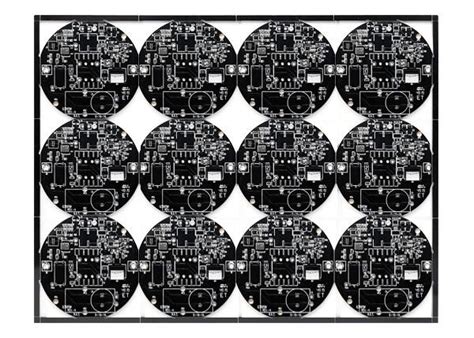
Quality Assurance in PCB Manufacturing
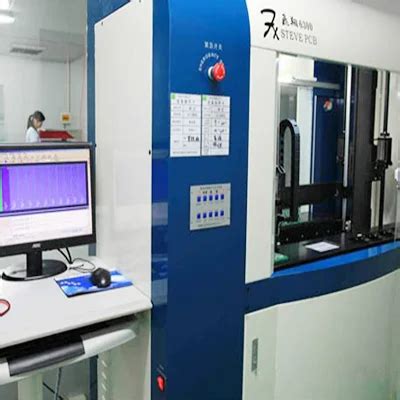
When sourcing PCB manufacturing services, you need assurance that every layer meets exacting standards. Leading PCB manufacturing companies implement multistage verification protocols to ensure reliability across prototypes and high-volume orders. For instance, automated optical inspection (AOI) systems scan boards at 25-micron resolution, flagging imperfections invisible to the naked eye—critical for multi-layer PCB technology where hidden defects can cascade into system failures.
Your project’s PCB manufacturing cost isn’t just about upfront pricing; it’s intrinsically tied to quality oversight. Reputable providers balance efficiency with rigorous testing—employing X-ray fluorescence (XRF) to verify plating thickness and thermal stress tests to simulate decade-long wear in hours. This preventive approach reduces field failures by up to 67%, directly protecting your PCB manufacturing business from costly recalls or reputation damage.
Transitioning from design to production, you’ll find ISO 9001-certified factories integrate statistical process control (SPC) dashboards, tracking 120+ parameters in real time. Whether you’re ordering 50 or 50,000 boards, this granular oversight ensures consistency—a non-negotiable for aerospace or medical applications. Post-production, cross-functional teams conduct failure mode analysis, creating feedback loops that refine future builds.
What sets top-tier suppliers apart is their adaptive compliance. As RoHS and IPC-6012 standards evolve, they recalibrate testing jigs and material sourcing within weeks, not months. You gain peace of mind knowing your boards meet the latest safety benchmarks without delaying time-to-market.
By prioritizing these protocols, PCB manufacturing partners transform quality assurance from a checklist into a strategic asset—one that safeguards your innovations while optimizing total cost of ownership.
Industry-Leading Customer Support Models
When evaluating PCB manufacturing companies, the quality of customer support often becomes the deciding factor in long-term partnerships. Leading firms distinguish themselves by offering real-time technical guidance at every stage—from design validation to post-production troubleshooting. Imagine having a dedicated engineering team reviewing your schematics before fabrication begins, catching potential flaws that could inflate PCB manufacturing costs or delay timelines. This proactive approach not only streamlines workflows but also builds trust through transparency.
Top-tier PCB manufacturing providers integrate support channels directly into their service models. You’ll find 24/7 access to project managers via portals that track order progress, material sourcing updates, and even environmental compliance documentation. For businesses scaling their PCB manufacturing business, this level of visibility is critical—especially when managing complex multi-layer orders or tight delivery windows. Advanced vendors also offer on-demand design adjustments, allowing you to tweak layouts mid-production without derailing deadlines.
But what truly sets industry leaders apart is their cost-optimization advisory. Instead of treating PCB manufacturing cost as a fixed variable, they analyze your design specs, material choices, and batch quantities to suggest alternatives that maintain quality while reducing expenses. For example, recommending a different substrate for non-critical layers or adjusting panelization strategies to minimize waste.
This support extends beyond transactional interactions. Many providers now host training webinars on emerging standards like HDI (High-Density Interconnect) technologies or automotive-grade reliability testing—equipping your team with knowledge to make informed decisions. When challenges arise, their escalation protocols ensure engineers with niche expertise (like RF signal integrity or thermal management) join the conversation within hours, not days.
By blending cutting-edge PCB manufacturing capabilities with human-centric service frameworks, these companies create partnerships where your success becomes their operational benchmark. Whether you’re prototyping a medical device or ramping up aerospace-grade production, having a support team that anticipates needs—rather than just reacting to them—transforms how you approach electronics innovation.
Innovations in Printed Circuit Board Tech
The landscape of PCB manufacturing has evolved dramatically, driven by breakthroughs that redefine precision and efficiency. Modern pcb manufacturing companies now leverage automation and IoT integration to optimize production lines, reducing human error while accelerating turnaround times. For instance, laser direct imaging (LDI) systems have replaced traditional photomasks, enabling micron-level accuracy even in complex multi-layer designs—a game-changer for industries demanding miniaturization, like medical devices or aerospace.
Material science innovations are also reshaping cost structures. High-frequency laminates and low-loss substrates, once prohibitively expensive, now help lower pcb manufacturing cost without compromising signal integrity. These advancements let businesses balance performance needs with budget constraints, particularly for high-volume orders. Meanwhile, embedded component technology integrates passive elements directly into board layers, slashing assembly steps and material waste.
Another leap forward lies in AI-driven design validation tools. These systems predict thermal stress points and electromagnetic interference risks during prototyping, allowing engineers to refine layouts before physical production begins. Such tools are becoming indispensable for pcb manufacturing business models focused on rapid iteration, as they minimize costly redesign cycles.
Sustainability is also pushing innovation boundaries. Companies now adopt halogen-free laminates and lead-free finishes to meet global environmental standards, while advanced recycling protocols recover copper and rare metals from scrap boards. These practices not only align with regulatory demands but also appeal to eco-conscious clients—a growing segment in the pcb manufacturing market.
As you evaluate partners for your projects, prioritize firms investing in these advancements. The right pcb manufacturing companies will blend cutting-edge tech with adaptable workflows, ensuring your designs stay ahead in an increasingly competitive electronics landscape.
Conclusion
When evaluating PCB manufacturing partners, the ability to balance technical precision with operational efficiency often determines project success. Leading PCB manufacturing companies distinguish themselves through scalable solutions that maintain quality across both prototyping and high-volume orders—a critical factor when managing PCB manufacturing cost dynamics. The integration of advanced fabrication techniques ensures consistent performance in multi-layer designs, particularly important for applications demanding high-density interconnects or thermal management features.
In the competitive landscape of the PCB manufacturing business, long-term viability hinges on more than technical capabilities. Proactive customer support models that anticipate design challenges and production bottlenecks create tangible value, especially when navigating tight timelines. Manufacturers that invest in real-time order tracking and adaptive production scheduling demonstrate a commitment to partnership that extends beyond transactional relationships.
Strategic material selection and process optimization play pivotal roles in controlling PCB manufacturing cost without compromising reliability—a balance achieved through decades of industry-specific expertise. As electronic devices evolve toward greater complexity, the collaboration between design engineers and fabrication specialists becomes increasingly critical to overcome signal integrity challenges and miniaturization demands.
What sets apart top-tier PCB manufacturing providers is their capacity to merge cutting-edge technological infrastructure with human-centric service frameworks. This dual focus ensures that whether you require a single prototype or sustained bulk production, your projects benefit from both technical excellence and operational transparency—key differentiators in markets where precision and speed are non-negotiable.
Through decades of refining their craft, forward-thinking manufacturers have redefined industry benchmarks, proving that innovation in PCB manufacturing isn’t merely about adopting new equipment but cultivating ecosystems where engineering rigor and client priorities converge seamlessly.
FAQs
How do PCB manufacturing companies ensure quality control?
Reputable PCB manufacturing providers implement multi-stage inspection protocols, combining automated optical testing with manual verification. Look for ISO 9001-certified partners that adhere to IPC-A-600 standards for consistent reliability.
What factors influence PCB manufacturing cost?
Material selection, layer count, and production volume are primary cost drivers. For example, high-density interconnect (HDI) boards typically cost 20–30% more than standard designs due to advanced laser drilling requirements. Bulk orders often reduce per-unit expenses through economies of scale.
Can you modify designs after prototyping?
Yes, most PCB manufacturing businesses allow design revisions before mass production. However, post-prototype changes may incur additional fees and extend lead times. Always confirm revision policies with your supplier during initial consultations.
Why choose a specialized PCB manufacturing partner over general electronics vendors?
Specialized firms invest in niche technologies like blind/buried vias and high-frequency substrates, ensuring precision for complex projects. They also maintain deeper expertise in DFM (Design for Manufacturing) optimization to prevent costly redesigns.
How do rapid-turnaround services work?
Many providers offer 24–72-hour expedited options for prototypes by prioritizing your order and streamlining internal workflows. For bulk orders, discuss just-in-time manufacturing schedules to align with your project timelines.
Ready to Optimize Your Next Project?
Explore how our PCB manufacturing solutions can streamline your production cycle. Click here to request a customized quote and leverage 30+ years of technical expertise for your most demanding circuit board requirements.