PCB Application and Basic Component
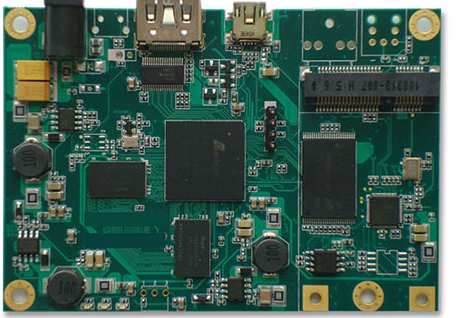
PCB(printed circuit board) are key supporting structures for electronic components,connecting them with metal conductors to enable the functionality of various electronic devices.In the early 20th century,traditional PCB manufacturing primarily involved printing each resist.However,with the rapid advancement of semiconductor technology, the demand for PCBs has skyrocketed. Modern PCBs have evolved from single-sided boards to double-sided boards, multi-layer boards, and flexible boards, boasting ultra-high density, miniaturization, and high reliability. This buying guide will provide an in-depth introduction to the composition and functions of PCBs and explore their importance in practical applications. Let’s explore the mysteries of PCBs and understand their indispensable role in the electronics industry.
01 What is a PCB?
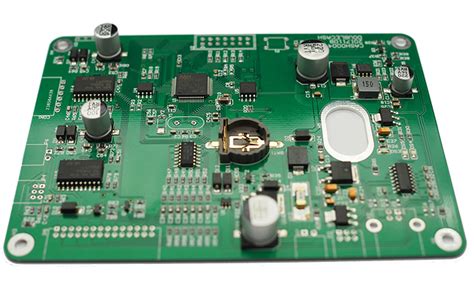
PCBs,or printed circuit board,are a type of circuits substrate composed of a substrate,an insulating layer,and copper foil.They utilize a printing and etching process to form the circuitry of electronic component on the substrate.In the United States and the United Kingdom,they are also referred to as printed wire board(PWBs).As a key component of electronic components,PCBs not only support the electronic component within the PCBA board but also provide circuit connections between the various components.From small headphones to large computers,nearly every product that uses electricity requires printed ciruit boards(PCBs).In this data age,PCBs have become the core of electronic products,connecting various components into a complete and coordinated whole.
PCB types include flexible printed circuit boards(FPCs),rigid printed circuit boards,and IC carrier boards,each with its own distinct market applications.
02 PCB Applications
PCBs are widely used in information,communication,and consumer products. Understanding the application of PCBs in various electronic products requires a deep understanding of their practical applications in different fields.

Applications of Electronic products
PCBs are core component of numerous electronic products,including but not limited to televisions,recorders,computer peripherals,fax machines,laptops tablets,smartphones,communication network equipment,and smart wearable devices.With the increasing demand for flexible printed circuit board are becoming increasingly popular applications such as 5G smartphones.
Emerging Applications
In recent years ,the rise of emerging,the rise of emerging application areas has driven demand for PCBs.These include smartwatches,true wireless earbuds,unmanned vehicles,smart glasses and headsets,smart speakers,automotive components in-vehicle computers,and automotive device.The demand for these emerging applications is driving demand for higher-end circuit boards,including HDI(High-Density Interconnect)boards and rigid-flex boards.
Applications of 5G and AI Technologies
With the widespread adoption of 5G and artificial intelligence(AI)technologies,demand for PCBs is also increasing.This includes applications in communications equipment,high-performance computing,automotive electronics,and other fields.The diverse application potential of PCBs will continue to expand with the support of these emerging technologies.
Overall,PCBs are widely used in downstream applications not only in traditional electronic products but aslo show great potential in emerging fields.From consumer electronics to automotive electronics,as well as in the application of 5G and AI technologies,PCBs play an indispensable role.Looking ahead,with the continuous advancement of technology,the scope of PCB applications is expected to continue to expand.
03 Basic Components of circuit board Manufacturing
Circuit board are composed of several core component,each of which performs a critical function.to ensure the reliable operation and efficiency of the entire circuit board.
Circuits and Patterns
Circuits form conductive pathways between components on a circuit board,while large copper layer are designed as ground and power planes.
Circuits and pattern are manufactured simultaneously,ensuring the basic conductive structure of the circuit board.
Dielectric Layer
The dielectric layer ,commonly known as the base material,provide insulation between layers.It ensure the stability of the circuit board and prevent short circuits.
Through hole(via)
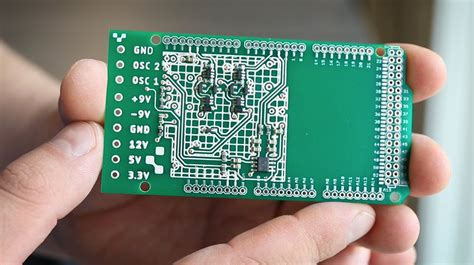
Through holes allow interconnection between circuits on different layers,while larger holes can be used for component insertion.
Solder Resistant(Solder Mask)
Solder mask is used to isolate areas where solder is not needed,preventing unnecessary electrical conduction.Different colors of ink are available.
Silk Screen(Legend/Marking)
While not required ,silk screen provides component identification on the circuit board,facilitating maintenance and identification after assembly.
Surface Finish
Surface finish is used to prevent oxidation of the copper surface and protect it from environmental influences,Methods include tin spraying,gold deposition,and silver deposition,each with its own advantages .
These basic components work together to ensure the proper functioning of circuit boards while meeting the needs of various application scenarios. Each component plays an integral role in ensuring the functional integrity and performance of the circuit board.
04 PCB Connectors
These connectors are electrical connectors consisting of a housing and contacts,used to connect different components on a circuit board.The conductive tracks on a circuit board are the pads for printed electronic components,while the connection between these components.
Backplane Connectors
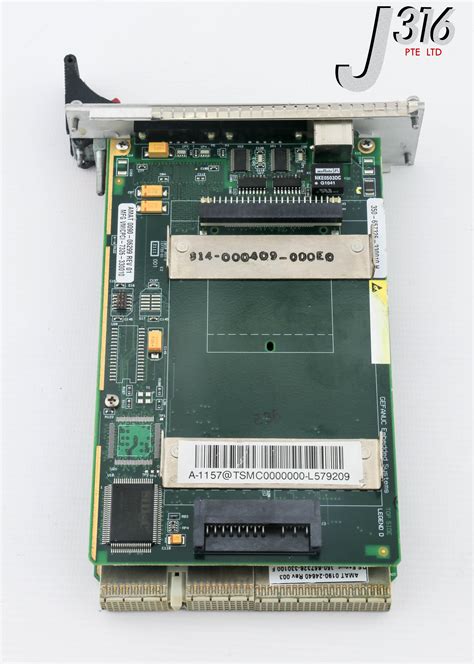
Primarily used in computer system design,these connectors serve as support structures for connecting different PCBs due to their versatility and modularity.Their cards are easily interchangeable,making them widely used in the telecommunications industry.
LVDS (Low Voltage Differential Signaling) Connectors
Also known as low voltage differential signaling connectors,their applications primarily involve various types of displays.One of their advantages is that copper cables allow for high-speed connection despite low power consumption.
Female headers (PCB sockets)
Mated with PCB headers, they simplify the assembly of two printed circuit boards without cables.
RITS connectors (Remote Input/Output Terminal System)
This abbreviation stands for Remote Input/Output Terminal System.They are color-coded to indicate their application and feature a locking lever to faciliate mating without the need for wire stripping,as required with other types of PCB connectors.
These connectors ensure efficient communication between the various components of an electronic system, while providing flexibility and reliability for a variety of applications. From the basic circuit board structure to the connector application, the entire system works together to ensure the proper functioning of electronic products.