Problems with PCBs in PCB Design and Solutions
The following problems may be caused by the substrate in the PCB design process:
First, all kinds of soldering problems
Now symbol mega: cold solder joints or solder joints have blast holes.
Inspection method: The hole is frequently dissected before dip soldering and after dip soldering to find out where the copper is stressed. In addition, the material is tested for feed.
possible reason:
1. Blast holes or cold solder joints are seen after the soldering operation. In many cases, copper plating is poor, and then expansion occurs during the soldering operation, so that voids or blast holes are created in the metallized hole wall. If this is produced during the wet processing process, the absorbed volatilization
The material is covered by the coating and then driven out by the heat of the dip soldering, which creates a spout or blast hole.
Solution:
1. Try to eliminate copper stress. The expansion of the laminate in the z-axis or thickness direction is usually related to the material. It can break the metallization hole. Dealing with laminate manufacturers to get advice on materials with less z-axis expansion.
Second, the adhesive strength problem
Now symbolizes megabytes: In the dip soldering operation, the pad and the wire are detached.
Inspection method: During the incoming inspection, fully test and carefully control all wet processing processes.
possible reason:
1. Detaching of pad or wire during processing may be due to plating solution, solvent etching, or copper stress during plating operations.
2. Punching, drilling, or perforating will partially detach the pad, which will become apparent during the hole metallization operation.
3. During wave soldering or manual soldering operations, pad or wire detachment is usually caused by improper soldering techniques or excessive temperature. Sometimes it is because the original laminate is poorly bonded or its thermal peel strength is not high, causing the pad or wire to separate.
4. Sometimes the PCB design layout will cause the pad or wire to detach in the same place.
5. During the soldering operation, the retained heat of the component will cause the pad to detach.
Solution:
1. Give the laminate manufacturer a complete list of solvents and solutions used, including processing time and temperature for each step. Analyze whether the plating process has copper stress and excessive thermal shock.
2. Effectively follow the method of mechanical processing that was promoted. Regular analysis of metallized holes can control this problem.
3. Most pad or wire breakaway is due to lax requirements on the entire operator. Failure of the temperature test of the solder bath or extension of the residence time in the solder bath can also occur. In manual solder trimming operations, pad detachment is probably due to improper use of wattage
Electrochromium, as well as the failure to conduct professional process training. Nowadays, some laminate manufacturers, for stringent soldering applications, manufacture laminates with high peel strength grades at high temperatures.
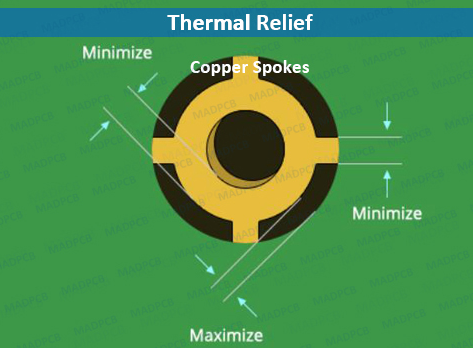
4. If the separation caused by the design layout of the printed board occurs at the same place on each board;
then this printed board must be redesigned. Normally, this does occur in thick copper foil or in the right angle of the wire. Occasionally, this behavior occurs in long wires; this is because.
It is due to the difference in thermal expansion coefficient.
5 PCB design time. If possible, remove heavy components from the entire printed board or install it after dip soldering.
Careful soldering is usually done with a low wattage soldering iron, which has a shorter duration of heat on the substrate material compared to component dip soldering.
Third, the problem of excessive size changes.
The symbol is now: the size of the substrate is out of tolerance or misalignment after machining or soldering.
Inspection method: Full quality control during processing.
possible reason:
1. The texture direction of the paper-based material is not noticed, and the forward expansion is about half of the horizontal direction. And the substrate cannot cool back to its original size after cooling.
2. If the local stress in the laminate is not released, it will sometimes cause irregular dimensional changes during processing.
Solution:
1. The entire production staff often unloads the board in the same direction of texture. If the dimensional change exceeds the allowable range, consider changing to the substrate.
2. Contact the laminate manufacturer for advice on how to relieve material stress before processing.