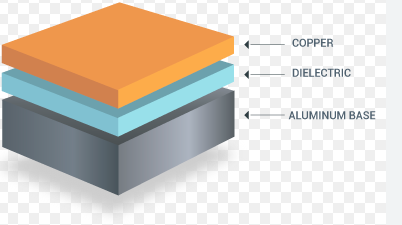
Rogers 5g pcb
Benefits Of Rogers 5G PCB In Modern Telecommunications
Rogers 5G PCBs, or printed circuit boards, have emerged as a cornerstone in the advancement of modern telecommunications. As the world transitions to the fifth generation of wireless technology, the demand for high-performance, reliable, and efficient PCBs has never been greater. Rogers Corporation, a leader in engineered materials, has developed a range of PCB materials specifically designed to meet the stringent requirements of 5G networks. These materials offer numerous benefits that are pivotal to the success and proliferation of 5G technology.
One of the primary advantages of Rogers 5G PCBs is their exceptional signal integrity.
In the realm of 5G telecommunications, maintaining high signal integrity is crucial due to the higher frequencies and faster data rates involved. Rogers materials are engineered to minimize signal loss and ensure that data is transmitted with minimal degradation. This is achieved through the use of low-loss dielectric materials, which reduce the attenuation of high-frequency signals. Consequently, this leads to improved performance and reliability of 5G networks, enabling faster and more stable connections for end-users.
In addition to superior signal integrity, Rogers 5G PCBs also offer excellent thermal management properties.
The increased data rates and higher power levels associated with 5G technology generate significant amounts of heat. Effective thermal management is essential to prevent overheating and ensure the longevity of electronic components. Rogers materials are designed to dissipate heat efficiently, thereby maintaining optimal operating temperatures and enhancing the overall reliability of the system. This is particularly important in densely packed electronic assemblies where heat dissipation can be challenging.
Moreover, Rogers 5G PCBs exhibit outstanding mechanical stability.
The deployment of 5G infrastructure often involves harsh environmental conditions, including extreme temperatures, humidity, and mechanical stress. Rogers materials are known for their robustness and durability, which ensures that the PCBs can withstand these challenging conditions without compromising performance. This mechanical stability is critical for the long-term reliability and maintenance of 5G networks, reducing the need for frequent repairs and replacements.
Another significant benefit of Rogers 5G PCBs is their compatibility with advanced manufacturing processes.
The complexity of 5G technology necessitates the use of sophisticated manufacturing techniques, such as high-density interconnect (HDI) and multi-layer PCB fabrication. Rogers materials are well-suited for these advanced processes, offering excellent dimensional stability and ease of processing. This compatibility facilitates the production of high-quality, high-performance PCBs that meet the exacting standards of 5G applications.
Furthermore, Rogers 5G PCBs contribute to the miniaturization of electronic devices.
As consumer demand for smaller, more powerful devices continues to grow, the ability to integrate more functionality into a smaller footprint becomes increasingly important. The high-performance characteristics of Rogers materials enable the design of compact, efficient PCBs that support the miniaturization trend. This is particularly beneficial for mobile devices, IoT applications, and other portable electronics that rely on 5G connectivity.
In conclusion, the benefits of Rogers 5G PCBs in modern telecommunications are manifold. Their exceptional signal integrity, thermal management properties, mechanical stability, compatibility with advanced manufacturing processes, and contribution to device miniaturization make them an indispensable component in the development and deployment of 5G networks. As the telecommunications industry continues to evolve, the role of high-performance PCBs like those offered by Rogers Corporation will remain critical in ensuring the success and advancement of 5G technology.
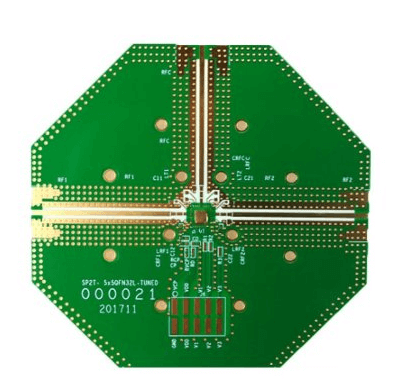
Design Considerations For Rogers 5G PCB
Designing printed circuit boards (PCBs) for 5G applications necessitates meticulous attention to detail, particularly when utilizing Rogers materials. Rogers Corporation is renowned for its high-frequency laminates, which are pivotal in achieving the performance benchmarks required for 5G technology. The design considerations for Rogers 5G PCBs are multifaceted, encompassing material selection, signal integrity, thermal management, and manufacturability.
To begin with, the choice of Rogers material is paramount.
Rogers offers a variety of laminates, such as RO4000, RO3000, and RO5000 series, each with distinct properties tailored for different applications. For 5G, the material must exhibit low dielectric constant (Dk) and low dissipation factor (Df) to ensure minimal signal loss and high-frequency performance. The RO4000 series, for instance, is often preferred due to its excellent electrical properties and cost-effectiveness. However, the specific application requirements, such as operating frequency and environmental conditions, will ultimately dictate the optimal material choice.
Signal integrity is another critical aspect in the design of Rogers 5G PCBs.
High-frequency signals are susceptible to various forms of degradation, including crosstalk, reflection, and attenuation. To mitigate these issues, designers must carefully consider trace width, spacing, and impedance control. Utilizing controlled impedance traces ensures that the signal maintains its integrity over long distances. Additionally, the use of differential pairs can help reduce noise and improve signal quality. It is also essential to minimize the length of high-frequency traces and avoid sharp bends, which can cause signal reflections and losses.
Thermal management is equally important in the design of Rogers 5G PCBs.
The high power densities associated with 5G applications can lead to significant heat generation, which, if not properly managed, can degrade the performance and reliability of the PCB. Rogers materials generally have good thermal conductivity, but additional measures such as thermal vias, heat sinks, and proper airflow must be incorporated into the design. Ensuring adequate thermal management not only enhances the performance but also prolongs the lifespan of the PCB.
Manufacturability is another crucial consideration.
While Rogers materials offer superior electrical performance, they can pose challenges during the manufacturing process. For instance, the drilling and plating processes must be carefully controlled to avoid damaging the material. Additionally, the lamination process requires precise temperature and pressure control to ensure proper bonding without introducing defects. Collaborating closely with the PCB manufacturer during the design phase can help identify potential issues and implement solutions that facilitate smooth production.
Furthermore, the integration of components on Rogers 5G PCBs requires careful planning.
The placement of active and passive components must be optimized to minimize signal path lengths and reduce parasitic effects. Ground planes and power distribution networks should be designed to provide stable reference voltages and minimize electromagnetic interference (EMI). The use of advanced simulation tools can aid in predicting and mitigating potential issues, ensuring that the final design meets the stringent performance requirements of 5G applications.
In conclusion, designing Rogers 5G PCBs involves a comprehensive approach that addresses material selection, signal integrity, thermal management, and manufacturability. By carefully considering these factors and leveraging the unique properties of Rogers materials, designers can create high-performance PCBs that meet the demanding requirements of 5G technology. The collaboration between designers and manufacturers is essential to overcome the challenges and achieve a successful implementation, ultimately contributing to the advancement of next-generation wireless communication systems.
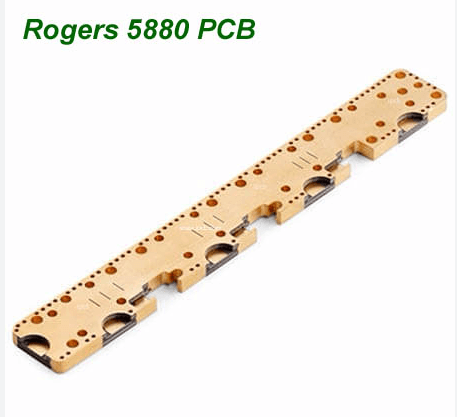
Comparing Rogers 5G PCB To Other High-Frequency Materials
Rogers 5G PCB materials have garnered significant attention in the realm of high-frequency applications, particularly with the advent of 5G technology. As the demand for faster data transmission and higher bandwidth continues to escalate, the choice of printed circuit board (PCB) materials becomes increasingly critical. Rogers Corporation, a prominent player in the industry, offers a range of high-frequency laminates that are specifically designed to meet the stringent requirements of 5G applications. However, to fully appreciate the advantages of Rogers 5G PCB materials, it is essential to compare them with other high-frequency materials available in the market.
One of the primary attributes that set Rogers 5G PCB materials apart is their exceptional dielectric constant (Dk) stability.
The dielectric constant is a crucial parameter that influences signal integrity and transmission speed. Rogers materials, such as the RO4000 and RO3000 series, exhibit a low and stable Dk across a wide frequency range. This stability ensures minimal signal loss and consistent performance, which is paramount for 5G applications that operate at higher frequencies. In contrast, other high-frequency materials, such as FR-4, often exhibit higher Dk variability, leading to potential signal degradation and reduced reliability.
Moreover, Rogers 5G PCB materials are renowned for their low dissipation factor (Df), which directly impacts the efficiency of signal transmission.
lower dissipation factor indicates reduced energy loss as the signal propagates through the material. Rogers laminates, with their low Df values, ensure that signals maintain their integrity over longer distances, thereby enhancing the overall performance of 5G networks. On the other hand, traditional materials like FR-4 tend to have higher dissipation factors, resulting in greater signal attenuation and compromised performance, especially at higher frequencies.
Thermal management is another critical aspect where Rogers 5G PCB materials excel.
The high power densities associated with 5G technology necessitate efficient heat dissipation to prevent thermal-related failures. Rogers materials, such as the RO4835 and RO4350B, offer superior thermal conductivity, enabling effective heat management and ensuring the longevity of the PCB. In comparison, other high-frequency materials may struggle with thermal management, leading to potential overheating issues and reduced operational lifespan.
Furthermore, Rogers 5G PCB materials exhibit excellent dimensional stability, which is vital for maintaining precise circuit geometries.
This stability is particularly important in high-frequency applications where even minor deviations can significantly impact performance. Rogers laminates are engineered to minimize dimensional changes due to temperature fluctuations, ensuring consistent and reliable performance. Conversely, other materials may experience greater dimensional variations, potentially leading to misalignments and signal integrity issues.
In addition to their technical advantages, Rogers 5G PCB materials also offer ease of fabrication.
The materials are compatible with standard PCB manufacturing processes, allowing for seamless integration into existing production lines. This compatibility reduces manufacturing complexities and costs, making Rogers laminates an attractive choice for high-frequency applications. In contrast, some alternative materials may require specialized processing techniques, increasing production time and expenses.
In conclusion, Rogers 5G PCB materials stand out in the high-frequency domain due to their superior dielectric constant stability, low dissipation factor, excellent thermal management, and dimensional stability. These attributes collectively contribute to enhanced signal integrity, reliability, and overall performance in 5G applications. While other high-frequency materials are available, they often fall short in one or more of these critical areas. Therefore, for applications demanding the utmost in performance and reliability, Rogers 5G PCB materials present a compelling choice.
Future Trends In Rogers 5G PCB Technology
The advent of 5G technology has ushered in a new era of connectivity, promising unprecedented speeds and reliability. Central to the realization of this potential is the development of advanced printed circuit boards (PCBs) that can support the high-frequency requirements of 5G networks. Among the various materials used in PCB manufacturing, Rogers Corporation’s laminates have emerged as a leading choice due to their superior performance characteristics. As we look to the future, several trends are poised to shape the evolution of Rogers 5G PCB technology, driven by the need for enhanced performance, miniaturization, and sustainability.
One of the most significant trends in Rogers 5G PCB technology is the continuous push for higher performance.
As 5G networks operate at higher frequencies, typically in the millimeter-wave spectrum, the materials used in PCBs must exhibit low dielectric loss and high thermal conductivity. Rogers’ advanced laminates, such as the RO4000 and RO3000 series, are specifically engineered to meet these stringent requirements. These materials offer low signal loss, which is crucial for maintaining signal integrity at high frequencies. Additionally, their excellent thermal management properties help dissipate heat effectively, ensuring the reliability and longevity of the PCBs in demanding 5G applications.
In tandem with performance improvements, the trend towards miniaturization is also gaining momentum.
The demand for smaller, more compact devices necessitates the development of PCBs with higher component density and finer line widths. Rogers’ laminates are well-suited for this purpose, as they can be fabricated with precise tolerances and support high-density interconnect (HDI) designs. This capability is particularly important for applications such as smartphones, wearable devices, and Internet of Things (IoT) sensors, where space is at a premium. By enabling more compact and efficient designs, Rogers 5G PCBs are helping to drive the proliferation of 5G-enabled devices across various sectors.
Another emerging trend is the focus on sustainability and environmental responsibility in PCB manufacturing.
As the electronics industry grapples with the challenges of e-waste and resource depletion, there is a growing emphasis on developing eco-friendly materials and processes. Rogers Corporation has been proactive in this regard, investing in research and development to create laminates that are not only high-performing but also environmentally sustainable. For instance, their materials are designed to be halogen-free and compliant with global environmental regulations, reducing the ecological footprint of 5G PCBs. This commitment to sustainability is likely to become even more critical in the future, as regulatory pressures and consumer awareness continue to rise.
Furthermore, the integration of advanced manufacturing techniques, such as additive manufacturing and laser direct structuring (LDS), is set to revolutionize Rogers 5G PCB technology.
These techniques offer greater design flexibility and precision, enabling the production of complex geometries and customized solutions that were previously unattainable with traditional methods. By leveraging these innovations, manufacturers can optimize the performance and functionality of 5G PCBs, catering to the specific needs of diverse applications ranging from telecommunications infrastructure to autonomous vehicles.
In conclusion, the future of Rogers 5G PCB technology is characterized by a confluence of trends aimed at enhancing performance, enabling miniaturization, promoting sustainability, and embracing advanced manufacturing techniques. As 5G technology continues to evolve, the role of high-performance PCBs will become increasingly pivotal in unlocking its full potential. Rogers Corporation’s commitment to innovation and excellence positions it at the forefront of this dynamic landscape, driving the development of next-generation PCBs that will power the connected world of tomorrow.