Rogers pcb high frequency
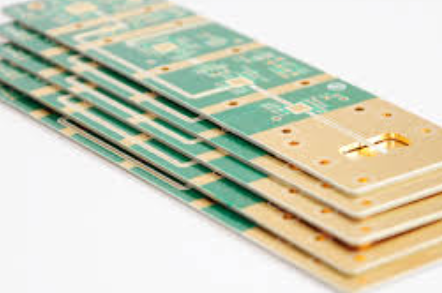
Rogers PCB (Printed Circuit Board) is a type of high-frequency PCB that is designed to operate at high frequencies, typically above 1 GHz.
Rogers PCBs are made from a specialized material called Rogers substrate, which is a high-performance laminate material that has excellent electrical properties, such as low dielectric loss and high thermal stability.
Rogers PCBs are commonly used in high-frequency applications such as microwave communication systems, radar systems, and satellite communication systems.
They are also used in various other applications that require high-speed signal transmission and low signal loss.
The use of Rogers PCBs in high-frequency applications is beneficial because they offer low signal loss, high thermal stability, and excellent electrical properties, which make them suitable for use in high-performance electronic devices.
Additionally, Rogers PCBs can be designed to meet specific requirements, such as impedance control, which ensures that the signal is transmitted without any loss or distortion.

Rogers pcb high frequency classification
Rogers PCBs are classified based on their dielectric constant (Dk) and loss tangent (Df) values, which determine their high frequency performance. The most common Rogers PCB classifications are:
1. Rogers 4000 series:
These PCBs have a low Dk of 2.55 to 3.55 and a low Df of 0.0025 to 0.0035, making them ideal for high frequency applications up to 10 GHz.
2. Rogers 5000 series:
These PCBs have a medium Dk of 4.0 to 6.15 and a low Df of 0.0017 to 0.0025, making them suitable for high frequency applications up to 40 GHz.
3. Rogers 6000 series:
These PCBs have a high Dk of 6.15 to 10.2 and a low Df of 0.0015 to 0.0025, making them ideal for high frequency applications up to 60 GHz.
4. Rogers 8000 series:
These PCBs have an ultra-high Dk of 10.2 to 12.5 and a low Df of 0.0025 to 0.0035, making them suitable for high frequency applications up to 110 GHz.
Overall, the higher the Dk value, the better the signal propagation on the PCB, but the higher the potential for signal loss and distortion. The lower the Df value, the lower the signal loss and distortion. Therefore, choosing the right Rogers PCB classification depends on the specific requirements of the high frequency application.
Rogers pcb high frequency who proposed
Rogers PCB was developed by Rogers Corporation, a global leader in engineered materials solutions.
The company was founded in 1832 and has been a pioneer in the development of high-performance materials for a wide range of industries, including aerospace, automotive, telecommunications, and electronics.
The Rogers PCB material was specifically designed for high-frequency applications, and it has become a popular choice among engineers and designers who require high-speed signal transmission and low signal loss in their circuits.
Rogers pcb high frequency cost
The cost of Rogers PCBs can vary depending on the specific application and design requirements. Rogers PCBs are generally more expensive than standard FR4 PCBs due to their advanced material properties and manufacturing processes.
The cost of Rogers PCBs can also be influenced by factors such as the thickness of the board, the number of layers, the complexity of the design, and the quantity of boards being produced.
It is recommended to get a quote from a PCB manufacturer or supplier to get an accurate estimate of the cost of Rogers PCBs for a specific project.