Sinking Gold PCB vs. Spray Tin PCB: A Comprehensive Comparison
Introduction
Printed Circuit Boards (PCBs) are the backbone of modern electronics, and their surface finish plays a critical role in determining the performance, reliability, and longevity of electronic devices. Among the various surface finish options available, sinking gold (also known as immersion gold or ENIG) and spray tin (also called HASL – Hot Air Solder Leveling) are two of the most widely used finishes in the electronics industry. This article provides an in-depth comparison between sinking gold PCB and spray tin PCB, examining their manufacturing processes, performance characteristics, applications, and cost considerations.
Understanding Sinking Gold PCB (ENIG)
Definition and Manufacturing Process
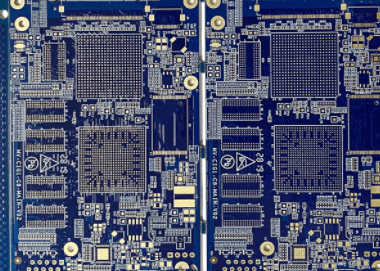
Sinking gold, more formally known as Electroless Nickel Immersion Gold (ENIG), is a two-layer metallic coating consisting of a nickel barrier layer covered with a thin layer of gold. The manufacturing process involves several precise steps:
- Cleaning: The copper surface is thoroughly cleaned to remove any contaminants.
- Microetching: A mild chemical etch prepares the copper surface for nickel deposition.
- Electroless Nickel Plating: A nickel-phosphorus alloy (typically 4-12% phosphorus) is deposited on the copper through an autocatalytic chemical process, usually 3-6 μm thick.
- Immersion Gold Plating: A thin layer of gold (typically 0.05-0.2 μm) is deposited on the nickel through a displacement reaction where gold ions replace nickel atoms at the surface.
Key Characteristics
- Surface Flatness: ENIG provides an extremely flat surface, ideal for fine-pitch components.
- Corrosion Resistance: Excellent resistance to oxidation and corrosion.
- Solderability: Good solderability that remains stable over time.
- Wire Bondability: Suitable for both gold and aluminum wire bonding.
- Contact Resistance: Low and stable contact resistance.
Advantages
- Excellent Surface Planarity: Critical for modern high-density interconnects and fine-pitch components.
- Long Shelf Life: Can remain solderable for up to 12 months or more under proper storage.
- Good for Multiple Reflow: Withstands multiple reflow cycles without significant degradation.
- Aluminum Wire Bondable: Unlike many other finishes, ENIG supports aluminum wire bonding.
- RoHS Compliant: Contains no lead and meets environmental regulations.
Disadvantages
- Higher Cost: More expensive than many other finishes, including spray tin.
- Black Pad Risk: Potential for “black pad” phenomenon if process controls are inadequate.
- Thicker Gold Layer Issues: If gold layer is too thick (>0.15 μm), it can lead to solder joint embrittlement.
- Process Sensitivity: Requires tight control of chemical concentrations and temperatures.
Understanding Spray Tin PCB (HASL)
Definition and Manufacturing Process
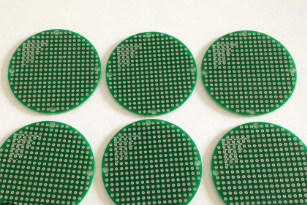
Spray tin, commonly referred to as Hot Air Solder Leveling (HASL), involves coating the PCB with molten solder (traditionally tin-lead, but now mostly lead-free alternatives) and then using hot air knives to level the solder and remove excess. The process steps are:
- Fluxing: The board is coated with flux to prepare the copper surfaces.
- Solder Dipping: The board is immersed in molten solder (typically 245-265°C).
- Air Knife Leveling: High-pressure hot air knives remove excess solder and create a relatively even surface.
- Cooling: The board is cooled to solidify the solder coating.
Key Characteristics
- Surface Profile: Relatively uneven compared to ENIG, with noticeable thickness variations.
- Thickness: Typically 1-25 μm, often with significant variation across the board.
- Solder Composition: Traditionally tin-lead (Sn63/Pb37), but now mostly lead-free (e.g., Sn96.5/Ag3.0/Cu0.5).
- Thermal Mass: Higher thermal mass due to thicker coating.
Advantages
- Cost-Effective: One of the most economical surface finishes available.
- Excellent Solderability: Provides outstanding wetting during assembly.
- Thick Coating: Offers good protection for copper traces.
- Repairable: Damaged areas can often be reworked easily.
- Proven Technology: Well-understood process with decades of industry experience.
Disadvantages
- Surface Planarity: Poor compared to ENIG, problematic for fine-pitch components.
- Thermal Stress: The high-temperature process can stress the PCB, potentially causing warpage or delamination.
- Limited Shelf Life: Typically 6-12 months before solderability begins to degrade.
- Lead-Free Challenges: Lead-free HASL requires higher temperatures, exacerbating thermal stress issues.
- Inconsistent Thickness: Solder thickness varies across the board and between different pad sizes.
Detailed Comparison
1. Surface Flatness and Fine-Pitch Compatibility
Sinking Gold (ENIG):
- Provides exceptional surface flatness (typically <0.5 μm variation).
- Ideal for fine-pitch components (<0.5 mm pitch) and BGA packages.
- Enables reliable stencil printing of solder paste for tiny components.
Spray Tin (HASL):
- Surface is noticeably uneven (variations of 10-25 μm common).
- Challenging for fine-pitch components (<0.65 mm pitch).
- May require special stencil designs to compensate for surface irregularities.
2. Solderability and Assembly Performance
Sinking Gold:
- Good initial solderability that remains stable over time.
- Withstands multiple reflow cycles (typically 3-5) without significant degradation.
- Requires careful control of soldering parameters to prevent gold embrittlement.
Spray Tin:
- Excellent initial solderability with wide process window.
- May degrade after multiple reflows due to intermetallic compound formation.
- Lead-free versions may have narrower process windows than traditional tin-lead.
3. Durability and Shelf Life
Sinking Gold:
- Excellent long-term reliability when properly stored (12+ months).
- Gold layer protects underlying nickel from oxidation.
- Stable contact resistance over time.
Spray Tin:
- Typically 6-12 months shelf life before oxidation affects solderability.
- Tin surfaces can grow whiskers over time, especially pure tin finishes.
- More susceptible to handling damage during storage and transport.
4. Electrical Performance
Sinking Gold:
- Excellent high-frequency performance due to smooth surface and gold’s conductivity.
- Low and stable contact resistance.
- Minimal signal loss at high frequencies.
Spray Tin:
- Higher surface roughness can increase skin effect losses at high frequencies.
- Oxidation over time can increase contact resistance.
- Generally acceptable for most digital applications but less ideal for RF/microwave.
5. Mechanical Properties
Sinking Gold:
- Hard nickel layer provides good wear resistance for contact surfaces.
- Thin gold layer is soft but protected by the nickel underneath.
- Potential for brittle fractures if gold layer is too thick.
Spray Tin:
- Softer surface more susceptible to mechanical damage.
- Better for mechanical stress relief due to solder’s ductility.
- Thicker coating can help protect against handling damage.
6. Environmental Considerations
Sinking Gold:
- RoHS compliant (no lead).
- Gold mining and refining have significant environmental impacts.
- Nickel is a known allergen and environmental concern.
Spray Tin:
- Lead-free versions are RoHS compliant.
- Traditional tin-lead versions are being phased out due to RoHS.
- Generally more environmentally friendly than gold finishes (excluding lead versions).
7. Cost Considerations
Sinking Gold:
- Typically 2-5 times more expensive than HASL.
- Cost varies with gold prices in the global market.
- Justifiable for high-reliability or high-density applications.
Spray Tin:
- One of the most cost-effective surface finishes.
- Minimal price fluctuation compared to gold.
- Economical for high-volume, cost-sensitive products.
Application Scenarios
When to Choose Sinking Gold (ENIG)
- High-Density Interconnects: For BGA, CSP, and fine-pitch components (<0.5 mm pitch).
- Wire Bonding Applications: When aluminum or gold wire bonding is required.
- High-Reliability Products: Medical, aerospace, military, and automotive electronics.
- RF/Microwave Circuits: Where surface smoothness affects high-frequency performance.
- Long Shelf Life Requirements: Products that may sit in inventory for extended periods.
- Multiple Reflow Cycles: Complex assemblies requiring several passes through reflow.
When to Choose Spray Tin (HASL)
- Cost-Sensitive Applications: Consumer electronics and high-volume products.
- Larger Components: When component pitches are >0.65 mm.
- Simple PCB Designs: Single or double-sided boards without dense layouts.
- Quick-Turn Prototypes: Where cost and turnaround time are prioritized.
- Legacy Systems: Maintaining compatibility with existing designs.
- High-Power Applications: Where thicker coating provides better current handling.
Emerging Trends and Alternatives
While sinking gold and spray tin remain popular, several alternative surface finishes are gaining traction:
- Immersion Silver: Lower cost than ENIG with good performance but shorter shelf life.
- OSP (Organic Solderability Preservative): Very flat and inexpensive but limited shelf life.
- ENEPIG (Electroless Nickel Electroless Palladium Immersion Gold): Enhanced version of ENIG with better wire bonding characteristics.
- Electrolytic Hard Gold: For edge connectors and high-wear applications.
The choice between these finishes depends on specific application requirements, with many manufacturers using different finishes on different parts of the same PCB (selective finishing).
Conclusion
The selection between sinking gold (ENIG) and spray tin (HASL) PCB finishes involves careful consideration of technical requirements, cost constraints, and application specifics. Sinking gold offers superior flatness, long-term reliability, and fine-pitch compatibility but at a higher cost. Spray tin provides excellent solderability and is more economical but suffers from surface irregularity and shorter shelf life.
For high-density, high-reliability applications where cost is secondary, sinking gold is typically the preferred choice. For cost-sensitive, less complex designs with larger components, spray tin remains a viable and economical option. As electronic components continue to shrink and reliability requirements increase, the industry is seeing gradual migration toward flat finishes like ENIG, though spray tin maintains strong positions in many market segments.
Ultimately, the decision should be based on a thorough evaluation of the product’s requirements, expected lifespan, manufacturing processes, and total cost of ownership rather than just initial PCB cost. Both finishes will likely continue to coexist in the electronics industry, each serving distinct market needs and application requirements.