Take you to understand the immersion gold process in PCB
The advantage of the immersion gold process is that when printing circuits, the color deposited on the surface is very stable, the brightness is very good, the coating is very smooth, and the solderability is very good. The thickness of immersion gold is generally 1-3 Uinch, so the gold thickness produced by the surface treatment method of immersion gold is generally thicker, so the surface treatment method of immersion gold is widely used in circuit boards such as key boards and gold finger boards. Because gold has strong conductivity, good oxidation resistance and long service life.
PCB board immersion gold process flow:
1. Process introduction: The purpose of the immersion gold process is to deposit a nickel-gold coating with stable color, good brightness, smooth coating and good solderability on the surface of printed circuits. It can basically be divided into four stages: pre-treatment (oil removal, micro-etching, activation, post-immersion), nickel immersion, gold immersion, and post-treatment (waste gold washing, DI washing, drying).
2. Pre-treatment: Immersion gold pre-treatment generally has the following steps: degreasing (30% AD-482), micro-etching (60g/InaPS, 2% H2SO4), activation (10% Act-354-2), and finally Dip (1%H2S04). To remove the oxide on the copper surface and deposit palladium on the copper surface as a nickel precipitation activation center. If one of the links is not properly handled, it will affect the subsequent nickel and gold sinking, and lead to batch scrapping. During the production process, various potions must be analyzed and replenished regularly and controlled within the required range. More important examples include: the micro-etching rate should be controlled at “25U-40U”. When the copper content of the activation potion is greater than 800PPM, a new tank must be opened. The cleaning and maintenance of the potion tank also has a greater impact on the quality of the PCB. Oil removal tanks, micro-etching tanks, The post-soaking tank should be replaced every week, and each water washing tank should also be cleaned every week.
3. Precipitated nickel: and stabilizer. Since chemical nickel has strict requirements on the composition range of the solution, it must be analyzed and tested twice per shift during the production process. Ni? reducing agent must be added according to the bare copper area of the production board or experience. When adding materials, the principle of small amounts and dispersed multiple times should be followed to prevent local plating solutions from violent reactions, resulting in accelerated aging of the plating solution. The pH value and plating solution temperature have a greater impact on the nickel thickness. The temperature of the nickel solution should be controlled at 85°C. -90℃. The PH is 5.3-5.7. When the nickel cylinder is not in production, the temperature of the nickel cylinder should be reduced to about 70°C to slow down the aging of the plating solution. The electroless nickel plating solution is sensitive to impurities. Many chemical components are harmful to electroless nickel, which can be divided into the following Categories: Inhibitors: including Pb.Sn..Hg.Ti.Bi (low melting point heavy metals).
4. Immersion gold: The immersion gold process is an immersion gold process. The main components of the immersion gold cylinder are: Au (1.5-3.5g/l), and the binding agent is (Ec0.06-0.16mol/L), which can be used in nickel-phosphorus Pure gold plating is replaced on the alloy layer, making the coating smooth and crystallized. The pH value of the plating solution is generally between 4-5, and the control temperature is 85-90 degrees Celsius.
5. Post-processing: Post-processing is also an important link. For printed circuit boards, it generally includes: scrap gold washing, DI washing, drying and other steps. If conditions permit, a horizontal plate washer can be used to further wash the immersed gold board. Wash the plate and dry it. The horizontal surface plate washer can be set up according to the sequence of chemical washing (10% sulfuric acid, 30g/L hydrogen peroxide), high-pressure DI water washing (30-50PSI), DI water washing, blow drying, and drying to completely remove the inside and surface of the printed circuit board holes. Potions and water stains can be removed to obtain an immersion gold plate with uniform coating and good brightness.
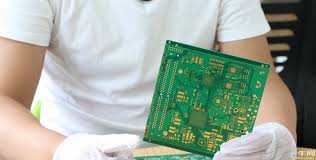
GET PCB MANUFACTURING AND ASSEMBLY QUOTE NOW!
Characteristics of PCB immersion gold process
There is a very common process used in circuit board surface treatment, which is the immersion gold process. The immersion gold process has very obvious characteristics, so let us first analyze the characteristics of the surface treatment of immersion gold from the definition and practice of immersion gold.
1. The definition of heavy gold. Simply put, immersion gold uses chemical deposition to produce a layer of metal coating on the surface of the circuit board through chemical oxidation-reduction reactions.
2. Characteristics of immersion gold technology. The copper on the circuit board is mainly red copper. Copper solder joints are easily oxidized in the air. This will cause poor conductivity, poor soldering or poor contact, which reduces the performance of the circuit board. Then the copper solder joints need to be surface treated. Immersion gold means plating gold on it. Gold can effectively block copper metal and air to prevent oxidation. Therefore, immersion gold is a surface anti-oxidation treatment method. It covers the surface of copper with a layer of gold through a chemical reaction. It is also called Turn into gold.
3. Advantages of immersion gold surface treatment. The advantage of the immersion gold process is that the color deposited on the surface is very stable when printing circuits, the brightness is very good, the coating is very smooth, and the solderability is very good. The thickness of immersion gold is generally 1-3 Uinch, so the gold thickness produced by the surface treatment method of immersion gold is generally thicker, so the surface treatment method of immersion gold is widely used in circuit boards such as key boards and gold finger boards. Because gold has strong conductivity, good oxidation resistance and long service life.
4. Characteristics of immersed gold plates:
1) The immersed gold plate has bright color, good color and good appearance.
2) The crystal structure formed by immersion gold is easier to weld than other surface treatments, and can have better performance and ensure quality.
3) Because the immersion gold board only has nickel and gold on the pad, it will not affect the signal, because the signal transmission in the skin effect is on the copper layer.
4) The metallic properties of gold are relatively stable, the crystal structure is denser, and oxidation reactions are less likely to occur.
5) Because the immersion gold plate only has nickel gold on the pad, the solder resist on the circuit is more firmly bonded with the copper layer, and it is less likely to cause micro short circuits.
6) The project will not affect the spacing during compensation.
7) The stress of the immersed gold plate is easier to control.
5. The relationship between heavy gold and golden fingers
What is a connecting finger?
Let us put it more bluntly, it is a brass contact, which can also be said to be a conductor. To be specific, because gold is extremely resistant to oxidation and has strong conductivity, the parts connected to the memory slot on the memory stick are plated with gold, and all signals are transmitted through the gold fingers. Because gold fingers are composed of numerous yellow conductive contacts, the surface is gold-plated and the conductive contacts are arranged like fingers, hence the name. In layman’s terms, the gold finger is the connecting component between the memory module and the memory slot. All signals are transmitted through the gold finger. Gold fingers are composed of many golden conductive contacts. Gold fingers are actually covered with a layer of gold on a copper-clad board through a special process.
Therefore, the simple distinction is that immersion gold is a surface treatment process for circuit boards, while gold fingers are components on the circuit board that have signal connections and conduction. In market reality, gold fingers may not actually appear to be gold. Because of the high price of gold, currently more memory is replaced by tin plating. Tin materials have become popular since the 1990s. Currently, the “gold fingers” of motherboards, memory and graphics cards are almost all made of tin. In terms of materials, only the contact points of some high-performance server/workstation accessories will continue to use gold plating, which is naturally expensive.
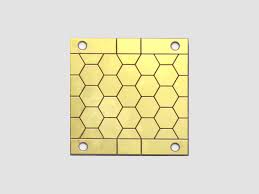
GET PCB AND ASSEMBLY SERVICE QUOTE NOW!
What kind of pcb board needs gold and gold fingers?
First of all, let’s introduce what is immersion gold? The copper on the circuit board is mainly red copper. Copper solder joints are easily oxidized in the air. This will cause poor conductivity, poor soldering or poor contact, which reduces the performance of the circuit board. Then the copper solder joints need to be surface treated. Immersion gold means plating gold on it. Gold can effectively block copper metal and air to prevent oxidation. Therefore, immersion gold is a surface anti-oxidation treatment method. It covers the surface of copper with a layer of gold through a chemical reaction. It is also called Turn into gold.
So what is a golden finger? Let us put it more bluntly, it is a brass contact, which can also be said to be a conductor. To be more specific, it is the component on the memory stick that is connected to the memory slot. All signals are transmitted through gold fingers, which are composed of numerous yellow conductive contacts. The surface is gold-plated and the conductive contacts are arranged like fingers. name.
The advantage of the immersion gold process is that the color deposited on the surface is very stable when printing circuits, the brightness is very good, the coating is very smooth, and the solderability is very good. Generally, the thickness of immersion gold is 1-3 Uinch, which can be basically divided into four stages to complete: pre-treatment (oil removal, micro-etching, activation, post-immersion), nickel immersion, gold immersion, post-processing (scrap gold washing, DI water washing) ,drying).
However, in terms of production cost, the immersion gold process is relatively high compared to other spray tin processes. If the thickness of the gold exceeds the conventional process of the plate making factory, the cost will be even more expensive. Of course, if you are concerned about the weldability and electrical properties of the board, If the requirements are relatively high, that’s another matter. For example: if your circuit board has gold fingers and needs to be immersed in gold, or the line width/pad spacing of the board is insufficient, then it is best to use the process of immersed gold + gold-plated fingers, so that the circuit board welding will be very good. , the performance of the circuit board is also very stable. The pads will not fall off, the contact will not be bad, and there will be no short circuits. It is also very shock-proof and drop-proof. Of course, we will not drop the board.
Another situation is that the circuit board has gold fingers, but the board surface other than the gold fingers can choose the tin spray process according to the situation, that is, the tin spray + gold finger plating process. When the circuit board line width and pad spacing are sufficient, the welding requirements are not When it is high, it can effectively reduce the production cost without affecting the use of the board. However, if the line width and pad spacing of the board are insufficient, then using the tin spray process in this case will increase the production difficulty. There will be more short circuits such as tin bridging, and gold fingers will often be inserted and peeled off, resulting in Poor contact phenomenon.
Therefore, we can choose a board-making process that suits us based on the actual situation of our circuit board, which can control the cost without affecting the use of the board.