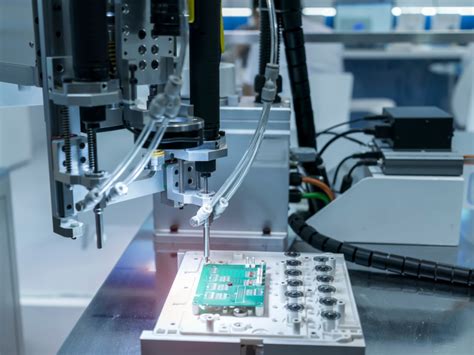
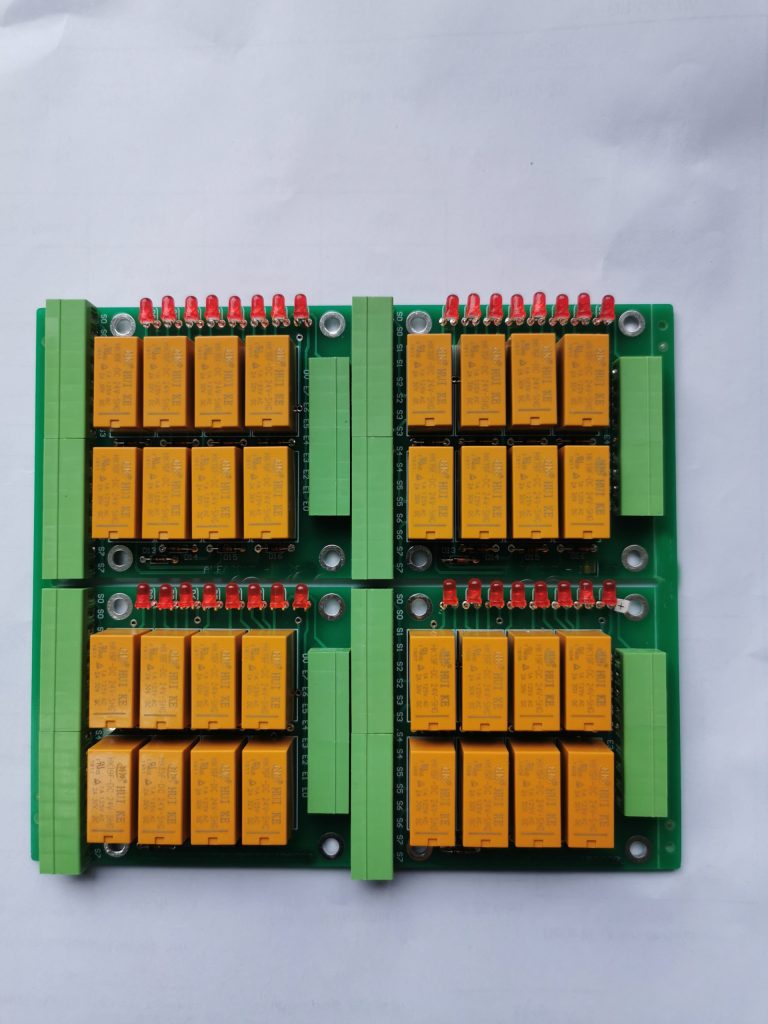
Wet process and PCB surface treatment
1.Abrasives Abrasives, brush materials
The various materials used to brush the copper surface before cleaning the board surface, such as polymer non-woven fabrics, or non-woven fabrics mixed with corundum, or various types of free materials of its sand materials, and pumice slurry, are all called abrasives. However, the powder of this kind of brush material mixed with sand often settles on the copper surface, which in turn causes adhesion and solderability problems of the subsequent photoresist layer or electroplating layer. The attached figure is a schematic diagram of the brush material fiber mixed with sand particles.
2.Air Knife
At the outlet of various process online units, a knife with high temperature and high pressure air is often installed to blow out air knives, which can quickly dry the board surface to facilitate carrying and reduce the chance of oxidation.
3.Anti-Foaming Agent
During the rinsing process of the dry film developer, a large amount of organic film material is dissolved in the PCB process, and air is mixed in during the extraction and spraying action, which produces a large amount of foam, which is very inconvenient for the process. Chemicals that reduce surface tension must be added to the bath liquid, such as octanol (Octyl Alcohol) or silicone resin (Silicone) as a defoaming agent to reduce the trouble of on-site operations. However, silicone resins containing silicon oxide compound cationic interface active agents are not suitable for metal surface treatment. Once it contacts the copper surface, it will not be easy to clean, resulting in poor adhesion of the subsequent coating or poor solderability.
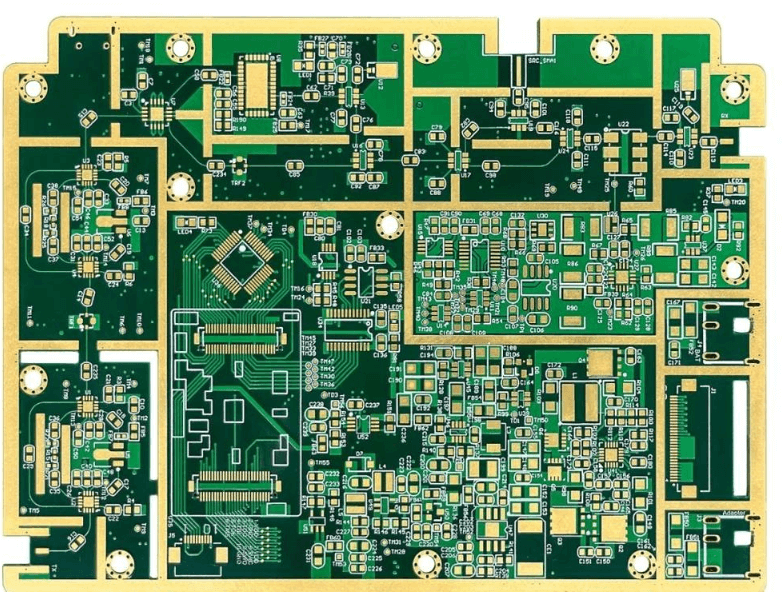
4.Bondability Bonding layer
The bonding layer refers to the surface to be bonded (or bonded), which must maintain good cleanliness to achieve and maintain good bonding strength, which is called “bonding”.
5.Banking Agent
It refers to the organic additive added to the etching solution, which plays a role of film adhesion on both sides of the line where the water flow is weak, so as to reduce the force of the attack by the solution and reduce the degree of side erosion (Cmdercut). It is an important condition for fine line etching. This agent is mostly confidential to the supplier.
6.Bright-Dip
It is a kind of slight erosion on the metal surface to make it smoother and brighter. The tank liquid wet treatment is called.
7.Chemical Milling
It is a chemical wet tank liquid method to perform various degrees of corrosion processing on metal materials, such as surface roughening, deep etching, or applying precise special resists, and then selectively etching, etc., to replace the punching operation of some mechanical processing methods. It is also called Chemical Blanking or Photo Chemical Machining (PCM) technology. It can not only save expensive mold costs and preparation time, but also the products will not have the trouble of residual stress.
8.Coat, Coating, Surface
It usually refers to the treatment layer on the surface of the board. In a broad sense, it refers to any surface treatment layer.
9.Conversion Coating
It refers to the surface of some metals, which can be converted to form a protective layer of compounds after a simple immersion in a specific tank. For example, phosphating treatment (Phosphating) on the surface of iron, chromating treatment (Chromating) on the surface of zinc, or zinc treatment (Zincating) on the surface of aluminum, etc., can be used as the “priming” (Striking) of the subsequent surface treatment layer, and also have the effect of increasing adhesion and enhancing corrosion resistance.
10.Degreasing
Traditionally, it means that before electroplating metal objects, the large amount of oil stains left by mechanical processing must be removed. Generally, the “vapor degreasing” method (Vapor Degreasing) of organic solvents or immersion degreasing of emulsified solutions are often used. However, there is no need to degrease the circuit board process, because almost all the processing processes do not touch oil, which is different from metal electroplating. It’s just that the pre-treatment of the board still needs to be “cleaned”, which is not completely the same as degreasing in concept.
11.Etch Factor Etching Factor, Etching Function
In addition to etching from the front down, the etching liquid will also attack the unprotected copper surface on both sides of the circuit, which is called undercut, thus causing etching defects like mushrooms. Etch Factor is an indicator of etching quality. The term Etch Factor in the United States (mainly IPC) is exactly the opposite of the European interpretation. The Americans say it is “the ratio of the forward etching depth to the undercut concavity”, so we know that the Americans say that the larger the “etching factor”, the better the quality; the European definition is exactly the opposite, and the smaller the “factor”, the better. It is easy to make a mistake. However, over the years, IPC’s achievements in circuit board academic activities and publications have long occupied a leading position in the industry worldwide, so its definition can be said to have become a standard and no one can replace it.
12.Etchant Etchant, Etching
In the circuit board industry, it refers specifically to the chemical bath used to etch the copper layer. At present, the inner layer board or single-sided board mostly uses acid copper chloride solution, which has the advantages of keeping the board surface clean and easy to automate management (single-sided boards also use acid ferric chloride as an etchant). The outer layer of double-sided boards or multi-layer boards uses tin-lead as an anti-corrosion agent, so the quality of copper etching is also greatly improved.
13.Etching Indicator Etching pointer
It is a special wedge-shaped pattern that pays attention to whether the etching is excessive or insufficient. This specific pointer can be added to the edge of the board to be etched, or several specially etched samples can be deliberately added to the operation batch to understand and improve the etching process.
14.Etching Resist
It refers to the anti-corrosion film layer made on the copper surface to protect the copper conductor part that is not to be etched, such as electrophotographic photoresist, dry film, ink pattern, or tin-lead plating for image transfer.
15.Hard Anodizing
Also known as “hard anodizing”, it refers to placing pure aluminum or certain aluminum alloys in a low-temperature anodizing solution (15% sulfuric acid, 5% oxalic acid, temperature below 10°C, lead plate as cold electrode, and anode current density of 15ASF). After long-term electrolysis treatment for more than 1 hour, a 1-2 mil thick anodized film can be obtained. It has a high hardness (i.e. crystalline A12O3), and can be dyed and sealed. It is a good anti-corrosion and decorative treatment method for aluminum.
16.Hard Chrome plating
It refers to the thick chromium layer plated for wear-resistant and lubricating industrial purposes. Generally, decorative chrome plating can only be applied on the shiny nickel surface for about 5 minutes, otherwise it will cause cracks if applied for too long. Hard chrome plating can be applied for several hours. The traditional plating solution composition is CrO3250 g/1 + H2SO410%, but it needs to be heated to 60℃, and the cathode efficiency is as low as 10%. Therefore, the remaining electricity will generate a large amount of hydrogen and bring out a large amount of harmful fog composed of chromic acid and sulfuric acid, and the water washing will also form a large amount of yellow-brown serious wastewater pollution. Although the wastewater needs to be strictly treated, which increases the cost, hard chrome plating is a wear-resistant coating for many shafts or rollers, so it cannot be completely abolished.
17.Mass Finishing Mass finishing, mass polishing
Many small metal products need to be carefully removed from the edges, scratches removed and the surface polished before electroplating to achieve the most perfect base, so that the surface after plating has the best aesthetics and corrosion protection effect. Usually, for large objects, this kind of pre-plating base polishing work can be done manually and with a cloth wheel machine. However, for large quantities of small objects, automatic equipment is required. Generally, small objects are mixed with various ceramic “polishing stones” (Abrasive Media) of various shapes, and various anti-corrosion solutions are injected. The surface is polished and refined in tens of minutes by slowly rotating and rubbing against each other in an oblique manner. After pouring out and separating, it can be loaded into the barrel for rolling electroplating.
18.Microetching
It is a station in the wet process of the circuit board. The purpose is to remove foreign contaminants on the copper surface. Usually, the copper layer below 100μ-in should be etched and removed, which is called “microetching”. Commonly used microetching agents include “sodium persulfate” (SPS) or dilute sulfuric acid plus hydrogen peroxide. In addition, when conducting “microsection” microscopic observation, in order to see the structure of each metal layer under high magnification, the polished metal cross section must also be microetched to make the truth clear. This term is sometimes also called Softetching or Microstripping.
19.Mouse Bite
It refers to the irregular gaps that appear on the edge of the circuit after etching, just like the bite marks left by a mouse. This is an informal term that has become popular in the American PCB industry recently.
20.Overflow
The liquid level in the tank rises over the upper edge of the tank wall and flows out, which is called “overflow”. In the various water washing stations of the wet process of the circuit board, a tank is often divided into several parts, and the overflow method is used to wash from the dirtiest water. It can be washed multiple times to achieve the principle of saving water.
21.Panel Process Full-board Electroplating Method
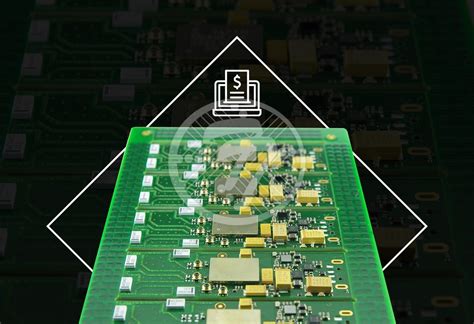
In the orthodox reduction process (Substractive Process) of circuit boards, this is a method of obtaining the outer layer circuit by direct etching. The process is as follows: PTH-full-board thick copper plating to 1 mil hole wall-positive film dry film cover hole-etching-film removal to obtain the outer layer board of bare copper circuit. This positive film method has a very short process, does not require secondary copper, does not require lead-tin plating and tin-lead stripping, and is indeed much easier. However, it is not easy to make fine circuits, and its etching process is also difficult to control.
22.Passivation, passivation treatment
It is a term for metal surface treatment, often referring to the stainless steel object immersed in a mixture of nitric acid and chromic acid to force the formation of a thin oxide film to further protect the substrate. In addition, an insulating layer can be generated on the surface of the semiconductor, so that the surface of the transistor is electrically and chemically insulated, improving its performance. The formation of this surface film is also called passivation treatment.
23.Pattern Process Circuit Plating Method
It is another way to manufacture circuit boards by the reduction method. The process is as follows: PTH -> primary copper plating -> negative film image transfer -> secondary copper plating -> tin-lead plating -> etching -> tin-lead stripping -> obtaining the outer bare copper board. This negative film method of secondary copper plating and tin-lead Pattern Process is still the mainstream in various circuit board manufacturing processes. The reason is simple, just because it is a safer approach and less prone to problems. As for the longer process, the need for additional troubles such as tin-lead plating and tin stripping, it is already a secondary consideration.
24.Puddle Effect Puddle Effect
It means that when the board is transported horizontally and the etching is sprayed up and down, the etching liquid will accumulate on the upward board surface to form a layer of water film, which hinders the effect of the fresh etching liquid sprayed down later and blocks the oxygen in the air, resulting in insufficient etching effect. The etching rate is slower than that of the spray on the lower board surface. The negative effect of this water film is called Puddle Effect.
25.Reverse Current Cleaning
It is a process that hangs the metal workpiece in the cleaning solution as the anode, and uses the stainless steel plate as the cathode. The oxygen produced in the electrolysis is used to clean the surface of the workpiece in combination with the dissolution of the metal workpiece in the tank solution (oxidation reaction). This process can also be called “Anodic Cleaning”; it is a common technology for metal surface treatment.
26.Rinsing
In the wet process, in order to reduce the mutual interference of chemicals in each tank, the plates must be thoroughly cleaned in various intermediate transition sections to ensure the quality of various treatments. Such water washing methods are called Rinsing.
27.Sand Blast
It is a method of surface cleaning that uses strong air pressure to carry various small particles ejected at high speed and spray them on the surface of the object. This method can remove rust on metals or remove difficult scales, which is very convenient. The types of sand sprayed include diamond sand, glass sand, walnut kernel powder, etc. In the circuit board industry, pumice powder is mixed with water and sprayed on the copper surface of the board for cleaning.
28.Satin Finish
It refers to the surface of an object (especially a metal surface) that has been treated in various ways to achieve a glossy effect. However, after this treatment, it is not a full-gloss mirror-like state, but only a semi-glossy state.
29.Scrubber
It usually refers to the equipment that produces a brushing action on the board surface, which can perform brushing, polishing, cleaning and other tasks. The brushes or grinding wheels used are of different materials and can be performed in a fully automatic or semi-automatic manner.
30.Sealing
After the aluminum metal is anodized in dilute sulfuric acid, the “cell layer” of the crystalline aluminum oxide on its surface has cell openings, and each cell opening can absorb dyes and be dyed. After that, it must be immersed in hot water again, so that the aluminum oxide absorbs another crystal water and expands its volume, causing the cell mouth to be squeezed smaller and the color to be sealed and more durable, which is called Sealing.
31.Sputtering
It is the abbreviation of Cathodic Sputtering, which means that in a highly vacuum environment and under high voltage, the metal surface atoms at the cathode will be forced to separate from the body and form plasma in the environment in the form of ions, and then rush to the object to be processed at the anode, and accumulate into a layer of film, which is evenly attached to the surface of the workpiece. It is called cathode sputtering coating method, which is a technology for metal surface treatment.
32.Stripper stripping liquid, stripper
It refers to the stripping liquid for metal coatings and organic films, or the outer skin stripper of enameled wires.
33.Surface Tension
It refers to the inward attraction of the surface of the liquid at the molecular level, that is, part of the cohesive force. This surface tension (contraction) force will tend to prevent the liquid from spreading at the interface between the liquid and the solid. As for the cleaning bath liquid for the wet process of the circuit board, the surface tension (contraction) force should be reduced first, so that the board surface and the hole wall can be easily wetted.
34.Surfactant surface wetting agent
The chemicals added to the various bath liquids of the wet process to reduce the surface tension are used to help the hole wall of the through hole to produce wetting effect, so it is also called “wetting agent”.
35.Ultrasonic Cleaning
In some cleaning
The energy of ultrasonic oscillation is applied to the liquid to produce semi-vacuum bubbles (Cavitation), and the friction and micro-stirring power of this bubble are used to make the dead corners of the items to be cleaned also produce mechanical cleaning effects at the same time.
36.Undercut Undercutting Side Erosion
The original meaning of this word refers to the early artificial felling of trees, which was called Undercut by using an axe from both sides of the tree root in an up and down oblique manner. In PCB, it is used for etching process. When the board conductor is sprayed under the cover of the resist, the etching liquid will theoretically attack vertically downward or upward, but because the effect of the potion is not directional, it will also cause side etching, causing the conductor line after etching to show the indentation on both sides on the cross section, which is called Undercut. However, it should be noted that only the side etching produced by direct etching of the copper surface under the cover of ink or dry film is the real Undercut. Generally, after the secondary copper and tin-lead plating is performed in the Pattern Process, when the anti-plating resist is removed and etching is performed again, the secondary copper and tin-lead may grow outward from both sides. Therefore, after etching, the side etching part can only be calculated for the line width on the film, and the loss of the inward etching can be calculated, and the part of the plating layer that widens outward cannot be included. In addition to this defect in copper surface etching in the circuit board manufacturing process, there is also a similar side etching situation in the dry film development process.
37.Water Break Water film breakage, water break
When the oil on the board surface is cleaned very clean, a uniform water film will be formed on the surface after immersion in water, which can maintain good adhesion with the board or copper surface (that is, the contact angle is very small). Usually, the complete water film can be maintained for about 5 to 10 seconds when standing upright. On the clean copper surface, the water film can be maintained for 10 to 30 seconds without breaking when it is placed flat. As for the unclean board surface, “water break” will soon appear even if it is placed flat, presenting a discontinuous and individually gathered “Dewetting” phenomenon. This is because the adhesion between the unclean surface and the water is not enough to counteract the cohesive force of the water itself. This simple method of checking the cleanliness of the board surface is called the Water Break method.
38.Wet Blasting
It is a physical cleaning method for metal surfaces. It is driven by high-pressure gas to force wet mud-like abrasives (Abrasive) to spray on the surface to be cleaned to remove dirt. The wet spraying pumice technology used in the circuit board manufacturing process belongs to this category.
39.Wet Process
The manufacturing process of circuit boards includes dry drilling, pressing, exposure and other operations; but there are also plated through holes, copper plating, and even imaging and stripping in image transfer that need to be immersed in aqueous solution. The latter are all wet processes, originally called Wet Process.