What are the advantages of aluminum-based PCB designs compared to traditonal PCB design?
When a design has very high thermal dissipation requirements ,using an aluminum-based pcb is a very effective solution.This design is able to better transfer heat energy away from the design component,thereby controlling the project’s temperature.It is often ten times more efficient at removing heat from circuit component than an equivalent fiberglass backing.This significantly higher level of heat dissipation allows for higher power and higher density designs.
Furthermore,aluminum-based PCBs are finding application in high-power/high-heat dissipation applications.Originally designated for high power switching power supply applications,they have become very popular in LED application.Examples of LED applications include traffic lights ,general lighting,and automotive lighting.Using an aluminum-based design(LED PCBs)allows for higher LED density within the board design and allows the mounted LEDs to be driven at higher currents while still maintaining temperature tolerances.Using an aluminum-based backing allows designers to reduce the safety margins used for power LEDs and derate them compared to conventional PCB design.As with all component,the lower the operating temperature of the LEDs in a design,the longer they can be expected to operate before failure.

Other application for aluminum-based PCB designs include high-current circuits,power supplies,motor controllers,and automotive application.Aluminum-based PCBs are an ideal thermal solution for any design using high-power surface-mount ICs. Furthermore, they can eliminate the need for forced ventilation and heat sinks,ultimately reducing design costs.Essentially,any design that could be improved through higher thermal conductivity and better temperature control is a potential application for aluminum-based PCBs.
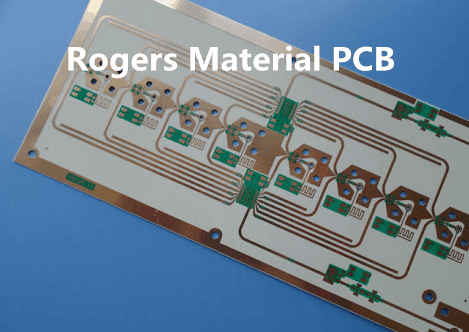
While traditional PCBs use a fiberglass backing(FR4 is the standard substrate used by PCB manufactures),aluminum-based pcbs consist of an aluminum base,a highly thermally conductive dielectric layer,and a standard circuit layer.The circuit layer is essentially a thin piece of PCB bonded to aluminum backing.This allows for circuit layers to be just as complex as those mounted on a traditional fiberglass backing.
While single-sided design are more common,aluminum-based designs can also to be double-side,with the circuit layer connected to both sides of the aluminum base via a highly thermally conductive dielectric layer.These two sides can then be connected via plated through-holes.Regardless of the configuration,aluminum-based PCBs provide an excellent thermal path to the ambient environment or any connected heat sink.Once again,improving thermal conductivity of power components is the best way to ensure design reliability,and aluminum PCBs offer an excellent solution for this problem.
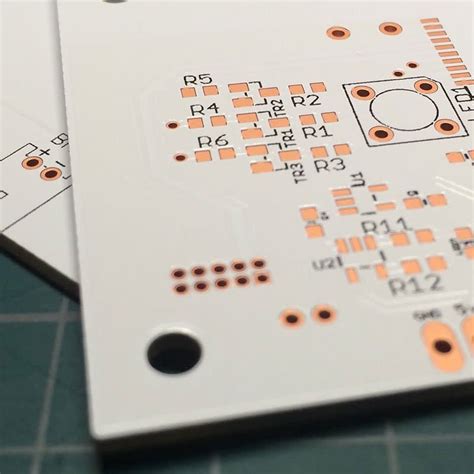
As with traditional PCB design,the solder mask layer on the circuitry portion of the board can be made in many different colors.Specifically,in LED design,the solder mask is often white.White solder mask allows for higher light reflection from the associated LED array,resulting in a more efficient design.In power supply designs,the solder mask is also often painted black to better dissipate heat.
Aluminum-based PCB designs also offer high mechanical stability and can be used in applications requiring high levels of mechanical stability or subject to significant mechanical stress,Furthermore,they are less affected by thermal expansion than fiberglass-based design.If your design doesn’t require high subject to significant mechanical stress or have very tight dimensional tolerances and will be subjected to significant heat,using an aluminum-based design may be a viable option.
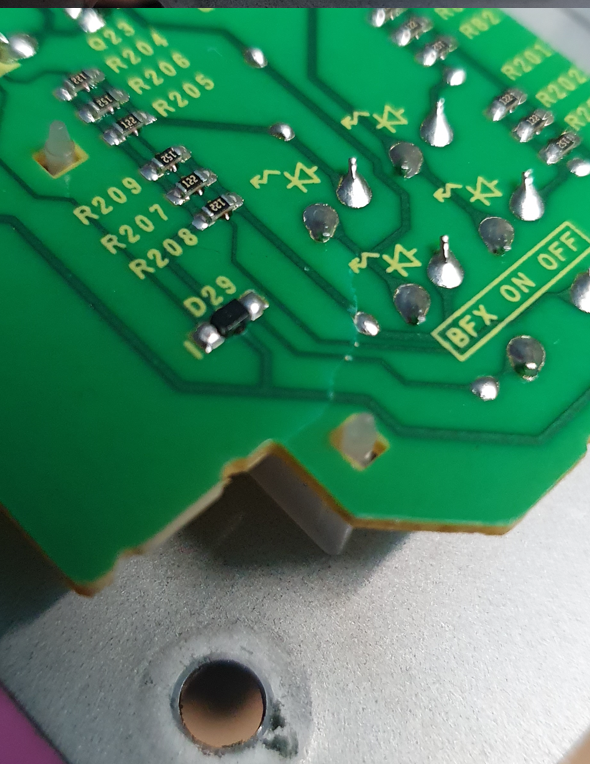
Finally,aluminum is not a viable metal backing material.Copper and copper alloys are also used as backing material,although they are less popular due to their generally higher cost.Copper and copper alloys offer higher performance in heat dissipation than aluminum,Therefore,if a standard aluminum based design fails to meet the thermal requirements of your design,cdpper may be considered as a next step to address the issue.
In summary,using an aluminum-based solution can significantly improve the reliability and lifespan of your design through temperature control and,consequently,lower component failure rates.In addition to excellent temperature control characteristics,aluminum designs also offer high level of mechanical stability and low thermal expansion.When a standard fiberglass(FR-4) backsheet fails to meet the thermal and density requirement of your design,an aluminum baseboard may provide the answer.