What is PCB copying? Why is PCB copying controversial?
1.pcb
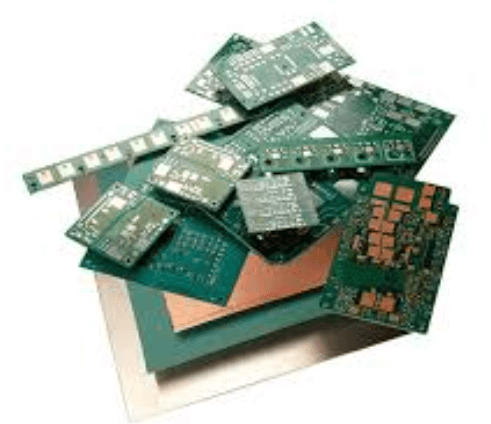
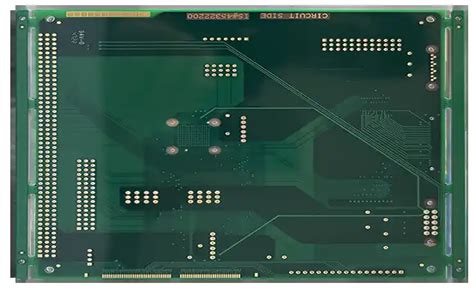
PCB (printed circuit board) is a printed circuit board, or PCB for short, which is one of the important components of the electronics industry. Almost every electronic device, from electronic watches and calculators to computers, communication electronic equipment, and military weapon systems, as long as there are electronic components such as integrated circuits, must use printed boards to make electrical interconnections between the components.
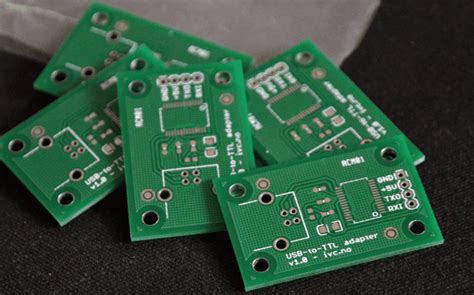
The printed circuit board consists of an insulating base plate, connecting wires, and pads for assembling and welding electronic components. It has the dual functions of a conductive circuit and an insulating base plate.
It can replace complex wiring to achieve electrical connections between components in the circuit, which not only simplifies the assembly and welding of electronic products, reduces the wiring workload under traditional methods, and greatly reduces the labor intensity of workers; it also reduces the size of the whole machine, reduces product costs, and improves the quality and reliability of electronic equipment.
The printed circuit board has good product consistency. It can adopt standardized design, which is conducive to mechanization and automation in the production process. At the same time, the entire assembled and debugged printed circuit board can be used as an independent spare part, which is convenient for the interchange and maintenance of the whole product. At present, printed circuit boards have been widely used in the production and manufacturing of electronic products.

2.Definition of PCB copy board
PCB copy board, also known as circuit board copy board, circuit board clone, circuit board copy, PCB clone, PCB reverse design or PCB reverse research and development, there are many definitions of PCB copy board in the industry, but none of them are very complete.
If we must give an accurate definition of PCB copy board, we can refer to the statement of the authoritative PCB copy board laboratory in China:
PCB copy board, that is, on the premise that there are physical electronic products and physical circuit boards, reverse research and development technology is used to reversely analyze the circuit board, and the PCB files, bill of materials (BOM) files, schematic files and other technical files of the original product and PCB silk screen production files are restored 1:1, and then these technical files and production files are used to make PCB boards, solder components, fly probe tests, and debug circuit boards to complete the complete replication of the original circuit board sample.
Since electronic products are composed of various circuit boards to work as the core control part, we can use the process of PCB copy board to complete the extraction of a full set of technical information of any electronic product and the imitation and cloning of products.

3.Controversial PCB copy board
From the moment PCB copy board appeared, the controversy about it has never stopped. No matter which country it is in, this industry is controversial. Even in the law, there are disputes about it. So why is copying a reverse research technology so controversial? Let’s explain in detail what disputes exist in PCB copying.
The first aspect: the controversy of circuit board copying technology
As we said above, it is difficult to define circuit board copying. If you want to define circuit board copying, there may be many definitions. And such copying is generally called circuit board copying or circuit board cloning in the industry. As long as you hear the words copying or cloning, people will think of infringement. Indeed, copying mainly uses reverse technology to copy circuits. So many people are very dissatisfied with this industry simply from the definition, thinking that this is an infringement.
The second aspect: disputes in the fields involved in circuit board copying
Now because of the development of the copying industry, even some companies have emerged that also copy PCBs. So in many fields, this copying is also widely used. Its existence allows many countries to easily understand the technology of some products produced by other countries. Therefore, the emergence of such technology, while being welcomed by some countries, has also been controversial and opposed by some countries.
The third aspect: legal disputes
Everyone knows that in law, if there is infringement, it must be illegal. However, in the laws of countries around the world, the act of copying boards is not included in the scope of infringement. Because this technology has brought about the development of many industries and countries, such behavior cannot be prohibited. It is precisely because of this that there are many disputes about copying boards. Whether from real life or from national laws, such a reverse research technology has always been controversial. But there is no doubt that although the development process of such technology is controversial. But it is still developing continuously, and existence is reasonable, so we have reason to believe that PCB copying technology will appear and develop better in our world.
4.How to ensure the accuracy of PCB copying
Since PCB copying involves the issue of copying accuracy, for circuit boards with high precision requirements such as mobile phone boards, high-precision PCB layouts must be copied. Therefore, in the scanning process, we must accurately select and set the scanner’s numerical values, and at the same time ensure the accuracy of the original scanned image. To be precise, the accuracy of copying depends mainly on the original scanning accuracy.
In the process of PCB copying, PCB scanning is undoubtedly the first step of all processes. Therefore, we first get a good PCB board, and then it must be scanned by a computer, and then the relevant parameters and the original PCB layout are backed up.
After the board is disassembled, the split PCB light board is taken, and the copying stage will be officially entered, and the first thing we have to do is scanning. First of all, we need to store and record the PCB image. One thing to mention here is that in order to better ensure that the relevant parameters on the PCB board are clearly visible after scanning, before scanning, we must first remove the stains and residual tin on the surface of the PCB board.
The accuracy of PCB copying depends on two links, one is the accuracy of the software, and the other is the accuracy of the original image. At present, the technical capabilities of various copy board companies in copy board accuracy are not uniform. Some companies have poor copy board technical capabilities and low copy board accuracy, while some have strong copy board technical capabilities and can achieve copy board accuracy below 1mil.
For software accuracy, using 32-bit floating point representation can be said to have no accuracy limit, so the most important thing is to depend on the accuracy of the original scanned image. For example, if a photo taken with 1 million pixels can be washed into a 5-inch photo, but if it is to be washed into a 20-inch photo, it will not be clear at all. The reason is the same. Therefore, for circuit boards with high accuracy requirements, if you want to copy a PCB diagram with very high accuracy, you must choose a higher DPI when scanning. The meaning of DPI is how many dots per inch. That is to say, the distance between every two dots on the scanned image is 1000/DPI, in mil.
If the DPI is 400, then the distance between two points on the image is 1000/400=2.5mil, which means that the accuracy at this time is 2.5mil. This is the most scientific basis, so some people say that the accuracy can reach below 1mil, which is a prerequisite. In fact, the accuracy of copying the board mainly depends on the original scanning accuracy. In summary, when scanning the board, the DPI setting should be based on the accuracy required by the actual board. If the accuracy requirement is below 1mil, such as the line spacing of the mobile phone board, the scanning DPI should be set to more than 1000DPI. All scanners on the market can meet this condition. The higher the DPI, the clearer the picture and the higher the accuracy, but the disadvantage is that the picture is too large and the hardware requirements are higher, so it should be set according to the specific situation. For boards of general accuracy, 400DPI is generally good, and mobile phone boards can be set to more than 1000DPI.