
Several kinds of glue commonly used in circuit boards, do you know which ones
1.Red glue
Red glue is a polyolefin compound that is easy to solidify after being heated. When the temperature it is subjected to reaches the solidification point of 150℃, the red glue begins to change from a paste to a solid. Using this characteristic, the patch components can be fixed by dispensing or printing. The circuit board components can be heated and cured by oven or reflow soldering using patch red glue.
The components on the circuit board, especially the double-sided mounted circuit board, are fixed with patch red glue during wave soldering, so that the small patch components on the back will not fall into the tin furnace. Red glue has several major characteristics:
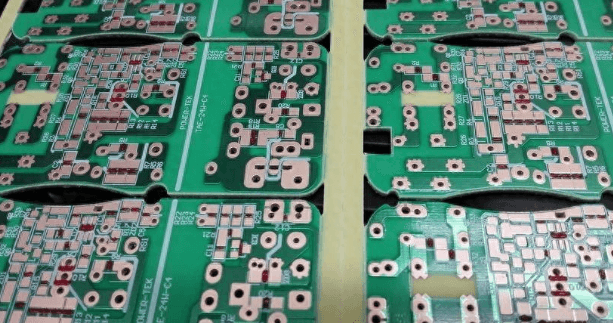
① Stable adhesion strength can be obtained for various chip components;
② It has viscosity and thixotropy suitable for screen printing requirements, and the amount of glue is stable without leakage or tower edge;
③ It has good storage stability performance;
④ It has high adhesion strength, which can avoid component displacement during high-speed patching.
Main function: The main function of red glue is to fix the circuit board patch components, mainly for bonding, or used together with solder paste as a reinforcement and fixation.
2.Yellow glue
The yellow glue used for circuit boards is a water-based adhesive with a pungent smell. It is a soft self-adhesive gel-like substance with excellent insulation, moisture-proof, shock-proof and thermal conductivity, allowing electronic components to operate safely under harsh conditions.
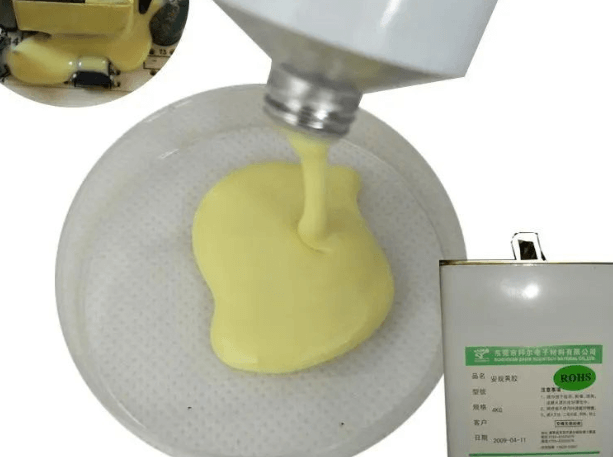
It is easy to solidify, and the curing speed is related to the ambient temperature, humidity and wind speed: the higher the temperature, the lower the humidity, the greater the wind speed, the faster the curing speed, and vice versa. Placing the coated parts in the air will slowly crust, and the operation should be completed before the surface crusts.
Main function: Fixing electronic products such as inductors, coils, transformers, electrolytic capacitors, and receiving heads, with the function of protecting and sealing electronic components, can be used for potting electrical components, potting high-voltage components, and moisture-proof coating of circuit boards.
3.Thermally conductive silicone
Thermal conductive silicone, also known as thermal paste and heat dissipation paste, is a highly thermally conductive insulating silicone material. Unlike thermal conductive silicone grease, it almost never solidifies, and can also maintain the grease state during use for a long time at a temperature of -50℃—+250℃. It has both excellent electrical insulation and excellent thermal conductivity, and has low oil separation (tending to zero), high and low temperature resistance, water resistance, ozone resistance, and weather aging resistance. It is characterized by being non-toxic, odorless, and non-corrosive, in line with ROHS standards and related environmental protection requirements, and having stable chemical and physical properties.
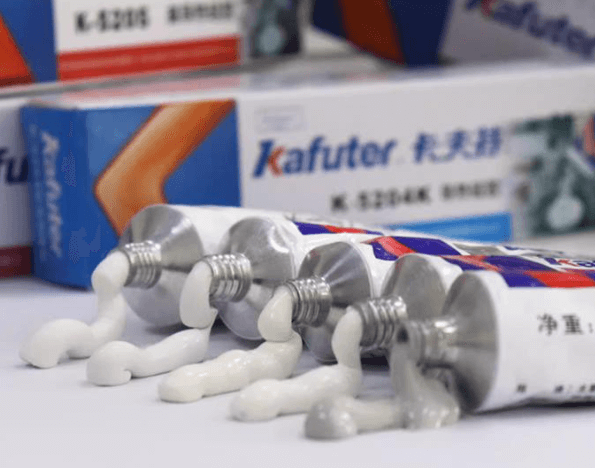
Main function: used to fill the gap between the heating element and the heat dissipation device, increase their contact area, thereby achieving the best thermal conductivity effect, so that the heat of the electronic components can be effectively dissipated and transmitted when working.
It is widely applied to the contact surface between the heating element (power tube, thyristor, electric heating pile, etc.) and the heat dissipation facilities (heat sink, heat dissipation strip, shell, etc.) in various electronic products and electrical equipment, acting as a heat transfer medium, which can improve the heat dissipation effect.
4.Silicone glue
Silicone glue is a kind of ointment-like material. Once it comes into contact with moisture in the air, it will solidify into a tough rubber-like solid material. Silicone glue is often used for bonding and sealing glass, so it is commonly known as glass glue. The glue should be stored in a sealed manner. The mixed glue should be used up at one time to avoid waste.
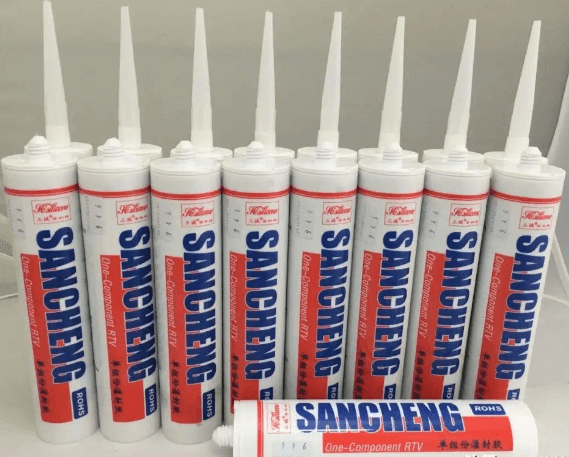
Main function: widely used in electronic modules, sensors, electronic components and other occasions that require potting, insulation, flame retardancy, as well as bonding of electronic components and insulation between fixed components.
5.Hot melt adhesive
Hot melt adhesive strips are solid adhesives made of ethylene-vinyl acetate polymer (EVA) as the main material, modified rosin resin or petroleum resin and other ingredients. It is a plastic, non-toxic and odorless green environmentally friendly adhesive. Within a certain temperature range, the physical state of the hot melt adhesive changes with temperature, while the chemical properties remain unchanged. It is completely free of water or solvents and has the characteristics of fast bonding, high strength, aging resistance, non-toxicity, good thermal stability, and film toughness.
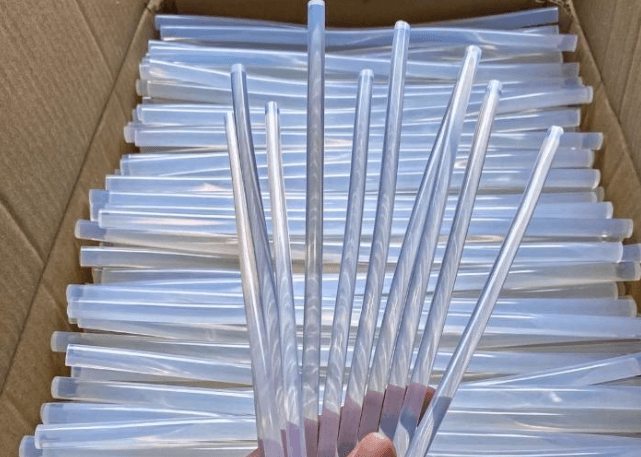
Heat the hot melt adhesive to the use temperature, spray it or apply it on the adherend, and the bonding and shaping work must be completed within the open time of the adhesive, and the adherend must be clamped and cooled to room temperature. Hot melt adhesive is solid at the appropriate temperature, and melts into liquid after heating. After cooling at room temperature, it can be bonded within a few seconds, which can effectively fix electronic components and wiring harnesses.
Main function: Hot melt adhesive is suitable for fixing electronic components, bonding electronic wiring, and can also be used for bonding other electronic materials. It can even be used for mutual bonding and fixing of crafts, packaging cartons, accessories, handicrafts, wood, textile samples, etc
.