
World’s Largest PCB Manufacturers 2023

Key Takeaways
When navigating the PCB manufacturing landscape, understanding the key players and trends helps you make informed decisions. The global market is dominated by PCB manufacturing companies in Asia-Pacific, particularly China and Taiwan, which account for over 60% of production capacity. Factors like material scarcity and automation adoption directly influence PCB manufacturing cost, pushing firms to innovate in supply chain efficiency. For businesses, balancing quality and affordability remains critical—especially for startups entering the PCB manufacturing business.
Regional leaders excel in specific niches: Chinese manufacturers dominate rigid PCB production, while Taiwanese suppliers lead in *high-density interconnect (https://www.andwinpcba.com).
By aligning your strategy with these takeaways, you can better navigate pricing fluctuations, identify reliable suppliers, and anticipate shifts in demand for advanced PCB solutions.
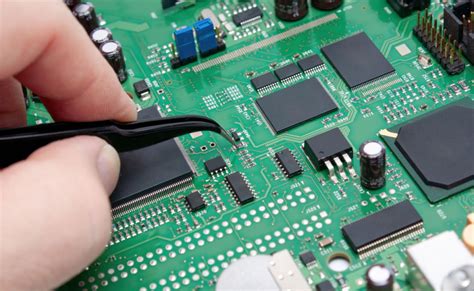
Global PCB Industry Overview 2023
The global PCB manufacturing sector has entered a transformative phase in 2023, driven by surging demand for advanced electronics and miniaturized components. With automotive electrification, 5G infrastructure, and IoT devices reshaping market needs, PCB manufacturing companies are scaling production while balancing PCB manufacturing cost pressures. Asia dominates the landscape, accounting for over 75% of output, with China and Taiwan leading in high-volume rigid PCB production. Meanwhile, South Korea and Japan excel in high-density interconnect (HDI) and flexible PCB technologies, catering to premium consumer electronics.
Tip: When evaluating PCB manufacturing business partnerships, prioritize suppliers with certifications like ISO 9001 and IATF 16949 to ensure compliance with automotive and industrial standards.
Rising raw material prices and geopolitical tensions have forced manufacturers to adopt automation and AI-driven process optimization to mitigate PCB manufacturing cost escalations. For instance, copper foil—a critical material—saw a 12% price hike in Q1 2023, pushing firms to explore alternative substrates. Additionally, sustainability initiatives are gaining traction, with leading PCB manufacturing companies investing in water recycling systems and halogen-free laminates to meet EU and North American regulations.
The Americas, though smaller in market share, are focusing on military-grade PCBs and aerospace applications, leveraging localized supply chains to reduce lead times. As you navigate this evolving landscape, understanding regional specializations becomes crucial—whether you’re sourcing high-reliability PCBs or prototyping flexible circuits.
Top Chinese PCB Manufacturers Analysis
When evaluating PCB manufacturing leaders, China’s dominance stems from its integrated supply chains and scalable production capabilities. Companies like Shenzhen Fastprint and DSBJ exemplify this strength, specializing in high-volume PCB manufacturing business operations that cater to consumer electronics and automotive sectors. These firms optimize PCB manufacturing cost through advanced automation, with some facilities achieving <20% cost reductions compared to global peers by leveraging localized material sourcing.
A key differentiator lies in China’s focus on rigid-flex PCB hybrids, which now account for 38% of its exports. While PCB manufacturing companies such as Kinwong and WUS Printed Circuit lead in traditional rigid boards, newer players like Suntak Technology are prioritizing ultra-thin flexible circuits for wearables and foldable devices. Government subsidies for R&D further amplify their competitiveness, enabling innovations like embedded passives that reduce assembly complexity.
However, challenges persist, including rising labor costs and stricter environmental regulations. To maintain their edge, top manufacturers are relocating mid-tier PCB manufacturing to inland provinces and investing in AI-driven quality control systems. This strategic balancing act ensures China remains indispensable to global electronics value chains, even as rivals emerge in Southeast Asia.
Taiwanese PCB Suppliers Comparison
When evaluating PCB manufacturing hubs, Taiwan’s ecosystem stands out for its blend of precision engineering and cost efficiency. Leading PCB manufacturing companies like Unimicron Technology and Zhen Ding Technology dominate global supply chains, specializing in high-density interconnect (HDI) and advanced flexible PCBs. You’ll notice their edge lies in vertical integration—controlling everything from substrate production to final assembly—which optimizes PCB manufacturing cost while maintaining stringent quality standards.
What sets Taiwanese suppliers apart is their agility in scaling PCB manufacturing business operations. For instance, Tripod Technology leverages automated factories to meet surges in 5G infrastructure demand, while Nan Ya PCB focuses on automotive-grade solutions for electric vehicles. Their ability to balance innovation with affordability makes them preferred partners for brands like Apple and NVIDIA.
However, competition is fierce. While mainland Chinese rivals prioritize volume, Taiwanese firms emphasize R&D-driven differentiation, investing over 8% of annual revenue in next-gen materials like low-loss laminates. This strategic focus ensures they remain critical players in high-margin segments, even as global PCB manufacturing cost pressures rise. Whether you’re sourcing rigid boards or ultra-thin flex circuits, Taiwan’s suppliers offer a compelling mix of technical expertise and scalable solutions.
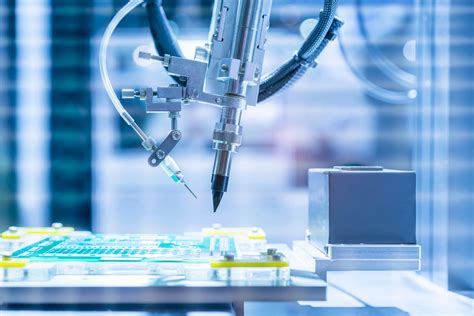
Rigid vs Flexible PCB Leaders
When evaluating PCB manufacturing companies, understanding the distinction between rigid and flexible PCBs becomes critical. Rigid PCB manufacturing dominates traditional applications like consumer electronics and automotive systems, where durability and heat resistance are non-negotiable. Leaders such as Unimicron (Taiwan) and TTM Technologies (U.S.) excel here, leveraging decades of expertise to optimize PCB manufacturing cost while maintaining high-volume output. Their economies of scale make rigid boards cost-effective for standardized designs.
On the flexible side, innovators like Flexium Interconnect (Taiwan) and Nippon Mektron (Japan) redefine possibilities in wearables and foldable devices. Flexible PCBs demand advanced materials like polyimide, raising PCB manufacturing business overheads but enabling lightweight, bendable solutions. Balancing performance with PCB manufacturing complexity, these firms prioritize precision lamination and ultra-thin conductive layers—key for next-gen medical devices or aerospace systems.
Your choice between rigid and flexible depends on application demands: rigid for stability, flexible for adaptability. As miniaturization trends accelerate, hybrid solutions combining both technologies are emerging, further blurring the lines between these leaders’ specialties. This evolution underscores why staying informed about PCB manufacturing advancements is vital for sourcing the right partner.
HDI PCB Production Innovations
As PCB manufacturing evolves, high-density interconnect (HDI) technologies are redefining precision and performance in electronics. Leading PCB manufacturing companies now leverage advanced laser drilling and stacked microvia architectures to achieve circuits with 20% higher component density than traditional designs. This innovation not only reduces PCB manufacturing cost through material efficiency but also supports the demand for smaller, faster devices like 5G smartphones and IoT sensors.
You’ll find firms in China and Taiwan dominating this niche, integrating automated optical inspection (AOI) and AI-driven defect detection to ensure near-zero error rates. These advancements address critical challenges in PCB manufacturing business models, where yield optimization directly impacts profitability. For instance, modified semi-additive processes (mSAP) enable thinner traces, cutting production time by up to 30% while maintaining signal integrity.
Transitioning from rigid to hybrid HDI-flex designs, manufacturers are unlocking applications in wearables and automotive systems. This shift aligns with broader industry trends but hinges on balancing R&D investments with scalable PCB manufacturing workflows. As you explore these innovations, note how embedded passive components and thermal management solutions are becoming non-negotiable for next-gen electronics.
Asia vs Americas PCB Market Leaders
When evaluating PCB manufacturing hubs, Asia’s dominance is undeniable, but the Americas are carving niches in specialized segments. Labor costs and supply chain density give Asian PCB manufacturing companies—particularly in China and Taiwan—a competitive edge, accounting for over 70% of global output. Their economies of scale lower PCB manufacturing cost, enabling mass production of rigid and flexible PCBs for consumer electronics. Meanwhile, North American firms prioritize high-reliability solutions for aerospace, defense, and automotive sectors, leveraging localized production to mitigate geopolitical risks.
| Region | Key Strengths | Market Share (2023) | Specialization |
|---|---|---|---|
| Asia | Cost efficiency, scaled capacity | ~72% | Consumer electronics |
| Americas | High-margin R&D, niche expertise | ~18% | Industrial/Automotive |
This divergence shapes PCB manufacturing business strategies. Asian suppliers optimize for volume, while American counterparts focus on proprietary technologies and faster turnaround for low-volume, high-complexity orders. Tariffs and logistics reshoring efforts are prompting some Western brands to diversify suppliers, but Asia’s entrenched infrastructure remains hard to replicate. For your projects, balancing cost sensitivity with technical requirements will dictate whether you align with Asia’s scale or the Americas’ precision.
PCB Technology Advancements
As PCB manufacturing evolves, you’ll notice how advancements are redefining efficiency and performance standards. Leading PCB manufacturing companies now integrate laser direct imaging (LDI) and automated optical inspection (AOI) systems to enhance precision in high-density interconnect (HDI) boards, enabling smaller, faster devices for 5G and IoT applications. Innovations like semi-additive processes (SAP) reduce PCB manufacturing cost by minimizing material waste, while advanced substrates—such as polyimide for flexible circuits—improve thermal stability in wearables and aerospace tech.
The push toward sustainability also shapes progress, with firms adopting halogen-free laminates and recycling-friendly chemistries to meet environmental regulations. For those in the PCB manufacturing business, adopting AI-driven predictive maintenance slashes downtime, ensuring tighter production timelines. Meanwhile, advancements in rigid-flex hybrid designs bridge the gap between durability and adaptability, catering to automotive and medical sectors demanding reliability under stress.
This shift isn’t just about technical specs—it’s about staying competitive. By leveraging these breakthroughs, manufacturers balance scalability with precision, ensuring they meet rising global demand without compromising on quality.
Future Trends in PCB Manufacturing
As PCB manufacturing evolves, you’ll notice a stronger emphasis on automation and sustainability. Advanced robotics and AI-driven systems are streamlining production, reducing PCB manufacturing cost while improving precision. Companies are also prioritizing eco-friendly practices, such as using halogen-free materials and recycling copper waste, to meet global environmental regulations.
Another key trend is the rise of high-density interconnect (HDI) and ultra-flexible PCBs, driven by demand for smaller, faster electronics. PCB manufacturing companies investing in these technologies are gaining an edge in sectors like wearables and electric vehicles. Meanwhile, geopolitical shifts are reshaping supply chains, pushing businesses to diversify production hubs—a critical consideration for your PCB manufacturing business strategy.
Look out for hybrid models combining rigid and flexible PCBs, enabling lighter, more durable devices. With 5G and IoT adoption accelerating, expect tighter integration between design and manufacturing phases to reduce time-to-market. As competition intensifies, balancing innovation with cost efficiency will define success in this dynamic industry.
Conclusion
As you evaluate the evolving landscape of PCB manufacturing in 2023, it’s clear that innovation and strategic adaptation define the industry’s trajectory. Leading PCB manufacturing companies across Asia and the Americas continue to prioritize advancements in rigid-flex integration and HDI technologies, balancing PCB manufacturing cost efficiencies with rising demand for high-performance electronics. Whether sourcing from established hubs in China and Taiwan or exploring emerging markets, understanding regional strengths—from cost-competitive mass production to cutting-edge R&D—is critical for optimizing your supply chain.
The PCB manufacturing business now hinges on sustainability, with top players investing in eco-friendly processes and recyclable materials to meet global regulatory standards. As demand grows for IoT, 5G, and automotive applications, manufacturers are also accelerating automation to reduce lead times and defects. By aligning your procurement strategy with these trends, you can leverage the expertise of market leaders while navigating challenges like material shortages and geopolitical shifts. Ultimately, staying informed about both technological breakthroughs and cost dynamics ensures you remain competitive in this fast-paced sector.
FAQs
How do you choose the right PCB manufacturing partner for your project?
Start by evaluating their expertise in your specific PCB type—whether rigid, flexible, or HDI. Leading PCB manufacturing companies prioritize certifications (like ISO or UL), advanced production capabilities, and transparent PCB manufacturing cost breakdowns. Regional factors, such as proximity to component suppliers, also influence lead times and expenses.
What drives PCB manufacturing cost variations across regions?
Material quality, labor rates, and compliance standards differ significantly. For example, Chinese firms often balance lower labor costs with high-volume efficiency, while Taiwanese suppliers excel in high-density interconnect (HDI) technologies. Always request detailed quotes to compare PCB manufacturing business models and hidden fees like logistics or testing.
Can smaller businesses compete with top-tier PCB manufacturing companies?
Yes. Many niche players specialize in low-volume, high-mix production or rapid prototyping. However, scaling requires optimizing PCB manufacturing workflows—like automating design checks or adopting eco-friendly processes—to reduce waste and costs.
What innovations are reshaping PCB manufacturing in 2023?
Advances in automated optical inspection (AOI) and HDI PCB production enable finer circuits and faster turnaround. Sustainability is also key, with firms investing in recyclable materials and energy-efficient factories to align with global regulations.
How does outsourcing impact your PCB manufacturing business strategy?
Partnering with overseas manufacturers can cut costs but requires rigorous quality audits. For critical projects, dual sourcing from regional and global suppliers mitigates supply chain risks while maintaining competitive PCB manufacturing cost structures.
Ready to Optimize Your PCB Production?
Explore tailored solutions from industry-leading PCB manufacturing companies. For a detailed consultation on cost-effective, high-quality production, please click here.