
High-Reliability LED PCB Manufacturing for Global Lighting Innovations
Key Takeaways
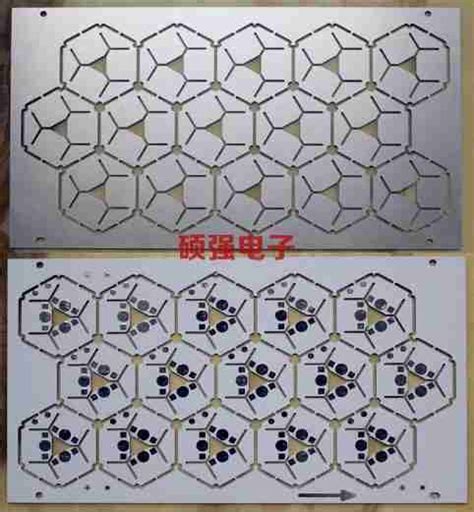
Understanding the essentials of PCB manufacturing for LED applications ensures your projects meet performance and durability demands. When evaluating PCB manufacturing companies, prioritize those with expertise in aluminum-based and rigid-flex designs, as these materials are critical for thermal management and adaptability in lighting systems. Balancing PCB manufacturing cost with quality requires selecting partners who optimize material usage while adhering to global certifications like ISO and UL.
For businesses scaling their PCB manufacturing business, quick-turn prototyping capabilities reduce time-to-market for cutting-edge lighting innovations. Advanced techniques, such as high-density interconnect (HDI) layouts, enhance reliability in high-power LED designs, minimizing failure risks. Additionally, transparent communication with manufacturers helps tailor solutions—whether you need FR4 boards for cost-sensitive projects or specialized substrates for industrial-grade applications.
By aligning with partners experienced in PCB manufacturing since 2009, you gain access to proven workflows that address both technical and commercial challenges. This focus on collaborative innovation ensures your lighting products remain competitive in a rapidly evolving global market.
High-Reliability LED PCB Manufacturing Essentials
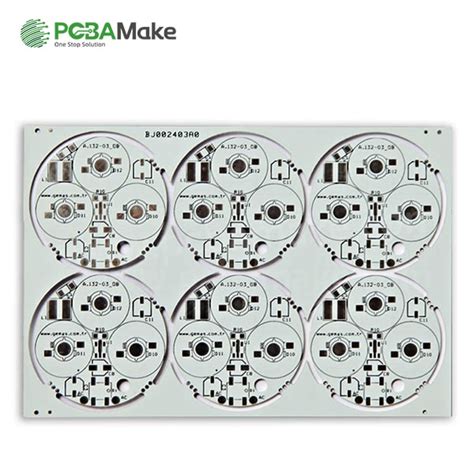
When designing LED lighting systems, understanding the essentials of PCB manufacturing ensures your products meet rigorous performance demands. High-reliability LED PCBs require precision in material selection, thermal management, and adherence to global standards. Leading PCB manufacturing companies prioritize aluminum substrates for their superior heat dissipation, critical for maintaining long-term luminosity in high-power applications.
Balancing PCB manufacturing cost with quality involves optimizing layer stacks, copper thickness, and surface finishes. Advanced thermal vias and dielectric materials prevent delamination, while automated optical inspection (https://www.andwinpcba.com).
In the PCB manufacturing business, rapid prototyping accelerates innovation cycles, allowing you to test custom layouts before mass production. Whether using FR4 for cost-sensitive projects or hybrid materials for extreme environments, partnering with certified manufacturers ensures compliance with IPC-6012 and UL certifications. This approach minimizes field failures while scaling production to meet global demand—key for maintaining competitiveness in smart lighting markets.
Aluminum PCBs for LED Lighting Efficiency
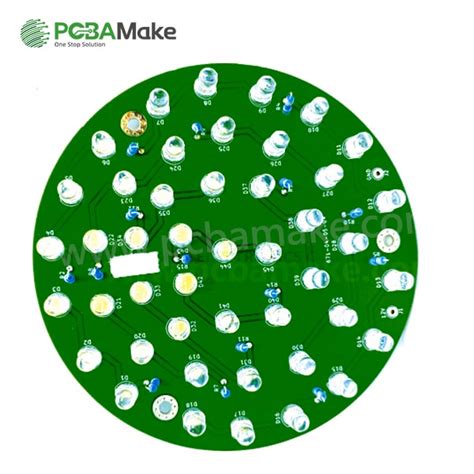
When designing LED lighting systems, you need substrates that balance thermal performance with PCB manufacturing cost efficiency. Aluminum-backed PCBs excel here, offering superior thermal conductivity to dissipate heat from high-power LEDs. This prevents premature dimming and extends operational life—critical factors for industrial and architectural lighting applications. Leading PCB manufacturing companies leverage aluminum’s properties to create boards that withstand temperature fluctuations while maintaining stable electrical performance, even in demanding environments.
The choice of material directly impacts your PCB manufacturing business outcomes. Aluminum’s lightweight yet durable nature reduces assembly complexity, allowing for slimmer luminaire designs without compromising durability. For projects requiring rapid scaling, partnering with manufacturers specializing in aluminum PCBs ensures consistent quality across batches, whether you’re prototyping or moving to mass production.
Transitioning from traditional FR4 to aluminum substrates? Consider how optimized heat dissipation lowers long-term maintenance costs—a strategic advantage in competitive markets. By integrating these boards into your designs, you align with global energy efficiency standards while addressing the core challenges of high-power LED implementations.
Global Standards in LED Circuit Board Production
When selecting PCB manufacturing companies for LED applications, understanding compliance with global standards ensures your projects meet performance and safety benchmarks. Modern PCB manufacturing processes adhere to certifications like IPC-6012 (for rigid boards), UL 796 (flammability testing), and RoHS directives (restricting hazardous substances). These protocols guarantee that aluminum-based or FR4 LED PCBs withstand thermal stress, moisture, and electrical interference—critical for high-power lighting systems.
A key consideration in PCB manufacturing cost optimization is balancing material quality with regulatory compliance. For instance, ISO 9001-certified suppliers streamline production workflows to reduce waste while maintaining traceability—a necessity for industrial clients requiring audit-ready documentation. Below is a comparison of standards impacting PCB manufacturing business outcomes:
| Standard | Key Focus | Impact on LED PCBs |
|---|---|---|
| IPC-A-610 | Acceptability of boards | Ensures solder joint reliability |
| UL 94V-0 | Flame resistance | Reduces fire risks in enclosures |
| IEC 61215 | Thermal cycling | Validates longevity in outdoor lighting |
By prioritizing suppliers aligned with these frameworks, you avoid costly redesigns and delays. Cross-industry collaboration further drives innovation, as standardized processes enable seamless integration of rigid-flex PCBs into compact or curved lighting designs. Whether prototyping or scaling production, global compliance remains the backbone of dependable LED PCB manufacturing.
Quick-Turn Prototyping for Lighting Innovations
When developing cutting-edge lighting solutions, partnering with experienced PCB manufacturing companies becomes critical to accelerate your time-to-market. Modern PCB manufacturing processes enable rapid prototyping cycles—often as short as 24–72 hours—without compromising precision. This agility lets you test thermal management systems, optical alignment, and power distribution networks iteratively, ensuring your LED designs meet exact performance benchmarks.
Tip: Prioritize design-for-manufacturability (DFM) principles during prototyping to minimize PCB manufacturing cost and avoid delays. Simplify complex layouts by collaborating early with your fabrication partner.
Advanced PCB manufacturing business models leverage automated optical inspection (AOI) and 3D solder paste testing to catch defects in real time. For high-power LED applications, materials like aluminum substrates or rigid-flex boards are processed with laser drilling and controlled impedance routing. By combining these technologies with global supply chain integrations, manufacturers deliver prototypes that mirror full-production quality.
Transitioning from concept to functional prototype requires balancing speed with scalability. Leading providers optimize material sourcing and layer stacking to align with your project’s technical and budgetary constraints. This approach ensures seamless scaling once your design is validated—keeping your lighting innovations ahead in competitive markets.

Custom Solutions for Industrial LED Applications
When designing industrial LED systems, you need PCB manufacturing partners who understand the unique demands of high-stakes environments. Whether it’s harsh temperatures, vibration-prone settings, or prolonged operational cycles, customized solutions ensure reliability without compromising performance. Leading PCB manufacturing companies leverage aluminum-based substrates for superior thermal management, while rigid-flex designs enable compact layouts in space-constrained machinery.
Balancing PCB manufacturing cost with durability is critical. For example, industrial-grade LED drivers often require thicker copper layers or specialized conformal coatings—features that impact pricing but extend product lifespans. By collaborating early in the design phase, manufacturers can optimize material choices and layer stacks to align with both technical requirements and budget constraints.
For businesses scaling production, streamlining the PCB manufacturing business workflow becomes essential. Trusted providers offer scalable turnkey services, from prototyping to volume runs, ensuring consistency across batches. This approach minimizes downtime while maintaining compliance with industry-specific certifications like IPC-A-610 or UL recognition—key for global market access.
Ultimately, tailored solutions bridge the gap between innovative LED technology and real-world industrial applications, empowering your projects to thrive in demanding conditions.
FR4 and Rigid-Flex PCB Advancements
When optimizing LED systems, selecting the right substrate material directly impacts performance and longevity. PCB manufacturing companies increasingly rely on advanced FR4 variants to balance PCB manufacturing cost with thermal management needs. Modern FR4 laminates now feature enhanced glass transition temperatures (Tg) and reduced thermal expansion rates, ensuring stable operation in high-power LED arrays. These improvements allow manufacturers to deliver boards that withstand prolonged heat exposure without compromising electrical integrity—a critical factor for industrial lighting applications.
Simultaneously, rigid-flex PCB advancements are redefining design possibilities for compact or irregularly shaped fixtures. By integrating flexible polyimide layers with rigid FR4 sections, PCB manufacturing processes enable seamless three-dimensional layouts, reducing assembly complexity and material waste. This hybrid approach not only lowers long-term PCB manufacturing business expenses but also supports lightweight, durable designs ideal for automotive or architectural lighting.
For projects demanding precision, partnering with PCB manufacturing specialists who understand material science ensures optimal board performance. Whether you require cost-effective FR4 solutions or cutting-edge rigid-flex configurations, these innovations empower you to push the boundaries of LED technology while maintaining reliability across diverse environments.
Ensuring Durability in High-Power LED Designs
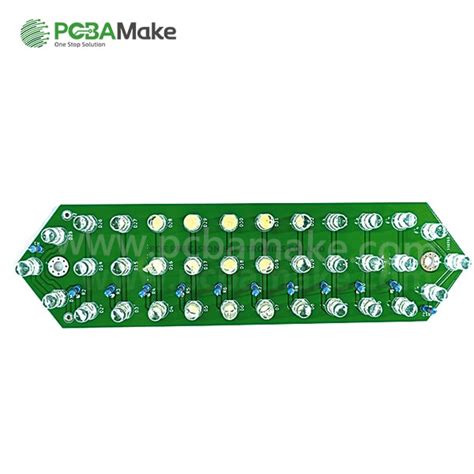
When designing high-power LED systems, durability hinges on addressing thermal stress and material integrity. Thermal management becomes critical as increased power output generates excess heat, which can degrade components over time. This is where selecting the right PCB manufacturing process matters—aluminum-based boards, for instance, excel in dissipating heat while maintaining structural stability under continuous operation.
Leading PCB manufacturing companies prioritize robust designs by optimizing trace widths, copper thickness, and dielectric layers to handle high currents without compromising performance. For industrial applications, balancing PCB manufacturing cost with long-term reliability requires precise material selection—such as high-Tg FR4 or advanced ceramics—to withstand thermal cycling and mechanical shocks.
Your design choices should align with industry certifications (e.g., IPC-6012) to ensure compliance with global durability standards. Rigorous testing protocols, including thermal shock and vibration resistance checks, help validate board longevity before mass production. By partnering with PCB manufacturing business experts, you gain access to tailored solutions that minimize failure risks in harsh environments, from automotive lighting to outdoor infrastructure.
Transitioning from prototyping to scale? Focus on suppliers offering design-for-manufacturability (DFM) feedback to refine layouts for enhanced durability without inflating costs. This collaborative approach ensures your high-power LED systems meet both performance benchmarks and operational lifespans demanded by modern lighting innovations.
Trusted LED PCB Partnerships Since 2009
When building industrial lighting systems, partnering with established PCB manufacturing companies ensures your designs meet both performance and longevity demands. Since 2009, leading innovators have relied on specialized expertise in PCB manufacturing to balance thermal management, energy efficiency, and PCB manufacturing cost—critical factors for high-volume lighting projects. By collaborating with certified partners, you gain access to scalable solutions, from prototyping to mass production, tailored to your PCB manufacturing business needs.
Long-term partnerships thrive on transparency and adaptability. For example, aluminum-based boards may lower PCB manufacturing cost in high-power applications, while rigid-flex designs enable compact, durable fixtures. Trusted manufacturers optimize material selection and fabrication workflows, reducing lead times without compromising quality. This alignment between technical precision and commercial viability is why global brands prioritize suppliers with proven track records in LED PCB manufacturing. After all, reliability isn’t just about components—it’s built through years of shared innovation and problem-solving.
Conclusion
When navigating the complexities of PCB manufacturing for LED applications, aligning with experienced PCB manufacturing companies ensures your designs meet both performance and durability demands. Balancing PCB manufacturing cost with quality requires expertise in material selection—whether aluminum-based boards for thermal management or rigid-flex solutions for compact designs. Trusted partners optimize production workflows to deliver quick-turn prototypes while adhering to global standards, critical for industrial and commercial lighting innovations.
The PCB manufacturing business thrives on customization, particularly for high-power LED systems where heat dissipation and electrical stability are non-negotiable. By collaborating with specialists who understand the nuances of FR4 advancements and aluminum substrate integration, you secure solutions tailored to your technical and budgetary requirements. Since 2009, forward-thinking manufacturers have bridged innovation with reliability, proving that strategic partnerships in PCB manufacturing are indispensable for driving next-generation lighting technologies. Your project’s success hinges on choosing collaborators who prioritize precision, scalability, and long-term performance—cornerstones of modern LED PCB development.
Frequently Asked Questions
What factors influence pcb manufacturing cost for LED applications?
Material selection, layer count, and thermal management requirements primarily drive costs. Aluminum-based PCBs, commonly used in LED lighting, offer better heat dissipation but may increase initial expenses compared to FR4 alternatives.
How do pcb manufacturing companies ensure reliability in high-power LED designs?
Reputable providers implement stringent testing protocols, including thermal cycling and ISTA-3A vibration tests. Many leverage automated optical inspection (AOI) systems to detect micro-defects in high-reliability LED PCBs.
Can pcb manufacturing business models accommodate custom industrial LED projects?
Yes, specialized manufacturers provide custom solutions ranging from rigid-flex configurations for compact designs to hybrid boards integrating copper-core layers for extreme thermal loads.
What separates top-tier pcb manufacturing partners in global lighting innovation?
Leading firms combine ISO 9001-certified processes with rapid prototyping capabilities. Their expertise in material science ensures compliance with IEC 61215 and UL certification standards for global deployments.
Ready to Transform Your LED Lighting Concepts?
Optimize your project’s performance with precision-engineered LED PCBs. For tailored technical specifications and real-time pcb manufacturing cost analysis, please click here to consult our engineering team.