
Key Considerations for PCB Design: What You Need to Know Before Drawing a PCB
Introduction
Printed Circuit Board (PCB) design is a critical step in electronics development. A well-designed PCB ensures functionality, reliability, and manufacturability. However, poor design choices can lead to circuit failures, increased costs, and production delays. Before drawing a PCB, engineers and designers must consider several key factors, including schematic accuracy, component placement, signal integrity, power distribution, thermal management, and manufacturing constraints.
This article explores the essential questions and considerations for successful PCB design, helping beginners and experienced designers avoid common pitfalls.
1. Schematic Design: The Foundation of PCB Layout
Before starting the PCB layout, a correct and well-organized schematic is crucial. Key questions include:
Is the Schematic Error-Free?
- Verify all connections match the circuit design.
- Ensure correct component symbols and footprints.
- Cross-check netlists to prevent mismatches in the PCB layout.
Are Components Properly Annotated?
- Assign unique reference designators (e.g., R1, C2, U3) to avoid confusion.
- Group related components (e.g., power supply section, microcontroller peripherals).
Have Design Rules Been Defined?
- Set electrical rules (e.g., minimum trace width, clearance).
- Define net classes (power, signal, high-speed) for proper routing.
A well-prepared schematic minimizes errors during PCB layout and reduces debugging efforts later.
2. Component Selection and Placement
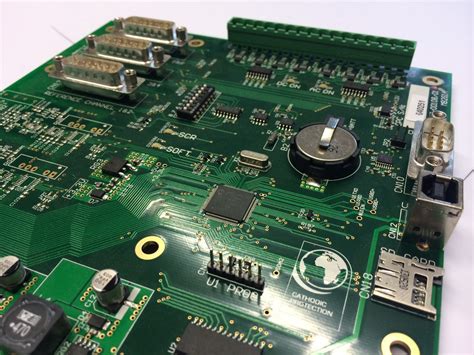
Choosing the right components and placing them optimally affects performance and manufacturability.
Are Components Available and Cost-Effective?
- Check component availability (avoid obsolete or long-lead-time parts).
- Compare prices and consider alternatives if necessary.
Is the Placement Optimized for Functionality and Manufacturing?
- Group related components (e.g., place decoupling capacitors near IC power pins).
- Consider mechanical constraints (enclosure size, mounting holes).
- Ensure adequate spacing for soldering and rework.
Are Sensitive Components Properly Positioned?
- Keep high-frequency or noise-sensitive parts away from interference sources.
- Position connectors and user-interface elements for accessibility.
Poor placement can lead to signal integrity issues, increased EMI, and assembly difficulties.
3. Signal Integrity and Routing Considerations
Proper routing ensures signal quality and minimizes noise.
Are High-Speed Signals Properly Routed?
- Use controlled impedance traces for high-speed signals (e.g., USB, HDMI).
- Avoid sharp angles (use 45° or curved traces).
- Match trace lengths for differential pairs (e.g., USB D+/D-).
Is Crosstalk Minimized?
- Increase spacing between parallel traces.
- Use ground planes to shield sensitive signals.
Are Power and Ground Planes Well-Designed?
- Use solid power and ground planes for low impedance.
- Avoid splitting planes under high-speed signals.
- Implement proper decoupling (place capacitors near ICs).
Signal integrity issues can cause data corruption, EMI problems, and circuit malfunctions.

4. Power Distribution and Thermal Management
Efficient power delivery and heat dissipation are crucial for reliability.
Is the Power Delivery Network (PDN) Robust?
- Ensure sufficient trace width for high-current paths.
- Use multiple vias for power connections to reduce resistance.
- Implement proper filtering (ferrite beads, bulk capacitors).
Are Thermal Considerations Addressed?
- Place heat-generating components (e.g., regulators, processors) near ventilation.
- Use thermal vias under hot components to dissipate heat.
- Consider heatsinks or copper pours for thermal relief.
Overheating can degrade performance and reduce component lifespan.
5. EMI/EMC and Shielding
Electromagnetic interference (EMI) can disrupt circuit operation and fail compliance tests.
Are Grounding Techniques Optimized?
- Use a solid ground plane to reduce noise.
- Avoid ground loops by ensuring a single return path.
Are High-Frequency Signals Shielded?
- Route sensitive traces away from noise sources.
- Use guard traces or shielding cans if necessary.
Is the PCB Layout Compliant with EMC Standards?
- Follow industry standards (e.g., FCC, CE) for emissions and immunity.
- Test prototypes for EMI performance early.
Ignoring EMI/EMC can lead to certification failures and unreliable products.
6. Design for Manufacturing (DFM) and Assembly (DFA)
A PCB must be manufacturable at scale without defects.
Are Design Rules Followed for the Fabrication Process?
- Check manufacturer’s capabilities (minimum trace width, hole size, layer count).
- Avoid excessive via drilling or tight tolerances that increase cost.
Is the Design Optimized for Assembly?
- Ensure proper solder mask and silkscreen clarity.
- Orient polarized components uniformly for automated assembly.
- Provide fiducial marks for pick-and-place machines.
Has a Design Rule Check (DRC) Been Performed?
- Run DRC in PCB software to detect errors (shorts, unrouted nets).
- Verify Gerber files before sending to fabrication.
DFM/DFA mistakes can lead to costly re-spins and delays.
7. Testing and Debugging Considerations
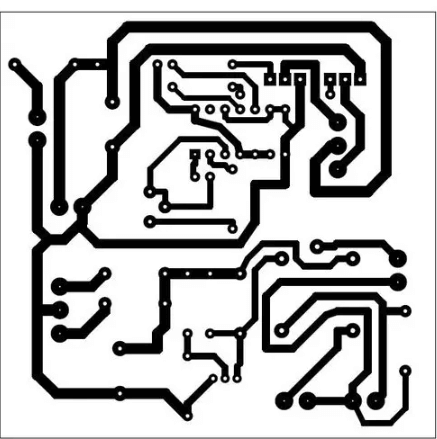
A well-designed PCB should be testable and debuggable.
Are Test Points Included?
- Add test pads for critical signals (voltage, clock, data lines).
- Provide accessible probe points for oscilloscopes and logic analyzers.
Is Debugging Feasible?
- Avoid burying critical components under connectors.
- Include LED indicators for power and status signals.
Has a Prototype Been Validated?
- Test functionality before mass production.
- Check for thermal, signal, and power issues.
Testing ensures reliability and reduces post-production failures.
Conclusion
Designing a PCB involves multiple considerations, from schematic accuracy to manufacturability. By addressing signal integrity, power distribution, thermal management, EMI, and DFM early, designers can avoid costly mistakes and ensure a reliable, high-performance board.
Before finalizing a PCB design, always:
- Verify the schematic.
- Optimize component placement.
- Ensure proper routing and grounding.
- Check thermal and power requirements.
- Follow DFM/DFA guidelines.
- Test prototypes thoroughly.
By keeping these factors in mind, engineers can create efficient, manufacturable, and robust PCBs for any application.