Flex pcb dielectric constant
Understanding The Impact Of Dielectric Constant On flex pcb dielectric constant
The dielectric constant, a critical parameter in the design and performance of flexible printed circuit boards (flex PCBs), plays a pivotal role in determining the electrical characteristics of these advanced electronic components.
Flex PCBs, known for their ability to bend and conform to various shapes, are increasingly utilized in applications where space constraints and mechanical flexibility are paramount. Understanding the impact of the dielectric constant on flex PCB performance is essential for engineers and designers aiming to optimize their designs for both functionality and reliability.
The dielectric constant, also referred to as the relative permittivity, is a measure of a material’s ability to store electrical energy in an electric field.
In the context of flex PCBs, the dielectric constant of the substrate material influences several key performance attributes, including signal integrity, impedance control, and overall electrical performance. As electronic devices continue to shrink in size while increasing in complexity, the choice of dielectric material becomes even more critical.
One of the primary effects of the dielectric constant on flex PCB performance is its influence on signal integrity.
High-speed digital and RF signals are particularly sensitive to variations in the dielectric constant. A consistent and stable dielectric constant ensures that signal propagation remains uniform, minimizing signal loss and distortion. Conversely, a material with a variable dielectric constant can lead to signal degradation, increased electromagnetic interference (EMI), and potential data transmission errors. Therefore, selecting a dielectric material with a stable and appropriate dielectric constant is crucial for maintaining signal integrity in high-frequency applications.
In addition to signal integrity, the dielectric constant also affects impedance control within flex PCBs.
Impedance, the measure of opposition that a circuit presents to the flow of alternating current, is a critical parameter in high-speed digital circuits. The dielectric constant of the substrate material directly impacts the characteristic impedance of transmission lines on the PCB. Precise impedance control is necessary to ensure proper signal transmission and to avoid reflections that can cause signal integrity issues. By carefully selecting a dielectric material with a suitable dielectric constant, designers can achieve the desired impedance levels, thereby enhancing the overall performance of the flex PCB.
Moreover, the dielectric constant influences the overall electrical performance of flex PCBs by affecting parameters such as capacitance and signal propagation speed.
A higher dielectric constant generally results in increased capacitance, which can impact the timing and performance of high-speed circuits. Additionally, the dielectric constant affects the speed at which signals travel through the PCB material. Materials with a lower dielectric constant typically allow for faster signal propagation, which is advantageous in high-speed applications where timing is critical.
Furthermore, the mechanical properties of the dielectric material, such as flexibility and thermal stability, must be considered alongside the dielectric constant. Flex PCBs are often subjected to dynamic bending and flexing during operation, necessitating materials that can withstand mechanical stress without compromising electrical performance. Therefore, the selection of a dielectric material involves a careful balance between electrical properties and mechanical robustness.
In conclusion, the dielectric constant is a fundamental factor that significantly impacts the performance of flex PCBs. Its influence on signal integrity, impedance control, and overall electrical performance underscores the importance of selecting the appropriate dielectric material for specific applications. As the demand for smaller, more complex electronic devices continues to grow, a thorough understanding of the dielectric constant and its effects on flex PCB performance will remain essential for engineers and designers striving to achieve optimal functionality and reliability in their designs.
How To Choose The Right Dielectric Material For Flex PCBs
When selecting the appropriate dielectric material for flexible printed circuit boards (flex PCBs), it is crucial to consider several factors that influence the performance, reliability, and overall functionality of the final product. The dielectric constant, a key property of dielectric materials, plays a significant role in determining the electrical characteristics of the flex PCB. Understanding how to choose the right dielectric material involves evaluating the dielectric constant in conjunction with other material properties and application requirements.
The dielectric constant, also known as the relative permittivity, measures a material’s ability to store electrical energy in an electric field.
A higher dielectric constant indicates a greater capacity to store charge, which can affect signal integrity, impedance control, and overall circuit performance. Therefore, selecting a dielectric material with an appropriate dielectric constant is essential for ensuring optimal electrical performance in flex PCBs.
To begin with, it is important to assess the specific application requirements of the flex PCB.
Different applications may demand varying levels of signal integrity, frequency performance, and thermal stability. For high-frequency applications, materials with a low dielectric constant are often preferred, as they minimize signal loss and ensure better signal propagation. Conversely, for applications requiring high capacitance or energy storage, materials with a higher dielectric constant may be more suitable.
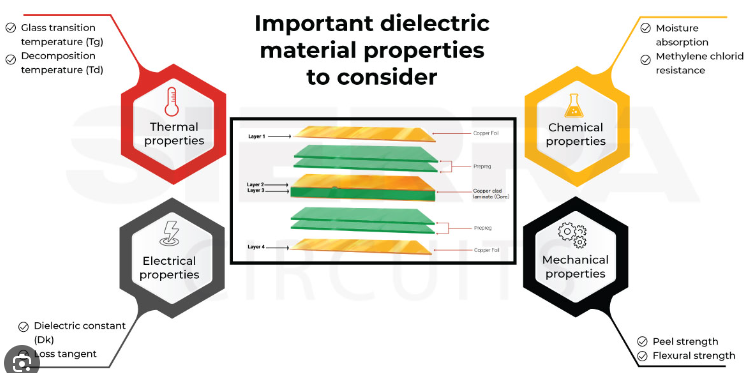
In addition to the dielectric constant, other material properties such as flexibility, thermal stability, and mechanical strength must be considered.
Flex PCBs are designed to bend and flex, so the chosen dielectric material must exhibit excellent flexibility and mechanical durability. Polyimide, for instance, is a popular choice due to its high flexibility, thermal stability, and relatively low dielectric constant. However, for applications requiring even lower dielectric constants, materials like liquid crystal polymer (LCP) may be more appropriate, despite their higher cost.
Thermal stability is another critical factor, especially for applications exposed to varying temperatures or harsh environmental conditions.
The dielectric material must maintain its properties over a wide temperature range to ensure consistent performance. Materials such as polyimide and LCP offer excellent thermal stability, making them suitable for demanding applications.
Furthermore, the manufacturing process and compatibility with other materials used in the flex PCB construction must be taken into account.
The dielectric material should be compatible with the adhesive, conductive layers, and other components to ensure reliable bonding and overall structural integrity. It is also essential to consider the ease of processing and the material’s ability to withstand the various stages of PCB fabrication, including lamination, drilling, and soldering.
Cost considerations also play a role in material selection.
While high-performance materials like LCP offer superior electrical and thermal properties, they come at a higher cost. Balancing performance requirements with budget constraints is necessary to achieve an optimal solution. In some cases, a compromise between performance and cost may be required, leading to the selection of a material that meets the essential criteria without exceeding budget limitations.
In conclusion, choosing the right dielectric material for flex PCBs involves a comprehensive evaluation of the dielectric constant, flexibility, thermal stability, mechanical strength, manufacturing compatibility, and cost. By carefully considering these factors and understanding the specific application requirements, designers can select a dielectric material that ensures optimal performance, reliability, and cost-effectiveness for their flex PCB projects. This holistic approach to material selection ultimately contributes to the successful development and deployment of high-quality flex PCBs in various applications.
The Role Of Dielectric Constant In Flex PCB Signal Integrity
The role of dielectric constant in flex PCB signal integrity is a critical aspect that demands careful consideration in the design and application of flexible printed circuit boards (PCBs). Flex PCBs, known for their ability to bend and conform to various shapes, are increasingly utilized in advanced electronic devices where space constraints and mechanical flexibility are paramount. However, the electrical performance of these circuits is significantly influenced by the dielectric properties of the materials used, particularly the dielectric constant.
The dielectric constant, also known as the relative permittivity, is a measure of a material’s ability to store electrical energy in an electric field.
In the context of flex PCBs, the dielectric constant of the substrate material directly impacts signal propagation, impedance control, and overall signal integrity. A higher dielectric constant typically results in slower signal propagation due to increased capacitance, which can be detrimental in high-frequency applications where fast signal transmission is crucial.
To understand the implications of the dielectric constant on signal integrity,
it is essential to consider the relationship between the dielectric constant and the characteristic impedance of transmission lines. The characteristic impedance is a function of the geometry of the conductors and the dielectric properties of the substrate. Variations in the dielectric constant can lead to impedance mismatches, causing signal reflections, crosstalk, and attenuation. These issues can degrade the performance of high-speed digital and RF circuits, leading to data errors and reduced reliability.
Moreover, the dielectric constant affects the effective dielectric loss tangent, which quantifies the energy dissipation within the dielectric material.
A higher dielectric loss tangent indicates greater energy loss, which manifests as signal attenuation and heat generation. In flex PCBs, where maintaining signal integrity over long distances and through multiple bends is challenging, selecting materials with a low dielectric constant and low loss tangent is crucial to minimize signal degradation.
In addition to electrical considerations, the mechanical properties of the dielectric material must also be taken into account.
Flex PCBs are often subjected to dynamic bending and flexing during operation, which can induce mechanical stress and potential failure. Therefore, the dielectric material must exhibit not only favorable electrical properties but also sufficient mechanical robustness to withstand repeated flexing without compromising performance.
Furthermore, the choice of dielectric material can influence the manufacturability and cost of flex PCBs.
Materials with lower dielectric constants, such as polyimide and liquid crystal polymer (LCP), are preferred for high-frequency applications due to their superior electrical performance. However, these materials can be more expensive and challenging to process compared to traditional materials like FR-4. Balancing electrical performance, mechanical reliability, and cost is a key challenge in the design of flex PCBs.
In conclusion, the dielectric constant plays a pivotal role in determining the signal integrity of flex PCBs. It affects signal propagation speed, impedance control, and energy dissipation, all of which are critical for the reliable operation of high-speed and high-frequency circuits. Designers must carefully select dielectric materials that offer an optimal balance of electrical and mechanical properties to ensure the performance and longevity of flex PCBs in demanding applications. By understanding and managing the impact of the dielectric constant, engineers can enhance the signal integrity and overall functionality of flexible electronic systems.
Comparing Dielectric Constants In Different Flex PCB Materials
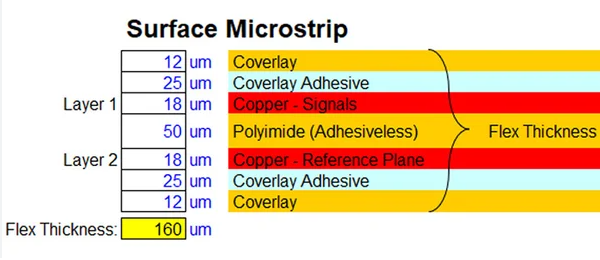
When designing flexible printed circuit boards (flex PCBs), one of the critical parameters to consider is the dielectric constant of the materials used. The dielectric constant, also known as the relative permittivity, is a measure of a material’s ability to store electrical energy in an electric field. This property significantly influences the electrical performance of the PCB, particularly in high-frequency applications. Therefore, understanding and comparing the dielectric constants of different flex PCB materials is essential for optimizing circuit performance and ensuring reliability.
To begin with, polyimide is one of the most commonly used materials in flex PCBs due to its excellent thermal stability, mechanical flexibility, and chemical resistance.
Polyimide typically has a dielectric constant ranging from 3.2 to 3.5. This relatively low dielectric constant makes it suitable for high-frequency applications, as it minimizes signal loss and ensures efficient signal transmission. Additionally, polyimide’s stable dielectric properties over a wide temperature range make it a reliable choice for various demanding environments.
In contrast, liquid crystal polymer (LCP) is another material gaining popularity in the flex PCB industry.
LCP offers a dielectric constant in the range of 2.9 to 3.2, which is slightly lower than that of polyimide. This lower dielectric constant further reduces signal loss and enhances signal integrity, making LCP an excellent choice for high-speed and high-frequency applications. Moreover, LCP exhibits low moisture absorption and excellent dimensional stability, which are crucial for maintaining consistent electrical performance in varying environmental conditions.
Another material worth mentioning is polyethylene naphthalate (PEN)
which has a dielectric constant of approximately 3.0 to 3.4. PEN is known for its good thermal and mechanical properties, making it a viable alternative to polyimide in certain applications. However, its slightly higher dielectric constant compared to LCP may result in marginally higher signal loss, which should be considered when designing circuits for high-frequency applications.
Furthermore, polytetrafluoroethylene (PTFE), commonly known as Teflon, is also used in some specialized flex PCB applications.
PTFE has an exceptionally low dielectric constant, typically around 2.1. This extremely low dielectric constant makes PTFE an ideal material for ultra-high-frequency applications, where minimizing signal loss is paramount. However, PTFE’s mechanical properties are not as robust as those of polyimide or LCP, which may limit its use in certain flex PCB designs.
In addition to these materials, other advanced composites and laminates are being developed to meet the evolving demands of the electronics industry. These materials often combine different polymers and fillers to achieve specific electrical, thermal, and mechanical properties. For instance, some advanced composites may offer dielectric constants tailored to specific applications, providing designers with more options to optimize their circuits.
In conclusion, comparing the dielectric constants of different flex PCB materials is crucial for selecting the appropriate material for a given application. Polyimide, LCP, PEN, and PTFE each offer unique advantages and trade-offs in terms of dielectric properties, thermal stability, and mechanical performance. By carefully considering these factors, designers can make informed decisions to ensure optimal electrical performance and reliability in their flex PCB designs. As technology continues to advance, ongoing research and development in materials science will likely yield new materials with even more tailored dielectric properties, further expanding the possibilities for high-performance flex PCBs.