Panasonic PCB Materials: Ultra-Low Loss Solutions for 5G & Automotive

Panasonic MEGTRON 6: 5G Circuit Breakthrough
When designing high-frequency circuits for 5G networks, signal integrity becomes non-negotiable. Panasonic’s MEGTRON 6 substrate material addresses this challenge with ultra-low dielectric loss (Df ≤ 0.0015 at 10 GHz), enabling faster data transmission while minimizing signal distortion. This is particularly critical for millimeter-wave applications, where even minor losses can degrade network performance.
For PCB manufacturing companies, adopting MEGTRON 6 translates to enhanced reliability in high-speed designs. Its low thermal expansion coefficient ensures stable performance under extreme temperature fluctuations—a must for base stations operating in harsh environments.
Tip: When selecting materials for 5G infrastructure, prioritize substrates with balanced dielectric constant (Dk) and low dissipation factors to maintain signal clarity across multi-layer designs.
The PCB manufacturing cost for advanced 5G systems often spikes due to material inefficiencies. However, MEGTRON 6’s compatibility with standard FR-4 processing workflows reduces fabrication complexity, helping manufacturers avoid costly retooling. Its halogen-free composition also aligns with sustainability goals—a growing priority in the PCB manufacturing business.
What sets this material apart is its adaptability. Whether you’re developing massive MIMO antennas or compact RF front-end modules, MEGTRON 6 supports laser-drilled microvias and fine-pitch traces essential for HDI layouts. As you scale production, its consistent quality across batches ensures predictable yields—a key advantage when meeting tight 5G deployment deadlines.
“The shift to 5G isn’t just about speed; it’s about redefining material science to handle unprecedented signal densities,” notes a leading RF engineer at a top-tier telecom OEM.
By integrating MEGTRON 6 into your PCB manufacturing strategy, you’re not just building circuits—you’re future-proofing infrastructure for 6G readiness while addressing today’s thermal management and bandwidth challenges head-on.
Ultra-Low Loss PCB Material Benefits
When designing high-frequency systems like 5G infrastructure or advanced automotive radar, PCB manufacturing becomes a balancing act between signal integrity and thermal performance. Ultra-low loss materials, such as Panasonic’s proprietary substrates, address this challenge by minimizing dielectric dissipation while maintaining structural stability. For PCB manufacturing companies, this translates to boards that handle millimeter-wave frequencies with reduced signal attenuation—critical for applications demanding sub-1 dB insertion loss at 28 GHz and beyond.
The shift to ultra-low loss substrates directly impacts PCB manufacturing cost by cutting downstream rework. Traditional materials often require additional shielding or signal-boosting components to compensate for energy loss, adding layers of complexity. With Panasonic’s low-loss solutions, you eliminate redundant design steps, streamlining production timelines. This efficiency is particularly valuable in industries like aerospace, where thermal reliability and weight reduction are non-negotiable.
For businesses scaling their PCB manufacturing business, adopting these materials future-proofs product lines. Automotive applications, for instance, benefit from stable impedance control across temperature fluctuations (-55°C to 150°C), ensuring consistent performance in electric vehicle battery management or ADAS modules. The glass transition temperature (Tg) of these substrates also prevents delamination during reflow soldering—a common pain point in high-density interconnect (HDI) designs.
Moreover, ultra-low loss materials enhance signal propagation speed, a key factor for 5G base stations and data centers. By reducing parasitic capacitance, they enable tighter trace spacing without crosstalk, allowing PCB manufacturing companies to meet miniaturization demands. This technical edge lowers total ownership costs, as end products require fewer iterations to achieve compliance with industry standards like IPC-6012DA.
In essence, selecting the right substrate isn’t just about material specs—it’s about optimizing the entire value chain. Whether you’re managing PCB manufacturing cost or aiming to differentiate your PCB manufacturing business, ultra-low loss solutions provide a competitive advantage where performance and reliability can’t be compromised.
Thermal Reliability in HDI PCB Design
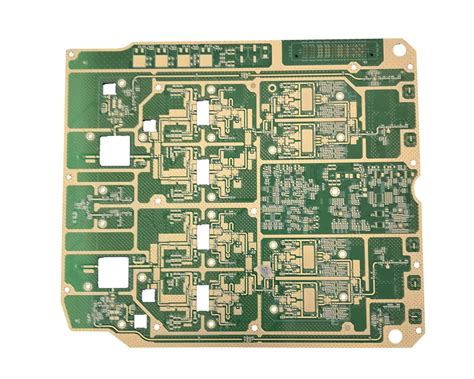
When designing high-density interconnect (HDI) PCBs for advanced applications like 5G infrastructure or automotive systems, managing thermal stress isn’t just an afterthought—it’s a critical design parameter. As signal speeds increase and component densities tighten, heat dissipation challenges escalate, directly impacting PCB manufacturing yields and long-term reliability. This is where material selection becomes pivotal. Panasonic’s MEGTRON 6 series, for instance, combines ultra-low dielectric loss with exceptional thermal stability, reducing the risk of delamination or warping even under prolonged high-frequency operation.
For PCB manufacturing companies, balancing PCB manufacturing cost with performance demands requires materials that minimize thermal expansion mismatches. Panasonic’s laminates achieve this through precise glass transition temperatures (Tg) and low coefficient of thermal expansion (CTE), ensuring compatibility with copper layers during reflow processes. In automotive applications, where temperature fluctuations range from sub-zero to over 150°C, such thermal resilience prevents micro-cracks in solder joints—a common failure point in HDI designs.
The PCB manufacturing business also benefits from Panasonic’s focus on predictable thermal behavior. By using materials with consistent thermal conductivity across batches, manufacturers reduce rework rates and improve time-to-market for high-reliability products. This is particularly vital for aerospace systems, where thermal cycling tests can account for up to 30% of validation timelines.
To optimize thermal reliability, designers should collaborate early with material suppliers to model heat distribution patterns. Advanced simulation tools paired with Panasonic’s datasheet parameters—like thermal resistance values and dissipation factors—allow for proactive adjustments in stack-up designs. This approach not only safeguards signal integrity but also extends the operational lifespan of HDI PCBs in harsh environments.
Ultimately, thermal management isn’t just about surviving extreme conditions; it’s about enabling consistent performance across the product lifecycle. As 5G and autonomous driving push PCB technologies to their limits, partnering with material innovators becomes a strategic advantage for PCB manufacturing companies aiming to lead in high-stakes markets.
Panasonic’s 5G-Ready Material Portfolio
When designing high-frequency systems for 5G networks or advanced automotive electronics, the choice of PCB manufacturing materials directly impacts performance and reliability. Panasonic’s 5G-ready portfolio, anchored by its MEGTRON 6 series, addresses the critical need for ultra-low signal loss in millimeter-wave applications. These laminates achieve dielectric constants as low as 3.2 with dissipation factors under 0.0015, enabling precise signal integrity for base stations, radar systems, and vehicle-to-everything (V2X) communication modules.
For PCB manufacturing companies, the thermal stability of these materials—capable of withstanding temperatures exceeding 180°C—simplifies high-density interconnect (HDI) designs while maintaining consistent impedance control. This becomes critical when balancing PCB manufacturing cost against the demand for multi-layer boards in compact 5G infrastructure. The MEGTRON 6 family also supports hybrid constructions, allowing engineers to combine low-loss and standard materials in a single stack-up, optimizing both performance and budget.
Beyond rigid boards, Panasonic’s portfolio includes flexible circuits tailored for automotive innovation. These solutions withstand extreme vibrations and thermal cycling, making them ideal for in-vehicle networks and ADAS sensors. By integrating these materials early in the PCB manufacturing business workflow, designers can avoid costly post-production revisions caused by signal degradation or heat-related failures.
Transitioning to 5G-ready materials isn’t just about technical specs—it’s about future-proofing designs. Panasonic’s offerings align with evolving standards like FR-4 alternatives for high-speed digital (HSD) applications, ensuring compatibility with next-gen network architectures. Whether you’re scaling PCB manufacturing for telecom infrastructure or automotive control units, this material portfolio bridges the gap between cutting-edge performance and scalable production realities.

Aerospace-Grade PCB Thermal Solutions
When designing electronics for aerospace applications, managing heat isn’t just a technical detail—it’s a mission-critical requirement. Extreme temperature fluctuations, from the icy vacuum of space to the intense heat generated during re-entry, demand PCB manufacturing solutions that prioritize thermal stability without compromising signal integrity. Panasonic’s aerospace-grade materials, like their advanced MEGTRON 6 series, are engineered to handle these challenges by combining ultra-low dielectric loss with exceptional heat dissipation properties.
For PCB manufacturing companies, achieving reliable thermal performance starts with material selection. High-frequency applications in satellites or avionics require substrates that minimize signal attenuation while efficiently transferring heat away from sensitive components. Panasonic’s laminates, with their low thermal expansion coefficients, prevent warping under rapid temperature cycles—a common failure point in conventional materials. This durability directly impacts PCB manufacturing cost by reducing field replacements and extending the lifecycle of aerospace systems.
Balancing performance and practicality is key in the PCB manufacturing business, especially when designing for weight-sensitive aerospace platforms. Panasonic’s ultra-thin, high-Tg (glass transition temperature) materials enable compact, multilayer designs that dissipate heat faster than traditional FR-4 alternatives. This allows engineers to integrate more functionality into smaller footprints, a critical advantage when every gram affects fuel efficiency. Additionally, these materials’ compatibility with high-density interconnect (HDI) processes ensures seamless integration into complex avionics architectures.
Transitioning from theory to application, thermal reliability also hinges on manufacturing precision. Even the best materials underperform if fabrication processes introduce micro-cracks or delamination. Leading PCB manufacturing companies leverage Panasonic’s strict material specifications to optimize lamination cycles and drilling parameters, ensuring consistent quality across batches. By prioritizing both material innovation and process control, aerospace developers can meet stringent MIL-SPEC standards while future-proofing systems for next-generation missions.
High-Speed Networks Demand MEGTRON 6
As data rates surge in 5G infrastructure and cloud computing systems, traditional PCB materials struggle to maintain signal integrity. This is where Panasonic’s MEGTRON 6 emerges as a game-changer, offering ultra-low dielectric loss (Df ≤ 0.0015 at 10 GHz) that minimizes signal distortion even in multi-layer designs. For PCB manufacturing companies building next-gen network equipment, this material’s balanced dielectric constant (Dk 3.7) ensures impedance control across complex circuit geometries—a critical factor when handling 56 Gbps PAM4 signaling.
The thermal stability of MEGTRON 6 addresses a key pain point in PCB manufacturing for high-speed applications. With a glass transition temperature (Tg) exceeding 180°C, it withstands repeated thermal cycling during assembly processes like soldering, reducing warpage risks that escalate PCB manufacturing costs in high-volume production. This durability also extends to field operations, where base stations and data centers face temperature fluctuations that degrade conventional substrates.
For businesses optimizing their PCB manufacturing business strategies, MEGTRON 6’s compatibility with existing fabrication workflows offers a competitive edge. Its halogen-free composition meets evolving environmental regulations without compromising processability, enabling faster adoption in regions with stringent material compliance standards. When paired with advanced via-filling techniques, the material supports high-density interconnects (HDI) required for millimeter-wave 5G antennas and AI accelerator cards.
The economic calculus becomes clear: while initial PCB manufacturing costs for MEGTRON 6-based designs might be 15-20% higher than standard FR-4, the ROI manifests through reduced signal loss, lower power consumption, and extended product lifespans. Network operators leveraging this material report up to 30% improvement in data throughput consistency—a critical metric for maintaining service-level agreements in 5G deployments.
By adopting MEGTRON 6, engineers gain flexibility to push bandwidth boundaries without redesigning entire architectures, making it a cornerstone material for future-proofing network infrastructure. Its performance characteristics align precisely with the escalating demands of terabit-scale routing and edge computing nodes, cementing its role as an enabler of tomorrow’s hyperconnected ecosystems.
Panasonic PCB: Advancing Automotive Electronics
Modern vehicles demand electronics that withstand extreme conditions while enabling faster data processing. Thermal reliability and vibration resistance become non-negotiable as advanced driver-assistance systems (ADAS) and in-cabin connectivity push PCB manufacturing to new thresholds. Panasonic’s automotive-grade materials, like MEGTRON 6, address these challenges with ultra-low dielectric loss, ensuring stable signal integrity even under high-temperature engine environments or fluctuating power loads.
For PCB manufacturing companies, balancing performance with PCB manufacturing cost is critical. Panasonic’s Rigid-Flex solutions simplify complex wiring layouts, reducing assembly steps and material waste. This not only lowers production expenses but also enhances durability—a key advantage for electric vehicles (EVs) where weight savings and space optimization directly impact range. When designing for automotive applications, you need substrates that maintain stability across -40°C to 150°C ranges. Panasonic’s low-loss laminates achieve this while minimizing signal attenuation, which is vital for high-frequency radar and LiDAR systems.
The PCB manufacturing business also benefits from Panasonic’s focus on thermal management. Their HDI PCBs integrate heat-dissipating layers and microvia structures, preventing overheating in densely packed control units. As automakers adopt 48V architectures and autonomous driving features, these innovations ensure seamless communication between sensors, processors, and actuators. For instance, Panasonic’s flexible circuits enable compact, vibration-resistant connections in steering modules or battery management systems—areas where traditional rigid boards might fail.
By partnering with PCB manufacturing leaders like Panasonic, engineers gain access to materials tested against AEC-Q200 standards, ensuring compliance with automotive industry benchmarks. Whether optimizing PCB manufacturing cost through scalable production methods or enhancing reliability for safety-critical components, these solutions future-proof vehicle electronics against evolving technological demands.
Conclusion
When navigating the complexities of modern PCB manufacturing, selecting materials that meet the demands of 5G, automotive, and aerospace systems becomes critical. Panasonic’s ultra-low loss solutions, like the MEGTRON 6 series, redefine performance benchmarks, enabling PCB manufacturing companies to deliver circuits that excel in high-frequency and high-speed environments. For industries where signal integrity and thermal stability are non-negotiable, these materials offer a competitive edge—without compromising on PCB manufacturing cost efficiency.
In automotive applications, flexible circuit designs paired with Panasonic’s thermally reliable substrates address the dual challenges of space constraints and heat dissipation. This synergy ensures that PCB manufacturing businesses can support next-gen vehicle architectures, from advanced driver-assistance systems (ADAS) to electrified powertrains. Similarly, aerospace systems benefit from materials engineered to withstand extreme temperatures, reducing the risk of failure in mission-critical scenarios.
As you evaluate partners for PCB manufacturing, prioritize suppliers that balance material innovation with scalable production capabilities. Panasonic’s portfolio not only meets today’s technical requirements but also anticipates future advancements in high-speed connectivity. By aligning with forward-thinking PCB manufacturing companies, you ensure your designs remain resilient, cost-effective, and ready for the evolving demands of 5G and beyond.
Frequently Asked Questions
How do Panasonic’s PCB materials address challenges in high-frequency 5G applications?
Panasonic’s PCB manufacturing solutions, like the MEGTRON 6 series, minimize dielectric loss at millimeter-wave frequencies. This ensures stable signal integrity for 5G base stations and antennas, even in densely packed circuit designs.
What factors influence PCB manufacturing cost for automotive systems?
Automotive-grade PCBs require materials with exceptional thermal stability and vibration resistance. While advanced laminates may increase initial PCB manufacturing cost, they reduce long-term risks like signal degradation or heat-related failures, optimizing lifecycle expenses.
Can PCB manufacturing companies leverage Panasonic’s materials for flexible circuits?
Yes. Panasonic’s flexible circuit materials enable PCB manufacturing businesses to create bendable, lightweight designs ideal for automotive sensors and aerospace instrumentation. These solutions maintain performance under extreme temperatures, critical for mission-critical systems.
Why prioritize thermal reliability in PCB manufacturing for aerospace?
Aerospace electronics face rapid temperature fluctuations. Panasonic’s materials ensure consistent thermal expansion rates, preventing delamination or warping. This reliability reduces maintenance costs and extends the lifespan of avionics hardware.
How do low-loss materials benefit PCB manufacturing for high-speed networks?
Ultra-low loss substrates like MEGTRON 6 reduce signal attenuation by up to 20% compared to standard FR-4. This allows PCB manufacturing companies to design thinner traces without compromising data rates, essential for 5G infrastructure and server backplanes.
Explore Custom PCB Solutions for Your Project
For tailored PCB manufacturing options that align with Panasonic’s high-performance materials, please click here to consult with industry experts.