PCB circuit board heat treatment points
The heat generated during the operation of the electronic device causes the internal temperature of the device to rise rapidly. If the heat is not dissipated in time, the device will continue to heat up and the device will fail due to overheating, and the reliability of the electronic device will decrease. Therefore, it is very important to dispose the circuit board.
I. Analysis of Temperature Rise of Printed Circuit Boards
The direct cause of PCB temperature rise is due to the existence of circuit power devices, electronic devices have varying degrees of power consumption, heat intensity varies with the size of power consumption.
Two phenomena of temperature rise in printed board:
(1) local temperature rise or large area temperature rise;
(2) Short-term temperature rise or long-term temperature rise.
In the analysis of PCB thermal power consumption, the general analysis from the following aspects.
1 Electric power consumption
(1) Analyze power consumption per unit area;
(2) Analyze the distribution of power consumption on the PCB. The
2 printed board structure
(1) The size of the printed board;
(2) PCB material.
3 printed board installation
(1) Installation method (such as vertical installation, horizontal installation);
(2) Sealing conditions and distance from the casing.
4 heat radiation
(1) The emissivity of the printed board surface;
(2) The temperature difference between the printed board and the adjacent surface and their absolute temperature;
5 heat conduction
(1) Install a radiator;
(2) Conduction of other mounting structures.
6 thermal convection
(1) natural convection;
(2) Forced convection cooling.
From the above analysis of the factors is an effective way to solve the PCB temperature rise of PCB, often in a product and systems of these factors are interrelated and dependent, most of the factors that should be analyzed according to the actual situation, and only for a specific The actual situation can be calculated or estimated more correctly temperature rise and power consumption and other parameters.
Second, the circuit board cooling method
1 high heat generating device plus radiator and heat conducting plate
When a small number of devices in the PCB generate a large amount of heat (less than 3), a heat sink or a heat pipe can be added to the heat-generating device. When the temperature cannot be lowered, a fan-equipped heat sink can be used to enhance heat dissipation. effect.
When there are a large number of heat generating devices (more than 3), a large heat dissipation cover (board) can be used, which is a dedicated heat sink customized according to the position and height of the heat generating device on the PCB or a large flat heat sink. Pull up different component heights.
The entire heat dissipation cover is fastened on the surface of the component and comes into contact with each component to dissipate heat. However, due to the low level of consistency in component mounting and welding, the heat dissipation effect is not good. Soft thermal phase change thermal pads are usually added on the component surface to improve heat dissipation.

2 through the PCB board itself
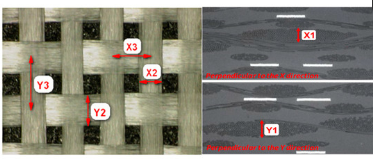
Currently widely used PCB materials are copper-clad/epoxy glass cloth substrates or phenolic resin glass cloth substrates, as well as a small amount of paper-based copper-clad boards. Although these substrates have excellent electrical and processing properties, they have poor heat dissipation.
As a heat dissipation path for high-heating components, it is almost impossible to expect that the heat is transferred from the surface of the component to the surrounding air by the resin itself. However, as electronic products have entered the era of component
miniaturization, high-density mounting, and high-heating assembly, it is not enough to rely on the surface of a component with a very small surface area to dissipate heat. At the same time, due to the extensive use of surface mount components such as QFP and BGA, the heat generated by the components is transmitted to the PCB in large quantities.
Therefore, the best way to solve the problem of heat dissipation is to improve the heat dissipation capability of the PCB itself that is in direct contact with the heat-generating components. Conducted or emitted.
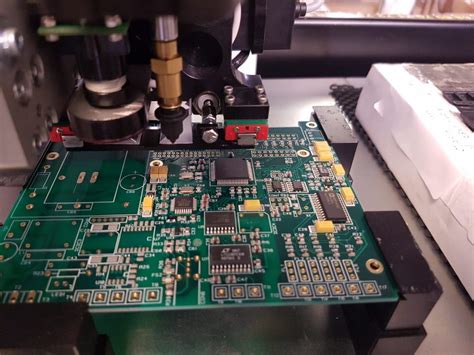
3 Use a reasonable wiring design to achieve heat dissipation
Because the resin in the plate has poor thermal conductivity, and the copper foil lines and holes are good conductors of heat, increasing the remaining rate of the copper foil and increasing the thermal conductance are the main means of heat dissipation.
To evaluate the heat-dissipation capability of a PCB, it is necessary to calculate the equivalent thermal conductivity (nine eq) of a composite substrate composed of various materials having different thermal conductivity—insulating substrates for PCBs.
4 For devices using free convection air cooling, it is best to arrange the integrated circuits (or other devices) in a longitudinal manner, or in a horizontally long manner.
5 Devices on the same printed board should be arranged as much as possible according to the amount of heat generated and the degree of heat dissipation.
Devices with small heat or poor heat resistance (such as small-signal transistors, small-scale integrated circuits, electrolytic capacitors, etc.) should be cooled. At the top of the airflow (at the entrance), devices with large heat or good heat resistance (such as power transistors, large scale integrated circuits, etc.) are placed at the most downstream of the cooling airflow.
6 In the horizontal direction, high-power devices are placed as close as possible to the edges of the printed board to shorten the heat transfer path; in the vertical direction, the high-power devices are placed as close to the printed board as possible to reduce the temperature of other devices when these devices work. influences.
7 Temperature-sensitive devices are best placed in the lowest temperature area (such as the bottom of the device).
Do not place it directly above the heat-generating device. Multiple devices are preferably staggered horizontally.
8 The heat dissipation of the PCB in the equipment relies mainly on the air flow.
Therefore, the air flow path must be studied during design, and the device or printed circuit board should be properly configured. When air flows, it tends to flow where the resistance is low. Therefore, when configuring the device on the printed circuit board, avoid leaving a large airspace in a certain area. The configuration of multiple printed circuit boards in the whole machine should also pay attention to the same problem.
9 To avoid the concentration of hot spots on the PCB, distribute the power evenly on the PCB as much as possible to keep the PCB surface temperature performance uniform and consistent.
It is often difficult to achieve a strict uniform distribution in the design process, but it is important to avoid areas with too high power density to avoid hot spots affecting the normal operation of the entire circuit. If there are conditions, it is very necessary to carry out the thermal performance analysis of the printed circuit. For example, the thermal performance index analysis software module added in some professional PCB design software can help the designer to optimize the circuit design. The
10 Place the device with the highest power consumption and heat generation near the optimal heat dissipation position.
Do not place devices with higher heat on the corners and edges of the printed board unless heat sinks are arranged near it. When designing power resistors, select as many devices as possible and allow enough space for heat dissipation when adjusting the layout of the printed board. The
11 Heat-dissipative devices should be connected to the substrate to minimize the thermal resistance between them.
In order to better meet the thermal characteristic requirements, some thermal conductive materials (such as a layer of thermal conductive silicone) can be used on the bottom surface of the chip, and a certain contact area is maintained for the device to dissipate heat. The
12 device and substrate connection:
(1) Shorten the device lead length as much as possible;
(2) When selecting high-power devices, consider the thermal conductivity of the lead material. If possible, try to select the largest cross-sectional area of the lead.
(3) Choose a device with more pins. The
13 device package selection:
(1) When considering thermal design, attention should be paid to the device package description and its thermal conductivity;
(2) Consider providing a good thermal conduction path between the substrate and the device package;
(3) Air separation should be avoided on the heat conduction path. If this is the case, heat-conducting material can be used for filling.