PCB Design Principles for Power Supply Modules
Introduction
Power supply modules are fundamental components in virtually all electronic systems, converting and regulating electrical energy to provide stable voltage and current to various circuits. The printed circuit board (PCB) design of these modules plays a critical role in their performance, efficiency, reliability, and electromagnetic compatibility (EMC). This article explores the essential principles of power supply module PCB design, covering layout considerations, component placement, routing strategies, thermal management, and safety requirements.
Fundamental Concepts in Power Supply PCB Design
Understanding Power Supply Topologies
Before delving into PCB specifics, designers must understand the common power supply topologies:
- Linear regulators: Simple but inefficient, suitable for low-power applications
- Buck converters: Step-down DC-DC converters
- Boost converters: Step-up DC-DC converters
- Buck-boost converters: Provide both step-up and step-down capability
- Flyback converters: Isolated power supplies for AC-DC conversion
- Forward converters: Another isolated topology for higher power applications
Each topology has unique PCB layout requirements that significantly impact performance.
Key Design Parameters
Power supply PCB design must consider several critical parameters:
- Current density: Determines trace widths and copper weight
- Voltage levels: Affects clearance and creepage requirements
- Switching frequency: Influences noise characteristics and EMI
- Efficiency targets: Impact thermal design and component selection
- Load characteristics: Affect stability and transient response
PCB Layout Considerations
Component Placement Strategy
Proper component placement forms the foundation of effective power supply design:
- Input/output organization: Maintain clear separation between input and output sections
- Power flow path: Arrange components to minimize high-current loop areas
- Control section isolation: Keep sensitive control circuitry away from noisy power components
- Thermal considerations: Position heat-generating components for optimal cooling
- Accessibility: Place test points and adjustment components for easy access
Critical Component Placement
Specific components require careful placement:
- Switching devices (MOSFETs, diodes): Position to minimize parasitic inductance
- Inductors/transformers: Orient to minimize magnetic coupling to sensitive circuits
- Input/output capacitors: Place as close as possible to switching devices
- Feedback networks: Locate near control ICs with short, direct routing
- Gate drive circuits: Keep close to switching devices with minimal loop area
Routing Techniques for Power Supplies
Power Trace Design
- Trace width calculation: Use current capacity formulas or online calculators
- General rule: 1 oz copper carries ~500mA per 0.01″ width (temperature rise dependent)
- High-current paths may require 2 oz or heavier copper
- Layer utilization:
- Use multiple layers for high-current paths when possible
- Consider buried or blind vias for complex designs
- Via strategies:
- Multiple vias in parallel for high-current transitions between layers
- Thermal relief patterns for soldering considerations
Signal Routing Considerations
- Control signal isolation:
- Route sensitive signals away from power components
- Use ground guards when necessary
- Feedback network routing:
- Keep traces short and direct
- Avoid running parallel to noisy traces
- Clock and PWM signals:
- Maintain consistent impedance
- Minimize length to reduce EMI
Grounding Strategies
Ground System Architecture
Power supply PCBs typically employ one of these grounding approaches:
- Single-point grounding: Suitable for low-frequency designs
- Multi-point grounding: Better for high-frequency switching supplies
- Hybrid approaches: Common in mixed-signal power supplies
Ground Plane Implementation
- Split ground planes: Carefully consider whether to split analog and digital grounds
- Current return paths: Ensure low-impedance paths for return currents
- Star grounding: Useful for combining different ground domains
Avoiding Ground Loops
- Proper component placement: Minimize loop areas
- Thoughtful via placement: Maintain continuous return paths
- Layer transitions: Ensure ground continuity when signals change layers
Thermal Management
Heat Dissipation Techniques
- Copper area utilization:
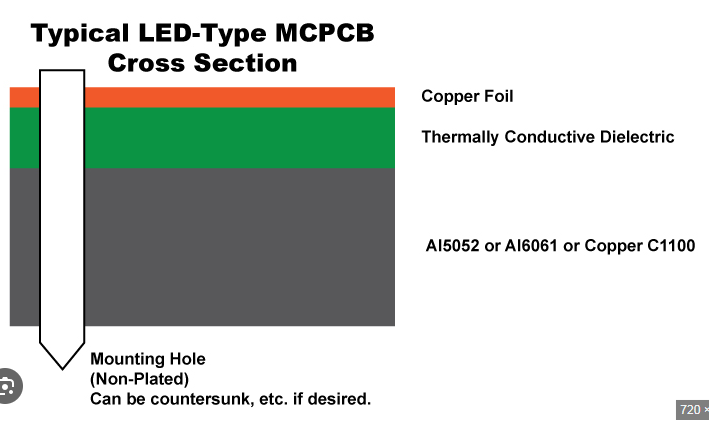
- Use generous copper pours for heat spreading
- Incorporate thermal relief patterns
- Via arrays: Thermal vias under heat-generating components
- Component selection: Choose packages with good thermal characteristics
- External heatsinks: Design for proper mechanical attachment
Temperature Considerations
- Thermal analysis: Perform calculations or simulations during design
- Component derating: Follow manufacturer guidelines for temperature derating
- Thermal cycling: Consider expansion effects in high-power designs
EMI/EMC Considerations
Noise Reduction Techniques
- Loop area minimization: Critical for switching current paths
- Shielding: Use grounded copper pours when appropriate
- Filtering: Proper implementation of input/output filters
- Component selection: Choose components with better EMI characteristics
Layout Practices for EMI Control
- High dv/dt node containment: Keep fast-switching nodes small
- High di/dt path management: Minimize inductance in gate drive loops
- Edge rate control: Consider gate resistors for switching devices
Safety and Compliance
Isolation Requirements
- Creepage and clearance:
- Follow safety standards (IEC/UL) for spacing
- Consider slotting or barriers when needed
- Reinforced insulation: For medical or high-voltage applications
- Barrier implementation: Physical separation for safety isolation
Protection Circuit Implementation
- Overcurrent protection: Proper sensing and routing
- Overvoltage protection: Component placement and routing
- Thermal protection: Sensor placement considerations
Advanced Techniques
High-Frequency Design Considerations
- Parasitic management:
- Minimize trace inductance and capacitance
- Account for via inductance in high-frequency paths
- Impedance control: For critical high-speed signals
- Skin effect: Consideration in very high-frequency designs
Multi-layer Board Strategies
- Layer stacking: Optimal arrangement for power integrity
- Power plane implementation: Low-impedance power distribution
- Signal layer separation: Isolate noisy and sensitive signals
Design Verification
Simulation and Analysis
- SPICE simulation: Verify circuit operation before layout
- Thermal simulation: Predict hot spots and verify cooling
- Signal integrity analysis: For high-speed control signals
Prototyping and Testing
- Initial bring-up procedures: Safe power application
- Performance measurement: Efficiency, ripple, transient response
- EMI testing: Conduct pre-compliance testing when possible
Conclusion
Power supply module PCB design requires careful consideration of electrical, thermal, and mechanical factors to achieve optimal performance. By following these fundamental principles—thoughtful component placement, proper routing techniques, effective grounding strategies, robust thermal management, and thorough EMI control—designers can create power supplies that meet stringent requirements for efficiency, reliability, and compliance. As power supply designs continue to evolve with advancing semiconductor technologies and increasing power density requirements, adherence to these PCB design principles becomes even more critical for successful power system implementation.
Remember that each power supply design presents unique challenges, and these guidelines should be adapted to specific application requirements. Continuous learning from design iterations, prototype testing, and real-world performance feedback remains essential for mastering the art and science of power supply PCB design.