Physical recycling and comprehensive utilization technology of waste PCB
How to effectively recycle waste circuit boards has become a new topic related to the sustainable development of my country’s economy, society and environment and the recycling of renewable resources in my country.
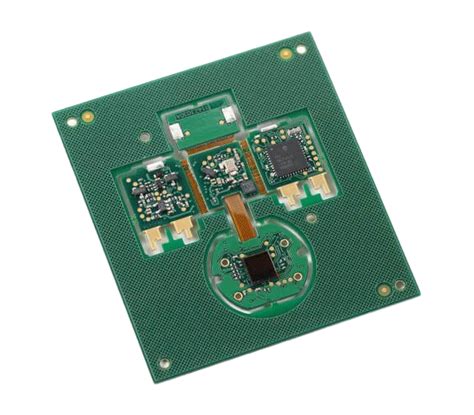
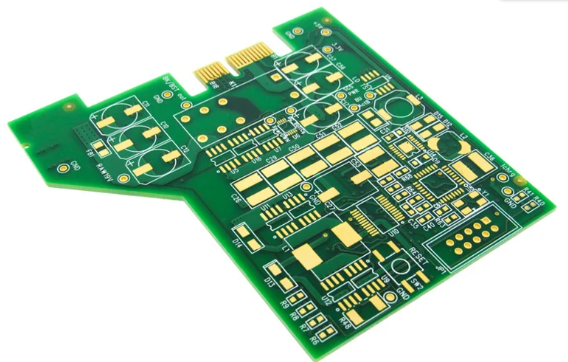
Printed circuit boards (PCBs) are made of glass fiber, reinforced resin and a variety of metal compounds. If waste circuit boards are not properly disposed of, the carcinogens such as brominated flame retardants they contain will cause serious pollution and harm to the environment and human health. However, waste circuit boards also have a very high economic value. The metal grade in circuit boards is equivalent to dozens of times the metal grade in ordinary minerals, and the metal content is as high as 10% to 60%, while the metal content of rich ores in nature is only 3% to 5%. It can be seen that waste circuit boards are also a “gold mine” to be developed.
New treatment technology and its system advantages
Hunan Wanrong Technology Co., Ltd. is a technology company specializing in the comprehensive utilization and development of industrial waste. Through cooperation with relevant institutions such as Beijing University of Aeronautics and Astronautics, it has carried out comprehensive development and research in the field of “comprehensive utilization and treatment of waste circuit boards”. On the basis of absorbing advanced recycling and processing technologies at home and abroad, we have carried out independent innovation and successfully developed a complete set of equipment and technology for the comprehensive utilization and harmless treatment of waste circuit boards. We have also industrialized this technology and built a harmless comprehensive treatment production line with an annual treatment capacity of 3,000 tons of waste PCB boards and a non-metallic material deep processing demonstration production line in Guangdong and Jiangsu respectively.
In terms of deep processing of recycled metals, Wanrong Technology has cooperated with relevant mining and metallurgical research units to form a complete set of deep processing process systems for various metals produced after the recycling of waste circuit boards.
In terms of the application of non-metallic materials, Wanrong Technology has successfully applied the non-metallic materials produced by the treatment of waste circuit boards to new composite materials such as logistics pallets and outdoor landscape materials through joint research with Beijing University of Chemical Technology and Hunan Plastics Research Institute, and has formed a mature production process and equipment package.
The separation equipment of this system uses the most advanced eddy current crushing and micro powder dissociation process to recover copper and other rare metals in circuit boards. Through special equipment treatment and sorting process, effective separation of metal and non-metal is achieved. There is no discharge of wastewater and waste residue in the whole production process, which completely solves the serious secondary pollution problems caused by incineration, acid leaching, water washing and other treatment methods. After actual operation test, it has the characteristics of stable operation, high recovery rate, high degree of automation, good working environment, etc. The metal recovery rate is stable at more than 96%, and the annual processing capacity of a single line can reach 3,000 tons.
This technology has better solved the problem of comprehensive application of non-metallic powder in the recycling of waste PCB boards, and has created a complete “green recycling industry chain”. This processing technology innovatively realizes the direct material utilization of non-metallic powder, truly achieving zero emission and zero pollution, with low processing cost, and can obtain greater value from non-metal recycling.
Main technical difficulties and solutions
During the development and industrialization of physical recycling and comprehensive utilization technology of waste printed circuit boards, there are the following main technical difficulties:
1.Separation degree of metal and non-metal and metal recovery rate index
Based on the physical properties of metal and non-metal, we adopt the crushing principle of shearing, impact and air flow crushing, and combine crushing with gravity sorting and wind classification to assemble a crushing and separation equipment for circuit boards. Through the control of parameters such as wind pressure and air volume, metal can be almost completely separated from non-metal, and the separation rate can reach more than 96%.
2.Purity of metal powder
The metal powder coming out of the metal discharge port of the crushing and separation equipment is generally only 60%-70% pure. The company adopts a combined selection process to increase the purity of copper from the original 60% to more than 90%, up to 99%. The produced metal copper powder can be directly used in other fields, such as the production of fireworks and salutes.
3.Dust and odor control
When we were developing the recycling equipment for waste circuit boards, we took into account the control of dust and odor during the production of circuit boards, which must comply with the national environmental protection standards. The company readjusted and supplemented the process plan of the circuit board recycling patent technology of the former Beijing University of Aeronautics and Astronautics, and changed the original wind pipe positive pressure feeding method and spiral feeding and bucket elevator feeding methods that are prone to dust leakage to fully enclosed pipeline negative pressure feeding methods.
In addition, during the crushing and pulverization of circuit boards, as the temperature rises and the materials such as resin, glass fiber and plastic are destroyed and decomposed, a certain odor will be generated. If it is not handled in time, it will cause certain pollution to the production environment and atmosphere. For this reason, the company has developed a deodorant formula, and this formula solution is added to the liquid in the spray tower in a certain proportion. The odorous gas discharged by the induced draft fan in the production can meet the national environmental protection gas emission standards after multi-stage spraying treatment in the spray tower.
4.Wear of crushing tools
Due to the special structure of circuit boards, which contain both metal and a variety of non-metallic composite materials, the wear of the tools is quite serious to crush them to a certain particle size. If general tool steel or alloy steel is used, not only will the wear resistance be poor and the service life be short, but it will also affect the equipment production capacity and maintenance and manufacturing costs, and ultimately increase production costs. In response to this problem, we have explored and improved it, and have now made a breakthrough in this regard. We use special alloy materials and special surface treatments. Through the analysis and comparison of the use costs of different types of tools and materials, its cost performance is in a leading position in China, and even reaches the international advanced technology level.
5.Control of metal content in non-metallic powder and material application of powder
The copper content in non-metallic powder output from the cyclone collector and the dust removal equipment discharge port can be controlled below 1%, which is greatly beneficial to the application of non-metallic powder. Since we use a completely dry method to process circuit boards, the particle size distribution of the non-metallic powder after separation is more suitable for use as various fillers. After surface activation and modification of non-metallic powders, we have successfully applied them to the production of wood-plastic profiles, outdoor landscaping materials, sewer pipes, logistics pallets and other products.