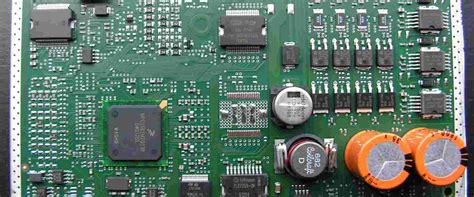
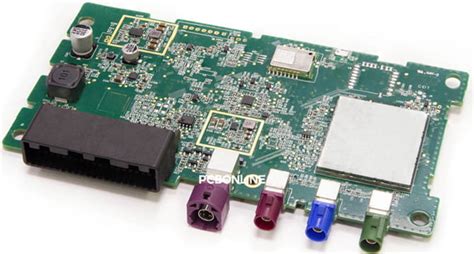
Rogers 3000 pcb material and appilication.
Designing High-Frequency Circuits with Rogers 3000 PCB
Designing high-frequency circuits requires meticulous attention to detail, particularly when it comes to the choice of materials.
One of the most reliable materials for such applications is the Rogers 3000 series of printed circuit boards (PCBs).
These PCBs are specifically engineered to meet the demanding requirements of high-frequency and high-speed digital applications. The Rogers 3000 series is renowned for its exceptional electrical properties, which make it an ideal choice for designers aiming to achieve optimal performance in their circuits.
To begin with, the Rogers 3000 series offers a low dielectric constant (Dk), which is crucial for maintaining signal integrity at high frequencies.
A low Dk minimizes signal loss and ensures that the signal travels through the PCB with minimal distortion. This is particularly important in applications such as RF and microwave circuits, where even the slightest signal degradation can lead to significant performance issues. Additionally, the Rogers 3000 series exhibits a stable Dk over a wide range of frequencies and temperatures, providing consistent performance in various operating conditions.
Moreover, the Rogers 3000 series boasts a low dissipation factor (Df), which is essential for reducing energy loss in the form of heat.
A low Df ensures that the PCB can handle high power levels without significant thermal issues, thereby enhancing the overall efficiency of the circuit. This characteristic is particularly beneficial in applications such as power amplifiers and antennas, where efficient power handling is paramount.
Another notable feature of the Rogers 3000 series is its excellent thermal management properties.
The material has a high thermal conductivity, which allows for efficient heat dissipation. This is particularly important in high-frequency circuits, where excessive heat can lead to component failure and reduced reliability. By effectively managing heat, the Rogers 3000 series helps to extend the lifespan of the circuit and maintain its performance over time.
Furthermore, the Rogers 3000 series is known for its ease of fabrication.
The material is compatible with standard PCB manufacturing processes, which simplifies the production of high-frequency circuits. This compatibility not only reduces manufacturing costs but also ensures that designers can leverage existing infrastructure and expertise. Additionally, the material’s dimensional stability ensures that the PCB maintains its shape and size during the fabrication process, which is crucial for achieving precise and reliable circuit layouts.
In addition to its electrical and thermal properties, the Rogers 3000 series offers excellent mechanical stability.
The material is resistant to mechanical stress and environmental factors, such as humidity and temperature fluctuations. This robustness ensures that the PCB can withstand harsh operating conditions, making it suitable for a wide range of applications, including aerospace, defense, and telecommunications.
In conclusion, the Rogers 3000 series of PCBs is an exceptional choice for designing high-frequency circuits. Its low dielectric constant and dissipation factor, combined with excellent thermal management and mechanical stability, make it an ideal material for achieving optimal performance in demanding applications. By leveraging the unique properties of the Rogers 3000 series, designers can ensure that their high-frequency circuits deliver reliable and efficient performance, even in the most challenging environments.
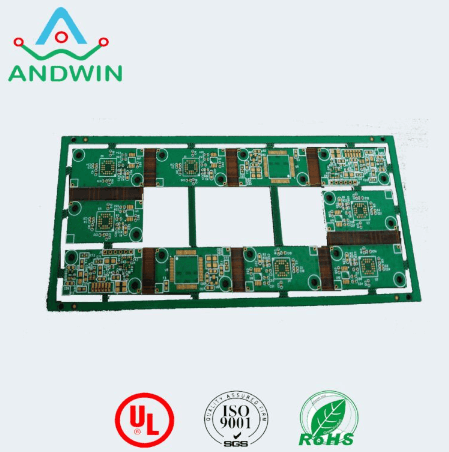
Thermal Management Techniques for Rogers 3000 PCB
Rogers 3000 series printed circuit boards (PCBs) are renowned for their exceptional performance in high-frequency applications, making them a preferred choice in industries such as telecommunications, aerospace, and defense.
However, one of the critical challenges associated with these high-performance PCBs is effective thermal management. As electronic devices become more powerful and compact, the need to dissipate heat efficiently becomes paramount to ensure reliability and longevity. Therefore, understanding and implementing thermal management techniques for Rogers 3000 PCBs is essential.
To begin with, the intrinsic properties of Rogers 3000 materials contribute to their thermal management capabilities.
These materials exhibit low dielectric loss and stable dielectric constants, which are beneficial for high-frequency applications. However, their thermal conductivity is relatively moderate compared to other materials. Consequently, designers must employ additional strategies to manage heat effectively.
One fundamental approach is the use of thermal vias.
These are plated through-holes that connect the top and bottom layers of the PCB, allowing heat to transfer from the surface-mounted components to the inner layers and ultimately to a heat sink or the ambient environment. By strategically placing thermal vias beneath heat-generating components, the overall thermal resistance can be significantly reduced.
In addition to thermal vias, the incorporation of heat sinks is anothe3r effective technique.
Heat sinks are typically made of materials with high thermal conductivity, such as aluminum or copper, and are attached to the PCB to dissipate heat away from critical components. The design and placement of heat sinks must be carefully considered to ensure optimal airflow and heat dissipation. For instance, finned heat sinks can increase the surface area available for heat transfer, thereby enhancing cooling efficiency. Moreover, the use of thermal interface materials (TIMs) between the heat sink and the PCB can improve thermal conductivity by filling microscopic air gaps that would otherwise impede heat transfer.
Another important aspect of thermal management is the layout and design of the PCB itself.
Proper component placement can significantly influence thermal performance. High-power components should be positioned in areas with adequate airflow and away from temperature-sensitive components. Additionally, spreading out heat-generating components can prevent localized hotspots and promote even heat distribution. The use of thermal relief pads can also aid in managing heat. These pads are designed to connect thermal vias to copper planes, providing a direct path for heat to dissipate.
Furthermore, advanced cooling techniques such as forced air cooling and liquid cooling can be employed for more demanding applications.
Forced air cooling involves the use of fans to increase airflow over the PCB, thereby enhancing convective heat transfer. Liquid cooling, on the other hand, uses a coolant to absorb and transport heat away from the PCB. While these methods are more complex and costly, they offer superior thermal management for high-power applications.
In conclusion, effective thermal management is crucial for maintaining the performance and reliability of Rogers 3000 PCBs in high-frequency applications. By leveraging techniques such as thermal vias, heat sinks, proper PCB layout, and advanced cooling methods, designers can mitigate thermal challenges and ensure the longevity of their electronic devices. As technology continues to evolve, the importance of innovative thermal management solutions will only grow, underscoring the need for ongoing research and development in this critical area.
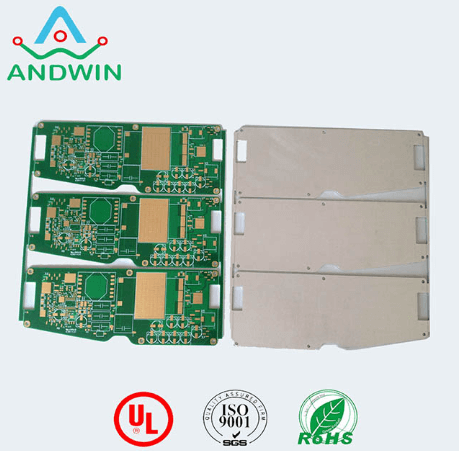
Comparing Rogers 3000 PCB to Other High-Performance Materials
When evaluating high-performance materials for printed circuit boards (PCBs), the Rogers 3000 series stands out as a prominent choice. This series, known for its exceptional electrical properties and mechanical stability, is often compared to other high-performance materials to determine its suitability for various applications. To understand the advantages and limitations of Rogers 3000 PCBs, it is essential to compare them with other materials commonly used in high-frequency and high-speed digital applications.
One of the primary attributes of Rogers 3000 PCBs is their low dielectric constant (Dk), which ranges from 3.0 to 3.5. This low Dk is crucial for maintaining signal integrity, especially in high-frequency applications.
In contrast, traditional FR-4 materials, which are widely used in standard PCBs, have a higher dielectric constant, typically around 4.5. The higher Dk of FR-4 can lead to signal loss and increased propagation delay, making it less suitable for high-frequency applications. Therefore, Rogers 3000 PCBs are often preferred in scenarios where signal integrity is paramount.
Moreover, the Rogers 3000 series exhibits a low dissipation factor (Df), which is a measure of energy loss in the dielectric material.
A lower Df indicates that the material can efficiently transmit signals with minimal loss. For instance, Rogers 3000 materials have a Df of approximately 0.002, whereas FR-4 materials have a Df ranging from 0.015 to 0.020. This significant difference in dissipation factor makes Rogers 3000 PCBs more efficient for high-speed digital and RF applications, where minimizing signal loss is critical.
In addition to electrical properties, thermal management is another crucial aspect to consider.
Rogers 3000 PCBs offer excellent thermal stability, with a coefficient of thermal expansion (CTE) that closely matches that of copper. This matching CTE is vital for maintaining the structural integrity of the PCB during thermal cycling, which is common in many electronic applications. On the other hand, FR-4 materials have a higher CTE, which can lead to mechanical stress and potential failure of the PCB under thermal cycling conditions. Consequently, Rogers 3000 PCBs are often chosen for applications that require reliable performance under varying thermal conditions.
Furthermore, the mechanical properties of Rogers 3000 materials contribute to their robustness and durability.
These materials exhibit high tensile strength and dimensional stability, ensuring that the PCB maintains its shape and functionality even under mechanical stress. In comparison, other high-performance materials, such as PTFE-based laminates, may offer similar electrical properties but often lack the mechanical strength and stability provided by Rogers 3000 PCBs. This combination of electrical and mechanical properties makes Rogers 3000 an attractive option for demanding applications.
However, it is important to note that the choice of PCB material ultimately depends on the specific requirements of the application.
While Rogers 3000 PCBs offer numerous advantages, they may also come at a higher cost compared to traditional materials like FR-4. Therefore, a cost-benefit analysis is essential to determine whether the superior performance of Rogers 3000 PCBs justifies the additional expense.
In conclusion, when comparing Rogers 3000 PCBs to other high-performance materials, it becomes evident that their low dielectric constant, low dissipation factor, excellent thermal stability, and robust mechanical properties make them a superior choice for high-frequency and high-speed digital applications. However, the final decision should consider the specific needs of the application and the associated costs to ensure the most effective and efficient solution.
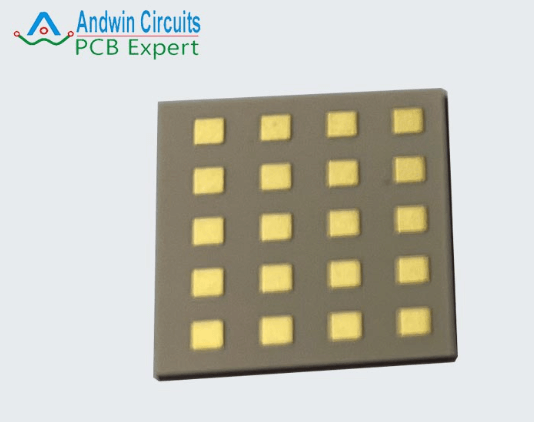
Applications of Rogers 3000 PCB in Modern Electronics
Rogers 3000 PCB, a high-frequency laminate material, has become a cornerstone in the development of modern electronics. Its unique properties, such as low dielectric constant and low loss tangent, make it an ideal choice for a wide range of applications. As technology continues to advance, the demand for materials that can support high-speed and high-frequency operations has surged, and Rogers 3000 PCB has proven to be a reliable solution.
One of the primary applications of Rogers 3000 PCB is in the telecommunications industry.
With the advent of 5G technology, the need for materials that can handle higher frequencies and faster data transmission rates has become critical. Rogers 3000 PCB’s ability to maintain signal integrity at high frequencies makes it an excellent choice for 5G base stations and other communication devices. Furthermore, its low dielectric constant ensures minimal signal loss, which is essential for maintaining the efficiency and reliability of communication systems.
In addition to telecommunications, Rogers 3000 PCB is widely used in the aerospace and defense sectors.
The stringent requirements of these industries demand materials that can perform reliably under extreme conditions. Rogers 3000 PCB’s thermal stability and mechanical robustness make it suitable for applications such as radar systems, satellite communications, and avionics. Its ability to withstand harsh environments without compromising performance ensures that critical systems remain operational, which is paramount in aerospace and defense applications.
The automotive industry has also recognized the benefits of Rogers 3000 PCB, particularly in the development of advanced driver-assistance systems (ADAS) and autonomous vehicles.
These systems rely heavily on high-frequency radar and communication modules to function effectively. Rogers 3000 PCB’s superior electrical properties enable the precise and reliable operation of these modules, contributing to the overall safety and efficiency of modern vehicles. As the automotive industry continues to evolve towards greater automation and connectivity, the role of Rogers 3000 PCB is expected to expand further.
Moreover, Rogers 3000 PCB finds applications in the medical field, where precision and reliability are of utmost importance.
Medical devices such as MRI machines, CT scanners, and other diagnostic equipment require materials that can support high-frequency operations without interference. The low loss tangent of Rogers 3000 PCB ensures that these devices can operate accurately and efficiently, providing critical diagnostic information to healthcare professionals. Additionally, its biocompatibility makes it suitable for use in implantable medical devices, further broadening its scope of application in the medical industry.
The consumer electronics market also benefits from the unique properties of Rogers 3000 PCB.
As devices become more compact and feature-rich, the need for materials that can support high-speed data transfer and miniaturization has increased. Rogers 3000 PCB’s ability to maintain performance at high frequencies while being adaptable to various form factors makes it an ideal choice for smartphones, tablets, and other portable electronic devices. Its contribution to enhancing the performance and reliability of consumer electronics cannot be overstated.
In conclusion, the applications of Rogers 3000 PCB in modern electronics are vast and varied. Its exceptional electrical properties, thermal stability, and mechanical robustness make it a preferred material across multiple industries, including telecommunications, aerospace, defense, automotive, medical, and consumer electronics. As technology continues to advance, the demand for high-performance materials like Rogers 3000 PCB is expected to grow, further solidifying its position as a critical component in the development of cutting-edge electronic systems.