SMT Circuit Boards: Revolutionizing Electronics Manufacturing
Introduction
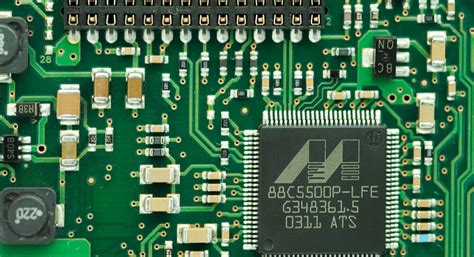
Surface Mount Technology (SMT) has transformed the electronics manufacturing industry by enabling the production of smaller, faster, and more reliable electronic devices. SMT circuit boards, which utilize surface-mount components, have become the standard in modern electronics due to their compact size, high performance, and cost-effectiveness. This article provides a comprehensive overview of SMT circuit boards, covering their design, manufacturing process, advantages, challenges, and future trends.
1. What is an SMT Circuit Board?
1.1 Definition
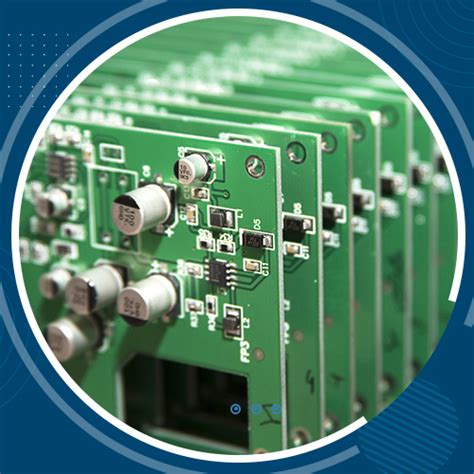
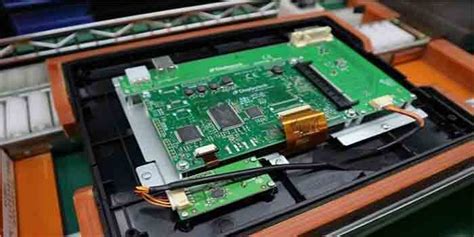
An SMT circuit board is a printed circuit board (PCB) that uses surface-mount components instead of through-hole components. These components are mounted directly onto the surface of the PCB, allowing for higher component density and more compact designs.
1.2 Key Features of SMT Circuit Boards
- Compact Size: SMT components are smaller than through-hole components, enabling miniaturization.
- High Component Density: SMT allows for more components to be placed on a single board.
- Improved Performance: Shorter trace lengths reduce signal interference and improve electrical performance.
- Cost-Effective: SMT is highly automated, reducing labor costs and increasing production efficiency.
2. Components of SMT Circuit Boards
2.1 Surface-Mount Components
SMT components are designed to be mounted directly onto the surface of the PCB. Common types include:
- Resistors and Capacitors: Small, rectangular components with metalized ends.
- Integrated Circuits (ICs): Packages such as Quad Flat Packs (QFPs) and Ball Grid Arrays (BGAs).
- Diodes and Transistors: Small, surface-mount versions of traditional components.
- Connectors: Miniature connectors for interconnecting PCBs.
2.2 PCB Substrate
The substrate of an SMT circuit board is typically made of fiberglass-reinforced epoxy (FR-4), which provides mechanical strength and electrical insulation.
2.3 Solder Paste
Solder paste is a mixture of tiny solder particles and flux, used to attach SMT components to the PCB. It is applied to the PCB pads using a stencil.
2.4 Solder Mask and Silkscreen
- Solder Mask: A protective layer that prevents solder bridges and short circuits.
- Silkscreen: Labels and markings for component placement and identification.
3. SMT Circuit Board Manufacturing Process
The manufacturing process for SMT circuit boards involves several stages, each requiring precision and expertise.
3.1 Design and Layout
The process begins with the design of the PCB using CAD software. Key considerations include:
- Component Placement: Optimizing the layout to minimize trace lengths and avoid interference.
- Trace Routing: Designing the conductive pathways that connect components.
- Design for Manufacturability (DFM): Ensuring the design can be efficiently and reliably manufactured.
3.2 PCB Fabrication
PCB fabrication involves transforming the design into a physical board. The key steps include:
- Material Preparation: Selecting and preparing the substrate and copper layers.
- Circuit Patterning: Using photolithography and etching to create the circuit traces.
- Drilling and Plating: Creating and plating vias for electrical connections.
- Surface Finishing: Applying a surface finish to protect the copper and improve solderability.
- Solder Mask and Silkscreen Application: Adding protective and labeling layers.
3.3 Solder Paste Application
Solder paste is applied to the PCB pads using a stencil. The stencil ensures precise application, which is critical for achieving reliable solder joints.
3.4 Component Placement
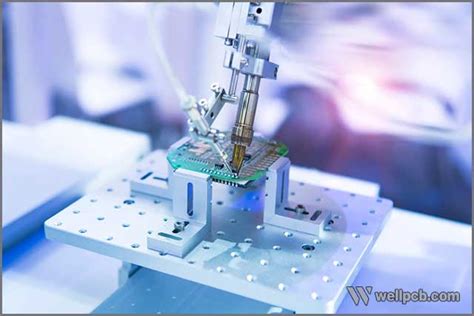
A pick-and-place machine positions SMT components onto the solder paste. These machines use vacuum nozzles to pick up components from reels or trays and place them with high accuracy.
3.5 Reflow Soldering
The PCB is passed through a reflow oven, where the solder paste is heated to its melting point, forming solid solder joints. The reflow process involves several stages:
- Preheating: Gradually heating the PCB to activate the flux.
- Soaking: Maintaining a stable temperature to ensure even heating.
- Reflow: Melting the solder paste to form solder joints.
- Cooling: Gradually cooling the PCB to solidify the solder joints.
3.6 Inspection and Testing
After soldering, the PCB undergoes inspection and testing to ensure functionality and quality. Common methods include:
- Automated Optical Inspection (AOI): Detecting visual defects such as misaligned components or solder bridges.
- X-Ray Inspection: Inspecting hidden solder joints, such as those in BGA components.
- In-Circuit Testing (ICT): Verifying the electrical performance of individual components.
- Functional Testing: Ensuring the assembled PCB performs its intended function.
4. Advantages of SMT Circuit Boards
4.1 Miniaturization
SMT components are smaller than through-hole components, enabling the production of compact and lightweight electronic devices.
4.2 High Component Density
SMT allows for more components to be placed on a single board, enabling more complex and powerful circuits.
4.3 Improved Performance
Shorter trace lengths reduce signal interference and improve electrical performance, making SMT circuit boards ideal for high-speed and high-frequency applications.
4.4 Cost-Effectiveness
SMT is highly automated, reducing labor costs and increasing production efficiency. The smaller size of SMT components also reduces material costs.
4.5 Reliability
SMT solder joints are more reliable than through-hole solder joints, as they are less susceptible to mechanical stress and vibration.
5. Challenges in SMT Circuit Board Manufacturing
5.1 Component Miniaturization
As components become smaller, achieving precise placement and soldering becomes more challenging.
5.2 Thermal Management
SMT components are more susceptible to thermal stress during reflow soldering, requiring careful thermal management.
5.3 Solder Joint Reliability
SMT solder joints can be prone to cracking under mechanical stress, requiring robust design and testing.
5.4 Inspection and Testing
Inspecting and testing SMT circuit boards can be more complex due to the high component density and small size of components.
6. Future Trends in SMT Circuit Boards
6.1 Advanced Packaging
Technologies like 3D packaging and System-in-Package (SiP) are enabling higher performance and integration in SMT circuit boards.
6.2 Flexible and Stretchable Electronics
The demand for wearable devices and IoT applications is driving the development of flexible and stretchable SMT circuit boards.
6.3 Automation and Industry 4.0
The integration of automation, IoT, and AI is improving the efficiency and precision of SMT circuit board manufacturing.
6.4 Green Manufacturing
Sustainable practices, such as using lead-free solder and recycling materials, are becoming more common in SMT manufacturing.
6.5 High-Density Interconnect (HDI) PCBs
HDI PCBs feature finer traces, smaller vias, and higher component densities, enabling more compact and powerful devices.
7. Choosing an SMT Circuit Board Manufacturer
When selecting an SMT circuit board manufacturer, consider the following factors:
- Capabilities: Ensure the manufacturer can handle your specific requirements, such as HDI or flexible PCBs.
- Quality Standards: Look for certifications like ISO 9001 and IPC-A-610.
- Turnaround Time: Choose a manufacturer that can meet your production deadlines.
- Cost: Compare pricing while considering the quality and reliability of the manufacturer.
- Customer Support: A responsive and supportive team can make the collaboration smoother.
Conclusion
SMT circuit boards have revolutionized the electronics manufacturing industry by enabling the production of smaller, faster, and more reliable electronic devices. By leveraging advanced technologies, adhering to industry standards, and addressing challenges such as miniaturization and thermal management, manufacturers can produce high-quality SMT circuit boards that meet the demands of today’s rapidly evolving electronics industry. As the industry continues to advance, trends such as advanced packaging, flexible electronics, and green manufacturing are shaping the future of SMT circuit boards. By staying informed and adopting best practices, manufacturers can drive innovation and deliver reliable, high-performance SMT circuit boards for a wide range of applications.